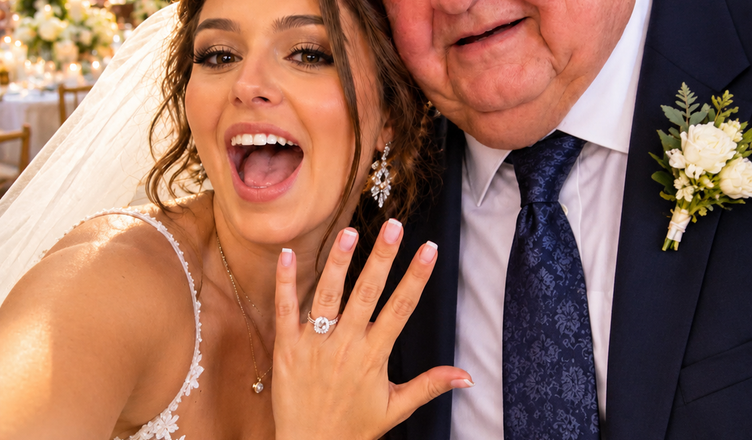
When I married Arthur Bennett, everyone assumed they understood our relationship.
I was thirty-one. Arthur was seventy-two.
He owned several properties, had spent decades building a successful business, and lived in a house large enough to make people lower their voices when they entered it. I was young enough to be mistaken for his daughter.
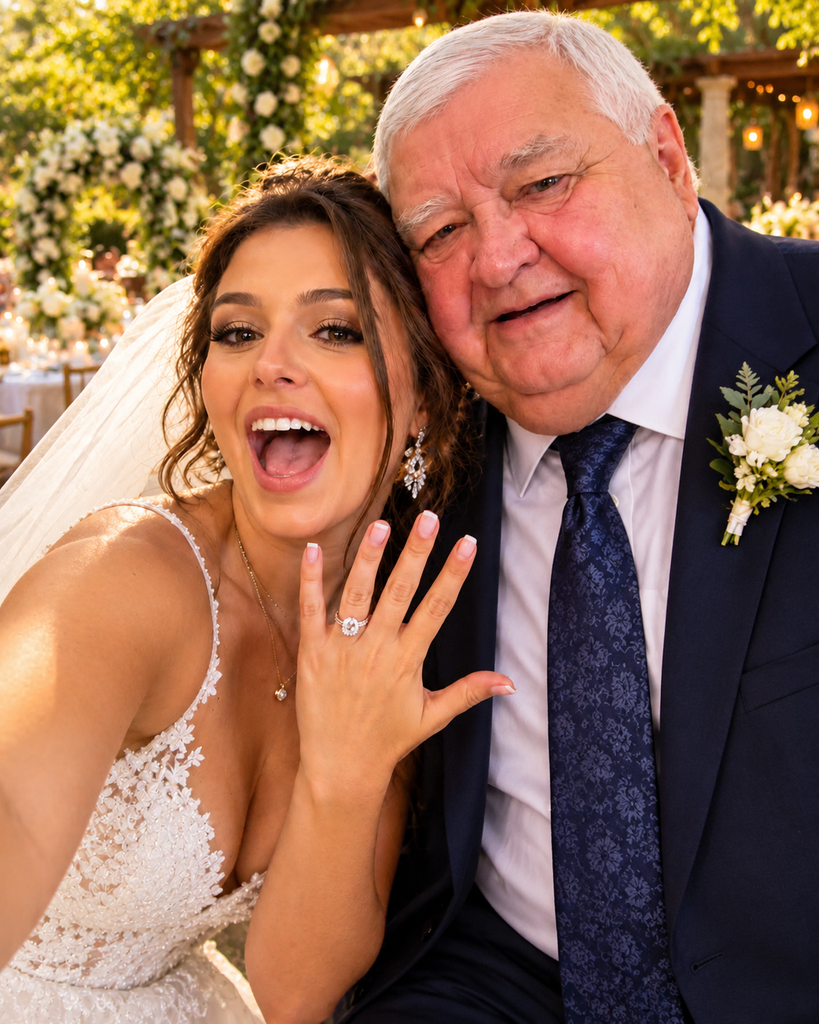
People stared when we walked into restaurants. His relatives barely concealed their suspicion. Even strangers seemed to have an opinion.
The uncomfortable truth was that some of them were right.
I had married Arthur because he was wealthy.
I didn’t fall in love with him and then discover his fortune. I noticed the fortune first.
At the time, I had convinced myself this wasn’t as terrible as it sounded. Arthur was lonely. I offered companionship. He enjoyed having someone beside him at dinners and social events. I made his enormous house feel occupied again.
In return, I had security.
That was how I justified it.
But beneath all those reasonable explanations was a calculation I never admitted aloud.
Arthur was forty-one years older than I was.
Eventually, I assumed, everything he owned would become mine.
A Marriage Built on an Unspoken Bargain
We met at a charity event where I was helping organize guests. Arthur arrived alone and stayed near the back of the room.
He wasn’t charming in the conventional sense. He was reserved, observant and almost impossible to impress.
But he remembered details.
The second time we met, he recalled the name of the town where I’d grown up. The third time, he remembered how I took my coffee.
Our relationship developed surprisingly quickly.
Within eight months, he proposed.
I said yes.
Arthur’s daughter, Caroline, was furious.
She was fifty and lived in another state. At our first family dinner after the engagement, she barely looked at me.
Later, Arthur told me she had asked him whether he intended to sign a prenuptial agreement.
He had.
I was disappointed when I learned the details, although I tried not to show it.
The agreement protected several family assets and ensured that certain investments would eventually pass to Caroline and Arthur’s grandchildren.
But Arthur still possessed considerable wealth outside those arrangements.
The house alone was worth more money than I had ever imagined owning.
So I remained patient.
I became the wife everyone expected me to be.
I attended appointments with him. I remembered his medication schedule. I hosted dinners for people twice my age and learned the names of business associates whose stories I had heard repeatedly.
And something unexpected happened along the way.
I began to like Arthur.
That wasn’t part of the plan.
He had a dry sense of humor and a habit of reading three newspapers every morning. He hated television game shows but somehow knew the answers whenever I watched one. He loved old jazz records and made terrible scrambled eggs.
He could also be extraordinarily generous.
Not merely with money.
With attention.
If I spoke, he listened.
Still, liking him wasn’t the same as loving him.
And somewhere in the back of my mind, the original calculation remained.
The Secret I Thought I Had Hidden
Two years into our marriage, I made a mistake.
His name was Ryan.
We had known each other years earlier, long before Arthur entered my life. When we met again by chance, old familiarity returned quickly.
At first, our conversations were harmless.
Then they weren’t.
Ryan knew why I had married Arthur. In fact, he was one of the only people who did.
I told him things I should never have said.
I complained about waiting.
I talked about Arthur’s properties.
Once, during an argument with Ryan, I even wrote that I had sacrificed years of my life for a future inheritance and wasn’t going to leave with nothing.
I regretted those words almost immediately.
The affair ended after only a few months.
Arthur never confronted me.
Nothing changed at home.
If anything, he became kinder.
That made my guilt worse.
I deleted the messages, blocked Ryan’s number and decided the entire episode had disappeared with him.
Years passed.
Arthur’s health gradually declined.
He remained mentally sharp, but his body became less reliable. Long walks turned into short ones. Stairs became difficult. Hospital visits became increasingly common.
During his final year, I spent more time caring for him than I ever expected.
And by then, something about our marriage had genuinely changed.
The money still mattered to me.
I would be lying if I said otherwise.
But Arthur mattered too.
The contradiction was difficult to accept.
A relationship can begin for an ugly reason and still accumulate real memories. Human motives rarely remain as simple as they were at the beginning.
When Arthur died at seventy-eight, I cried.
I also wondered about the will.
Both things were true.
The Reading of the Will
The funeral was held on a cold Tuesday morning.
Afterward, several family members gathered at the office of Arthur’s longtime attorney, Mr. Collins.
Caroline sat across from me.
She looked exhausted rather than angry.
Mr. Collins began reading.
Arthur had planned everything carefully.
His grandchildren received trusts. Caroline inherited several investments and two properties that had belonged to her mother. Charitable organizations received substantial donations.
Then my name came.
I inherited enough money to live comfortably, but nowhere near what I had expected.
The main house had been placed into a family trust.
Most of Arthur’s remaining business assets went to Caroline and the grandchildren.
I sat silently, trying not to reveal my disappointment.
It wasn’t nothing.
Far from it.
But after nearly seven years of marriage, I had imagined a different ending.
When the meeting concluded, Caroline left without speaking to me.
I stood to follow her.
“Mrs. Bennett,” Mr. Collins said, “your husband asked that you remain for a moment.”
My heart began beating faster.
Perhaps there was something else.
Mr. Collins waited until the room was empty.
Then he opened a drawer and removed a small wooden box.
It was no larger than the palm of his hand.
“Arthur instructed me to give this to you privately.”
I stared at it.
“What is it?”
“I don’t know everything inside. He requested that you open it yourself.”
Then Mr. Collins repeated the sentence Arthur had apparently told him to use.
“Your husband wanted to make certain you received exactly what he believed you deserved.”
For the first time that afternoon, I felt hopeful.
Perhaps there was jewelry inside.
A key.
Information about another account.
Arthur had always disliked public displays. Maybe he had arranged my real inheritance privately.
I opened the box.
There was no jewelry.
There was an old USB drive, a key and a folded piece of paper.
My hands went cold.
I recognized the USB drive immediately.
It had once belonged to me.
What Arthur Had Known
The note contained instructions to open a file stored on the drive.
Mr. Collins allowed me to use a computer in an empty office.
There was only one folder.
Inside were screenshots.
My messages to Ryan.
Not just one or two.
Dozens.
Conversations I thought I had deleted years earlier.
There were messages in which I mocked the age difference between Arthur and me. Others discussed his money.
And then I found the sentence I remembered writing during my worst moment:
I didn’t marry him to leave empty-handed.
I stopped reading.
Arthur had known.
The date on the folder showed that he had possessed those copies for more than four years.
Four years.
He had known while we ate breakfast together.
He had known during holidays.
He had known when I sat beside him in hospital waiting rooms.
He had known when he thanked me for staying.
Yet he had never said a word.
At the bottom of the folder was a document written by Arthur.
It wasn’t angry.
That somehow made it worse.
He explained that he had discovered the affair accidentally after an old tablet of mine synchronized messages that had also appeared on another device in the house.
He had initially planned to confront me.
Instead, he waited.
Arthur wrote that by the time he learned the truth, he had already suspected why I had married him.
The messages didn’t shock him as much as I imagined.
What hurt him was discovering how little respect I had once had for him.
But then his letter changed.
He wrote that people shouldn’t always be judged solely by the worst thing they had done.
After the affair ended, he had watched me change.
Not because I knew I had been caught.
I didn’t.
He had watched me cancel trips when he was ill. He remembered nights when I slept in a chair beside him at the hospital. He noticed that I stopped asking about his finances.
He knew some of my care had become genuine.
But genuine affection, he wrote, did not erase deception.
Nor did deception erase every good thing that came afterward.
So he had tried to make his will reflect both truths.
The Key
I had almost forgotten about the small brass key lying inside the box.
Arthur’s letter explained it.
Years earlier, he had purchased a modest cottage beside a lake several hours from the city.
I knew the place.
We had spent a weekend there during our first year of marriage.
I remembered telling Arthur that it was the first house he owned that actually felt like a home rather than a display of wealth.
I thought he had sold it.
He hadn’t.
The cottage was mine.
Not the mansion.
Not the company.
Not the fortune I had once imagined inheriting.
Just the small house by the lake and enough money to maintain it without financial difficulty.
His final paragraph was only a few lines.
He wrote that if money had truly been the only thing I wanted from him, I would consider the inheritance disappointing.
But if the years we had eventually shared meant something more, I would understand why he had chosen that particular house.
I sat alone in the attorney’s office for a long time.
For years, I had imagined Arthur’s death as the moment when my patience would finally be rewarded.
Instead, he had turned his will into a mirror.
What I Actually Inherited
I visited the cottage several weeks later.
Nothing had changed.
The furniture was covered with sheets. Dust had collected along the windowsills. The lake outside was gray beneath the winter sky.
I found two coffee mugs in the kitchen cabinet.
They were the same ones Arthur and I had used during our weekend there years earlier.
That was when I finally understood the uncomfortable precision of his decision.
Arthur had not left me nothing.
He had also refused to reward the woman I had been when I married him.
Instead, he left something to the woman he believed I had partially become.
I cannot turn our marriage into a beautiful love story.
It didn’t begin beautifully.
I entered it with selfish intentions. I deceived a man who trusted me, and later I betrayed him.
Those facts don’t disappear simply because I eventually cared for him.
But another truth exists beside them.
People can change after making choices they aren’t proud of.
The problem is that change does not entitle us to escape the consequences of those choices.
Arthur understood that better than I did.
For years, I thought I was patiently waiting to inherit his fortune.
Only after he was gone did I realize he had spent those same years deciding what kind of inheritance would tell the truth about both of us.
In the end, he left me far less money than I had once wanted.
But he left me the one place connected to a memory that had never been about his wealth.
And inside a small wooden box, he left something more difficult to accept than any punishment:
proof that he had known exactly who I was, had watched me struggle to become someone different, and had made his final decision with both versions of me in mind.