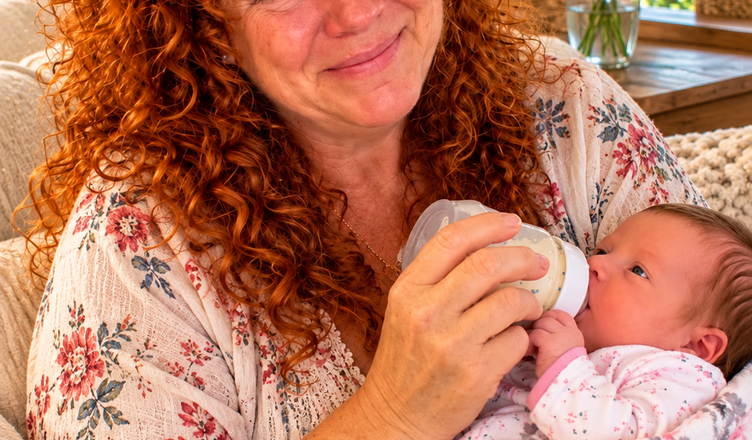
I had already been through three pregnancies, three deliveries, and three chaotic journeys home with tiny babies who somehow seemed capable of producing twice their body weight in laundry. Our sons had transformed our once-quiet house into a place of permanently misplaced shoes, unfinished cereal bowls, toy cars, footballs, and laughter.
When I discovered I was pregnant again, my husband, Michael, and I promised each other that we would not care whether the baby was a boy or a girl.
And we meant it.
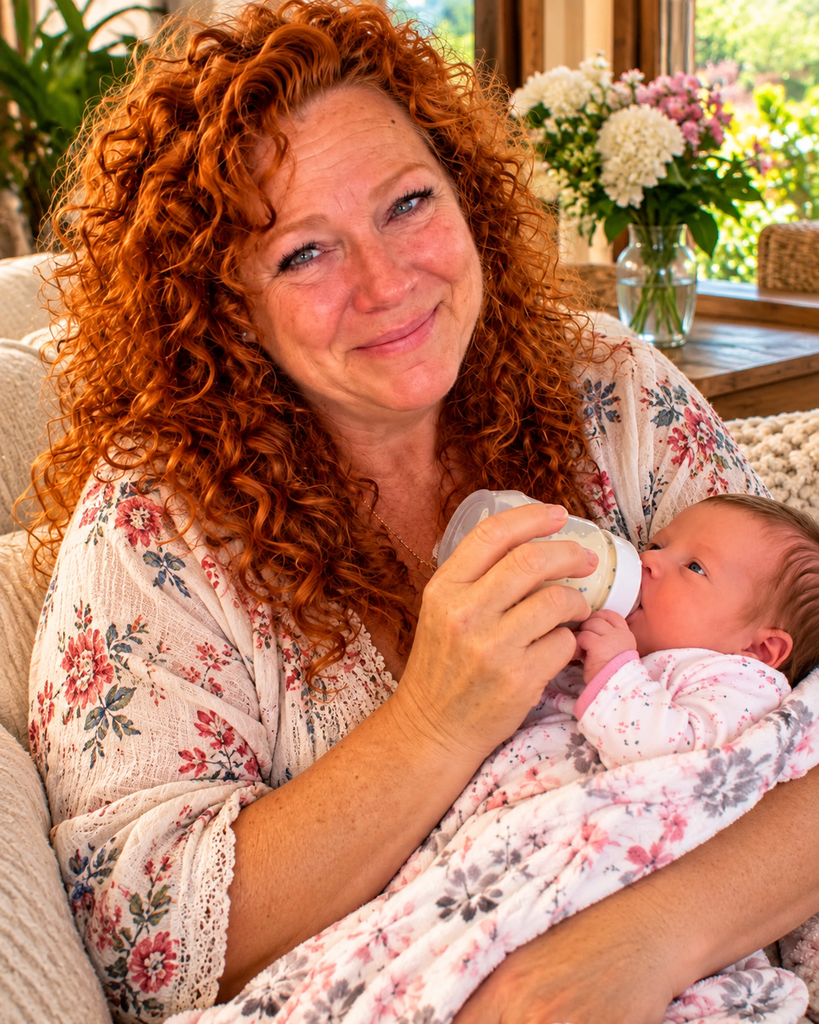
Still, when we learned we were expecting a daughter, something changed in the atmosphere of our home.
The boys immediately began making plans.
Eight-year-old Noah announced that he would teach his sister how to ride a bicycle. Six-year-old Ethan decided she needed a stuffed rabbit because, according to him, “babies definitely like rabbits.” Four-year-old Ben mostly wanted to know whether she would be allowed to sleep in his room.
Michael laughed whenever they argued about who would be the best big brother.
I watched them and tried to memorize those evenings.
After three sons, a daughter felt like the beginning of a new chapter.
We had no idea how differently that chapter would begin.
The Longest Night
Labor started shortly after midnight.
At first, I tried to convince myself that the contractions were nothing serious. By two in the morning, I was gripping the kitchen counter while Michael rushed around looking for a hospital bag that had been sitting beside the front door for two weeks.
My sister came to stay with the boys, and we drove to the hospital through nearly empty streets.
The delivery was exhausting but uncomplicated.
Hours later, I heard the sound I had been waiting for.
A baby’s cry.
Michael was beside me, holding my hand.
“She’s here,” he whispered.
I began crying before I even saw her.
A nurse wrapped our daughter in a blanket and, after the initial examinations, Michael carefully brought her toward me.
There are moments that remain impossibly clear even years later. I remember the warmth of the room. I remember Michael’s exhausted smile. I remember looking down and seeing an impossibly small face beneath a knitted hospital cap.
We named her Clara.
I touched one of her hands.
Her fingers closed around mine.
That was when all the exhaustion disappeared beneath a wave of happiness so powerful that I could barely speak.
“You have three brothers waiting for you,” I whispered.
Michael sat beside me.
For several minutes, nothing existed outside that room.
Then I noticed the doctor.
The Look at the Door
Dr. Harris had been reassuring throughout the delivery. He was calm, practical, and never dramatic.
Now he stood near the doorway with a completely different expression.
He looked at Clara.
Then at Michael.
Then at me.
I felt my stomach tighten.
“Is something wrong?” I asked.
He didn’t answer immediately.
Instead, he stepped farther into the room and quietly asked whether he could speak with Michael and me privately.
The happiness I had felt seconds earlier was suddenly mixed with fear.
I pulled Clara closer.
“Tell me now,” I said.
The doctor sat down.
He explained that during the routine examination after birth, the medical team had noticed something they wanted to investigate further. He was careful not to present a diagnosis before the necessary tests had been completed.
That distinction mattered, although at that moment I was too frightened to appreciate it.
I heard words such as “additional assessment” and “specialist.”
What I understood was much simpler.
Something might be wrong with my daughter.
When Minutes Become Hours
Anyone who has waited for medical information about a child knows how strangely time can behave.
Ten minutes can feel like an afternoon.
Every person who enters the room becomes someone whose facial expression you try to interpret before they speak.
I watched nurses constantly.
If they smiled, I wondered whether they were trying to reassure me.
If they looked serious, I became convinced they knew something terrible.
Michael tried to remain calm.
“We don’t know anything yet,” he kept saying.
He was right.
But uncertainty has its own weight.
I found myself replaying the pregnancy in my mind. Had I missed something? Had I done something wrong? Was there a moment when I should have noticed a warning?
Those questions were emotional reactions, not evidence. The doctors had not suggested that I had caused anything.
Still, fear does not always wait for logic.
At one point, Michael gently took my hand.
“Whatever they tell us,” he said, “she’s still Clara.”
I looked down at our sleeping daughter.
That sentence became the first thing that made sense.
The Conversation We Had Feared
Later that day, we met with a specialist.
The initial concern, she explained, required further investigation. Some physical findings in newborns can be harmless variations; others may be associated with conditions that require monitoring or treatment. It would have been irresponsible to make sweeping conclusions from appearance alone.
More examinations would be necessary.
For the first time since the doctor had approached us, I realized that we had mentally jumped from “the doctors noticed something” to “our daughter’s entire future has changed.”
Those were not the same thing.
Medicine often involves uncertainty, particularly in the first hours of a newborn’s life. Doctors may investigate something precisely because they do not yet know whether it is significant.
That did not eliminate our fear, but it gave it boundaries.
We were dealing with a question, not yet an answer.
Over the following days, Clara underwent additional evaluations. Some results arrived quickly. Others required more patience.
Eventually, the doctors explained what they knew and what they still could not predict.
Clara had a medical condition that would require specialist follow-up as she grew. It was not something that could be reduced to one dramatic prediction about her future. Her development would need to be observed, and her care would depend on her individual needs.
I remember waiting for the specialist to tell us what Clara’s life would look like.
Instead, she said something much more useful.
Nobody could write her entire future from a newborn examination.
Bringing Her Home
When we finally returned home, our three sons were waiting near the door.
Noah tried to act mature but could not stop smiling.
Ethan appeared with the stuffed rabbit he had chosen weeks earlier.
Ben immediately asked whether Clara could play with him.
“She mostly sleeps right now,” Michael explained.
Ben looked disappointed.
“Tomorrow?”
“Probably still sleeping.”
He considered this carefully.
“Okay. I’ll wait.”
Watching them meet their sister was unexpectedly grounding.
The boys knew nothing about the frightening conversations we had been having with doctors.
They did not look at Clara and see a diagnosis.
They saw their sister.
Noah wanted to hold her. Ethan worried that the blanket was not warm enough. Ben counted her fingers twice and proudly announced that she had the correct number.
For several days, I had been thinking almost entirely about everything that could happen.
My sons were interested in what was happening now.
There was wisdom in that.
Learning Not to Live Inside a Prognosis
The months that followed included appointments, questions, and more medical vocabulary than I had ever expected to learn.
There were difficult days.
There were also completely ordinary ones.
Clara cried when she was hungry. She fell asleep against Michael’s chest. She eventually learned to recognize her brothers’ voices, although their attempts to entertain her were often loud enough for the neighbors to recognize them too.
Slowly, we stopped treating every moment as evidence about the future.
That change was important.
When a child receives a diagnosis or requires additional medical care, families can understandably become consumed by milestones and predictions. Is development happening quickly enough? What does this symptom mean? What will happen next year?
Medical guidance matters, and ignoring professional advice would have been foolish.
But a childhood cannot consist only of appointments.
Clara was not a medical project.
She was a child.
The Question I Once Asked
During those first frightening hours in the hospital, I desperately wanted someone to answer one question:
“Will she be okay?”
Years later, I understand why no responsible doctor could give me the simple guarantee I wanted.
None of us receives such a guarantee about our children.
Parents make plans because planning gives us a sense of control. We imagine school, birthdays, friendships, graduations, careers, relationships, and countless other milestones.
Then life reminds us that children are not stories whose endings are written at birth.
They become themselves gradually.
The doctor standing in the doorway that day did change the atmosphere of what had been one of the happiest moments of my life. But he did not destroy that happiness.
He simply introduced uncertainty earlier than we expected.
And uncertainty, I eventually learned, does not cancel love.
The Moment I Remember Differently Now
When I think back to Clara’s birth, the doctor’s serious expression is no longer the strongest memory.
I remember Michael placing her in my arms.
I remember her fingers wrapping around mine.
I remember three impatient boys waiting at home to meet the sister they had discussed for months.
Most of all, I remember something Michael said while we were waiting for answers:
“She is still Clara.”
It sounded almost too simple at the time.
It became the lesson that carried us forward.
A diagnosis can provide important information. It can help doctors choose treatments, help parents understand risks, and connect families with appropriate support.
But it cannot summarize a human being.
Our daughter arrived with questions we had never expected to ask.
She also arrived as the person we had been waiting to meet.
And in the end, that was the beginning of her story—not the conversation at the hospital door.