I was wrong.
It began on an ordinary Saturday afternoon when my daughter, Hannah, called me from a supermarket parking lot. She was twenty-two at the time and had stopped to buy groceries on her way home from work.
When I answered, she wasn’t speaking normally.
“Mom,” she whispered. “I need you to come here.”
“What happened?”
“I think there’s a baby.”
For a moment, I thought I had misunderstood her.
Then she told me about the shopping cart.
Someone had left it near the far edge of the parking lot, away from the store entrance. Hannah had been walking toward her car when she noticed movement beneath a thin blanket inside it.
She assumed someone had forgotten a bag.
Then she heard a cry.
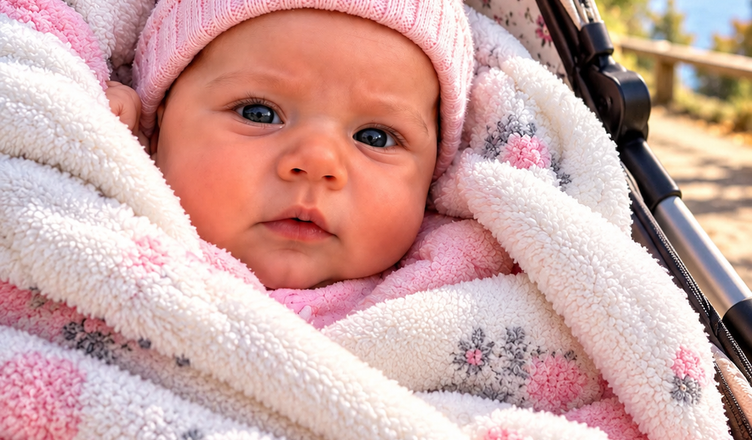
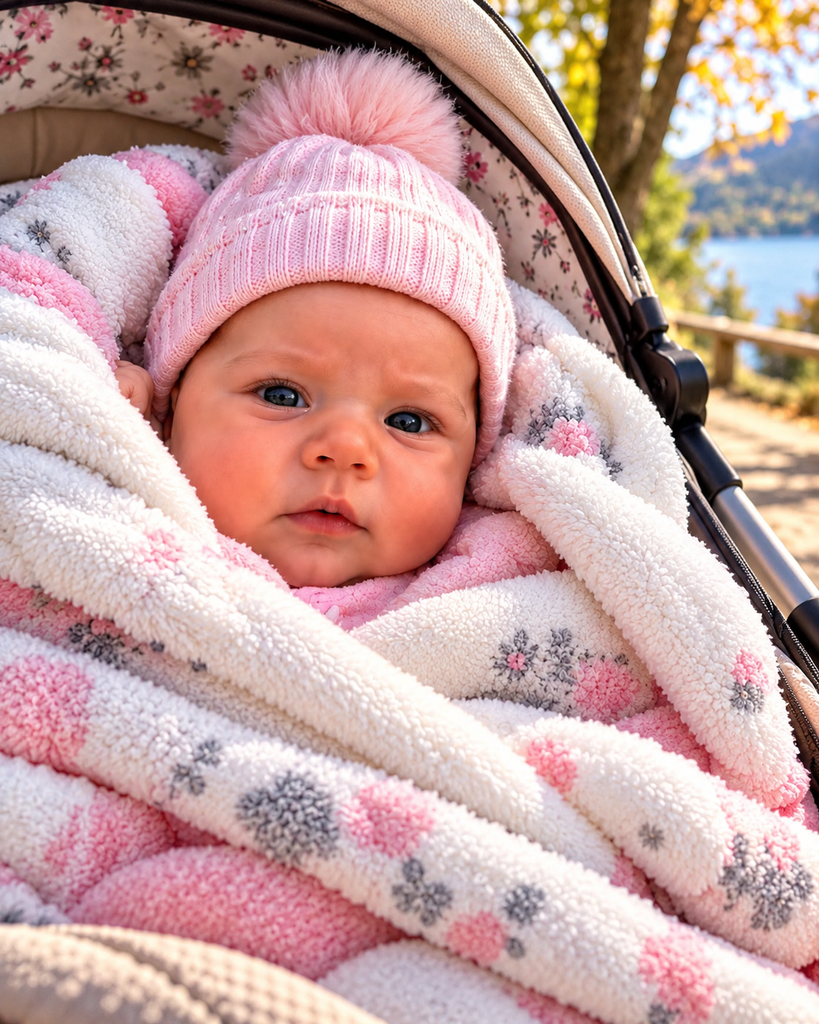
Under the blanket was a newborn girl.
There was no adult nearby.
Hannah immediately called emergency services and stayed beside the cart until help arrived. She did not pick the baby up unnecessarily, but she stood close, speaking softly to her while waiting for paramedics.
By the time I reached the parking lot, police vehicles were already there.
I will never forget seeing that tiny face.
None of us knew then that the child in that shopping cart would eventually become part of our family.
A Child Without a Story
The authorities began trying to establish where the baby had come from and who had left her.
For privacy reasons and because this story is presented independently rather than as a documented account of a specific real case, the details that followed should be understood as part of the fictional narrative rather than claims about an actual adoption proceeding.
The baby was healthy enough to leave the hospital after medical observation, but identifying her parents proved far more complicated.
Hannah could not stop thinking about her.
She called me constantly.
“Do you think she’s frightened?”
“Someone is taking care of her,” I kept saying.
But I knew what Hannah was really asking.
What happens to a child when nobody comes back?
Eventually, through the appropriate child-welfare process, Hannah became involved in the possibility of providing temporary care.
Temporary became months.
Months became something deeper.
By then, the baby had a name.
We called her Sophie.
How a Stranger Becomes Family
There was no single moment when Sophie suddenly became ours.
It happened gradually.
It happened during sleepless nights when Hannah walked through the living room with Sophie against her shoulder.
It happened when my husband learned that singing badly was somehow the fastest way to make her stop crying.
It happened when she smiled at Hannah for the first time.
By her first birthday, imagining the house without her felt impossible.
Hannah eventually completed the legal process necessary to become Sophie’s parent. I became the grandmother who always had snacks in her handbag, and my husband became the person Sophie ran toward whenever she wanted someone to repair a toy.
We did not pretend her beginning had never happened.
As Sophie grew old enough to understand, Hannah explained her story carefully and in age-appropriate ways.
She knew she had been found as a newborn.
She knew Hannah had discovered her.
She knew another woman had given birth to her.
What we could not tell her was why she had been left behind.
We simply did not know.
“Maybe she couldn’t take care of me,” Sophie once said when she was eight.
“Maybe,” Hannah replied.
“Was she bad?”
Hannah shook her head.
“We don’t know enough to say that.”
I was proud of her answer.
It would have been easy to invent a villain. Reality is rarely so convenient.
Eleven Years Later
By eleven, Sophie was energetic, curious, and increasingly independent.
She loved animals, hated mushrooms, and possessed an almost supernatural ability to locate birthday presents no matter where Hannah hid them.
The shopping cart had become part of her history rather than the center of her identity.
Then, one autumn afternoon, someone knocked on my door.
Hannah and Sophie were expected later for dinner, so I assumed they had arrived early.
I opened the door without checking.
A woman stood on the porch.
She appeared to be in her late thirties or early forties. Her hands were clasped tightly together, and she looked as though she had rehearsed what she intended to say.
“Are you Margaret?” she asked.
“Yes.”
She swallowed.
“My name is Rebecca. I think you know my daughter.”
I immediately felt uneasy.
“Who?”
“Sophie.”
Everything inside me seemed to stop.
Then I looked properly at her face.
And I knew her.
The Face From Eleven Years Earlier
I had seen her only once.
Eleven years earlier, while police were still gathering information in the supermarket parking lot, I had noticed a young woman standing far beyond the emergency vehicles.
At the time, there had been nothing obviously remarkable about her.
She stood beside an older car and watched.
When an officer began walking in her direction, she got into the vehicle and drove away.
I had mentioned it to police.
I never learned whether the woman had any connection to the abandoned baby.
Over the years, the memory faded.
Now she was standing on my porch.
Older, thinner, and visibly terrified.
But I recognized her eyes.
“You were there,” I said.
Her face changed.
She did not ask what I meant.
She simply nodded.
What She Said Happened
I did not invite her inside immediately.
Instead, I called Hannah.
I also made one thing clear to Rebecca: appearing at our home did not give her an automatic right to contact Sophie. Whatever she wanted would have to be handled carefully and through appropriate legal and professional channels.
Rebecca agreed.
Then she began telling me her version of what had happened.
According to her, she had been nineteen when Sophie was born. She described an unstable situation, little money, and almost no reliable support. She said she had hidden much of her pregnancy and had panicked after giving birth.
Leaving the baby in the shopping cart, she said, had not been a carefully considered decision.
It had been the action of a frightened young woman who believed she had run out of choices.
“I watched until someone found her,” she said.
“Hannah,” I replied.
She nodded.
“I saw her stop.”
“Then why didn’t you come back?”
Rebecca looked down.
“Because the police arrived. And I was scared.”
Her explanation answered one question while creating a dozen more.
Fear might explain behavior.
It did not erase its consequences.
Hannah Had to Make a Different Decision
When Hannah arrived, she did not rush into the house.
She sat in her car for several minutes.
Eventually, she came inside alone. Sophie stayed with my husband, who had taken her out for dinner.
The first conversation between Hannah and Rebecca was painful.
Hannah wanted evidence.
She wanted to know why Rebecca had waited eleven years.
Most importantly, she wanted to know what Rebecca expected now.
“I don’t want to take her,” Rebecca said.
Hannah stiffened.
“She isn’t something anyone can take.”
“I know.”
Rebecca explained that she had spent years wondering about the child. Eventually, she had begun searching more actively and had managed to trace enough information to find our family.
She said she wanted Sophie to know that she had not been forgotten.
Hannah responded quietly.
“You left her in a parking lot.”
Rebecca began crying.
“Yes.”
There was no sentence capable of making those two truths fit neatly together.
The Person Who Mattered Most
For the first few days, everyone focused on Rebecca.
Then Hannah said something that corrected our perspective.
“This isn’t about what she wants. And it isn’t about what I want. It’s about what Sophie can handle.”
She was right.
Sophie was not the prize at the end of someone else’s redemption story.
She was an eleven-year-old child whose emotional safety mattered more than the adults’ need for answers.
Hannah spoke with professionals familiar with adoption and family reunification before deciding how to proceed.
Eventually, Sophie was told that her biological mother had made contact.
She was quiet for a long time.
Then she asked the question none of us could answer for her.
“Do I have to meet her?”
“No,” Hannah said. “You don’t have to do anything immediately.”
That seemed to relieve her.
Several days later, Sophie changed her mind.
“I think I want to see her.”
Their First Meeting
The meeting did not happen dramatically on our doorstep.
It took place later, after preparation, in a controlled environment where Sophie could leave whenever she wanted.
Rebecca cried when she saw her.
Sophie did not.
She studied the woman carefully.
I wondered whether she was searching for herself in Rebecca’s face.
After a while, Sophie asked, “Why did you leave me?”
There it was.
Eleven years reduced to six words.
Rebecca did not attempt to make what she had done sound noble.
She told Sophie she had been frightened and had made a decision she regretted.
“I should have found a safer way,” she said.
Sophie listened.
Then she asked another question.
“Did you ever come back?”
Rebecca told her the truth as she had told it to us: she had remained nearby long enough to see Hannah discover the baby.
Sophie looked toward Hannah.
“So you were both there?”
Hannah nodded.
That detail seemed to affect Sophie more than anything else.
One woman had watched from a distance.
The other had walked toward her.
Family Is Not Erased by New Information
Rebecca’s arrival did not transform everything overnight.
There was no magical reconciliation.
There was also no dramatic rejection.
There were simply conversations.
Some were uncomfortable. Others were surprisingly ordinary.
Contact developed slowly and only within boundaries that prioritized Sophie.
Most importantly, Sophie did not suddenly stop belonging to the family that had raised her.
Learning where she came from did not erase where she had grown up.
That distinction mattered.
People sometimes talk about biological and adoptive families as though recognizing one requires diminishing the other.
Sophie’s experience taught us something different.
Identity can hold more than one truth.
Rebecca was the woman who gave birth to her.
Hannah was the woman who found her, raised her, comforted her, attended school meetings, celebrated birthdays, and stayed awake beside her bed when she was sick.
Both facts belonged to Sophie’s history.
Neither needed to become a weapon against the other.
The Shopping Cart Was Only the Beginning
For years, I thought Sophie’s story began with abandonment.
I no longer describe it that way.
Yes, someone left a newborn alone in a shopping cart, and nothing can make that decision safe or harmless.
But something else happened in the same place.
My daughter noticed movement beneath a blanket.
She could have assumed someone else would deal with it.
Instead, she stopped.
That small decision eventually shaped all our lives.
Eleven years later, another woman arrived carrying the missing part of Sophie’s history.
Her appearance did not provide a simple ending. Real families rarely receive those.
What it gave Sophie was information.
The rest belonged to her.
Someday she may decide she wants a close relationship with her biological mother. She may prefer distance. Her feelings may change as she grows older.
Those choices should be hers.
Because the most important lesson we learned was not that every mystery eventually receives a perfect explanation.
It was that a child’s past matters, but it does not have to dictate her future.
Sophie was once the newborn nobody in a supermarket parking lot could identify.
Eleven years later, she knew exactly who she was.
Not because every question had finally been answered, but because she had grown up surrounded by people who had never made her wonder whether she was wanted.