
That did not mean I was unhappy. I had friends, routines I enjoyed, a small house I had finally arranged exactly the way I wanted, and adult children who had built lives of their own. I had learned how to spend an evening alone without calling it loneliness and how to make plans without waiting for someone else to join me.
Romance belonged to another chapter, or so I thought.
Then I met Thomas.
I wasn’t looking for him. He wasn’t searching for me either. Perhaps that was one reason everything between us felt so uncomplicated at first.
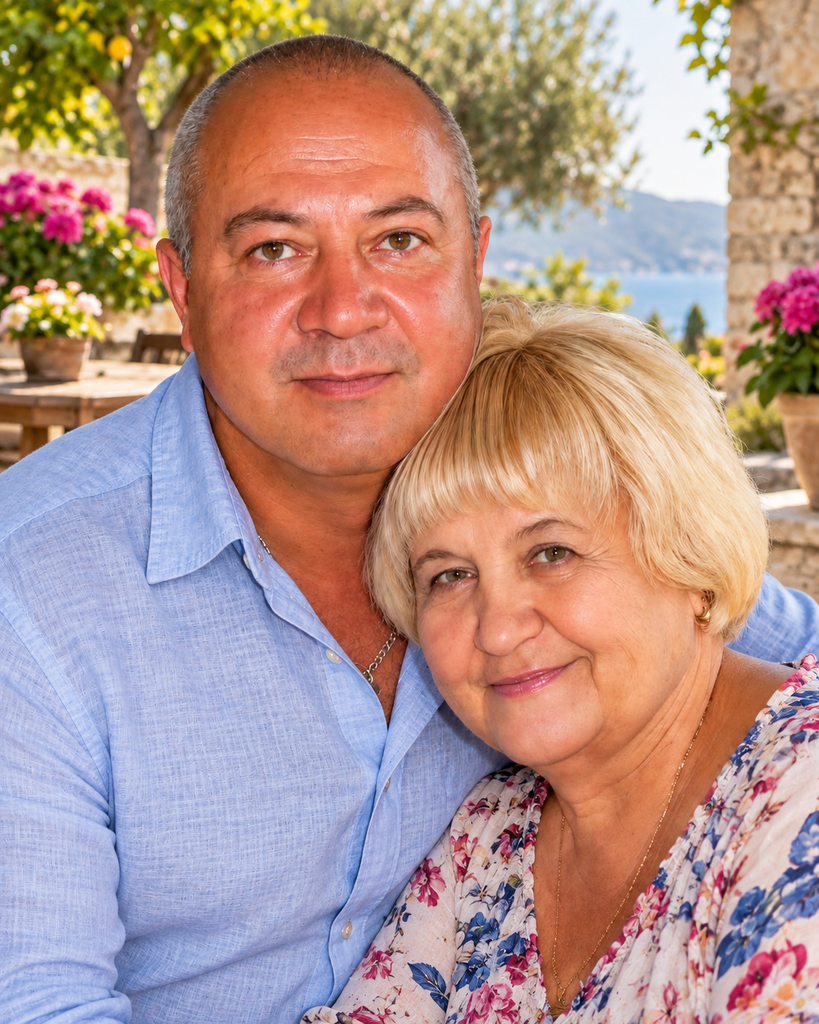
We met at a community gardening event on a Saturday morning. I had volunteered because my friend canceled at the last minute and I didn’t want to waste the day sitting at home. Thomas was standing beside a collection of plants, reading the labels with such concentration that I assumed he knew what he was doing.
He didn’t.
“You look like an expert,” I told him.
“That’s because I haven’t touched anything yet,” he replied.
I laughed.
That was the beginning.
Love Was Different This Time
Dating at 65 was nothing like dating when I was young.
There was less performance.
Neither of us had much interest in pretending to be more impressive than we were.
Thomas knew that I snored occasionally. I knew he could spend twenty minutes looking for glasses that were already on his head.
We both had histories.
I had been married before and had two adult children, Emily and Daniel. Thomas was a widower with a son, Michael, and a daughter, Rachel.
We weren’t trying to erase our previous lives.
We talked about them.
That became important.
There is sometimes an assumption that finding love later in life requires closing the door on everything that came before. For us, the opposite was true. Our pasts had shaped us, and acknowledging them made the relationship more honest.
Within months, Thomas had become the first person I wanted to call when something funny happened.
Eventually I realized that my life no longer felt merely comfortable.
It felt larger.
The Proposal I Never Expected
A little more than two years after we met, Thomas asked me to marry him.
There was no restaurant filled with strangers watching.
No photographer hiding behind a tree.
We were at home.
I was cutting vegetables while he dried dishes.
He suddenly put down the towel.
“I’ve been thinking,” he said.
“That sounds dangerous.”
He smiled.
Then his expression became serious.
“I don’t want to keep calling you my girlfriend when what I really mean is that you’re my family.”
I stopped cutting.
He reached into his pocket.
The ring was simple.
So was the question.
“Will you marry me?”
I said yes before he had completely finished asking.
Then I laughed.
Then I cried.
Then Thomas started crying too.
For several hours, I felt like a teenager.
By the next morning, reality arrived.
We had to tell our children.
Why Were We So Nervous?
It seemed ridiculous.
We were adults.
More than adults, really. We were parents of adults.
We did not need permission to marry.
Still, our children mattered to us.
Both families had experienced enough change already, and marriage would connect them in a new way.
There were practical questions too.
Where would we live?
Would we combine finances?
What would happen to our homes?
How would inheritance be handled?
Would our children worry that one family was somehow taking something from the other?
Love can be emotionally simple while marriage remains legally and financially complicated.
That is particularly true later in life, when people may already own property, have retirement savings and want to protect arrangements intended for children or grandchildren.
Thomas and I had discussed those issues privately.
Now we needed to discuss the marriage itself.
We Invited Everyone to Dinner
We decided to tell all four children together.
In retrospect, that may have increased the tension.
Emily arrived first and immediately asked why I had cooked enough food for an army.
Michael brought wine.
Rachel arrived with her husband.
Daniel was twenty minutes late and apologized while still removing his coat.
Thomas and I kept exchanging glances.
Nobody noticed.
After dinner, I brought out coffee but forgot the sugar.
Then I forgot the cups.
Emily stared at me.
“Mom, are you okay?”
“Yes.”
“You’re acting weird.”
Thomas rescued me.
“We have something we’d like to tell everyone.”
The room became quiet.
I reached under the table and took his hand.
“We’re getting married.”
Nobody spoke.
Not for three seconds.
Not for five.
By ten seconds, I was beginning to regret every decision I had made since Saturday morning two years earlier.
Then Rachel put down her glass.
“You’re serious?”
“Yes,” Thomas said.
Her expression was impossible to read.
The Reaction Wasn’t What I Expected
I had imagined surprise.
Perhaps questions.
I had even prepared myself for discomfort.
What I had not expected was Emily pushing back her chair and leaving the room.
“Emily?”
She continued toward the hallway.
I followed her.
She stopped near the front door.
Her eyes were wet.
“Why didn’t you tell me?”
“I just did.”
“No. Why didn’t you tell me you were thinking about this?”
I didn’t know how to answer.
She was 39 years old, yet for a moment I could see the little girl who once believed every major decision in my life somehow included her.
“I wasn’t hiding it from you.”
“It feels like you were.”
Then she said what she had apparently been carrying for years.
“What happens to Dad?”
The question caught me completely off guard.
Her father and I had been divorced for many years. He had since died, and although our marriage had ended long before his death, he remained her father.
“Nothing happens to Dad,” I said.
“You’re marrying someone else.”
“Yes.”
“It feels like we’re replacing everything.”
Suddenly, I understood.
This was not really about the wedding.
Adult Children Can Still Grieve Old Families
When parents separate, become widowed or form new relationships, their adult children may respond in ways that surprise everyone involved.
Age does not necessarily eliminate emotional attachment to the family structure someone grew up with.
A parent’s new marriage can revive old grief.
It can also create loyalty conflicts.
Accepting a stepparent may feel, irrationally but genuinely, like betraying another parent.
In our fictional family’s case, Emily wasn’t trying to control me.
She was frightened that accepting Thomas meant surrendering the last version of the family she remembered.
Understanding that changed the conversation.
I stopped defending my decision.
Instead, I listened.
There Were Other Concerns Too
Back in the dining room, the others had begun talking.
Michael was worried about finances.
He tried to phrase the question carefully.
“Have you two talked about the legal side?”
Thomas smiled.
“Yes.”
“Like houses and everything?”
“Yes.”
Michael looked embarrassed.
“I don’t want you thinking I’m asking about inheritance.”
“You are asking about inheritance,” Thomas said.
Michael turned red.
“And that’s okay.”
That surprised everyone.
Thomas explained that later-life marriage deserved practical planning precisely because both partners had existing families.
We had already decided to consult appropriate professionals about wills, property ownership and other arrangements rather than relying on assumptions.
Marriage did not require pretending money did not exist.
Clear planning could actually prevent resentment later.
Then Daniel Started Laughing
Until then, my son had barely spoken.
Suddenly he laughed.
Everyone turned toward him.
“Sorry,” he said. “It’s just incredible.”
“What is?”
“You’ve spent my entire life telling me not to make important decisions based on what other people think.”
I stared at him.
“And now you’re sitting here terrified because you’re worried what we’re going to think.”
He had a point.
Then he raised his glass.
“I think you should get married.”
That broke the tension.
Not completely.
But enough.
Acceptance Did Not Happen in One Evening
It would make a convenient story if everyone immediately hugged us and the rest of the night became a celebration.
Real families are rarely that tidy.
Emily needed time.
Michael had more questions.
Rachel worried about where holidays would be held.
There were conversations over the following weeks that were uncomfortable but necessary.
Thomas and I also learned something important.
We did not need our children’s permission.
But that did not mean their feelings were irrelevant.
There is a difference between allowing adult children to control a parent’s life and making room for them to process a major change.
We could maintain our decision while still listening.
Love After 60 Comes With History
Young couples often begin by building a life together.
Older couples may begin by combining two lives that are already full.
There can be children, grandchildren, former spouses, memories, houses, possessions, traditions and financial responsibilities.
That does not make later-life relationships less romantic.
It makes them layered.
Thomas didn’t enter an empty space in my life.
Neither did I enter an empty space in his.
We both arrived carrying decades of experiences.
The challenge was not to throw those histories away.
It was to make enough room for something new.
The Wedding Became Smaller Than Planned
We eventually decided on a modest ceremony.
No enormous reception.
No elaborate decorations.
Just family, close friends and a garden venue we both loved.
Emily surprised me by asking whether she could help choose my dress.
I did not mention how much that meant to me.
At the ceremony, Thomas’s daughter stood beside him.
Daniel walked me down the aisle, although I reminded him that technically I was perfectly capable of walking by myself.
“I know,” he said. “Let me do it anyway.”
Emily cried before I did.
When I reached Thomas, I looked around at our strange new family.
Nobody had been replaced.
Nobody had been erased.
The people who were gone were still part of our histories.
Our children were still our children.
And Thomas and I were allowed to begin something new.
Happiness Does Not Belong Only to the Young
There is a persistent idea that romantic love becomes less important with age.
Older people are expected to value companionship but somehow abandon passion, excitement and the desire for new beginnings.
Life does not work that way.
A person can fall in love at 25.
They can fall in love at 45.
They can fall in love at 65 or 85.
The relationship may look different because the people involved have changed, but the emotional significance can be just as powerful.
Perhaps later love even carries a particular kind of clarity.
You understand how quickly years pass.
You know relationships require effort.
You know that nothing is guaranteed.
That knowledge can make ordinary days together feel more valuable.
The Conversation I Had Feared Became Necessary
Looking back, I am glad our children did not simply smile and pretend everything was easy.
Their questions forced us to discuss things we might otherwise have postponed.
They made us think about finances, family traditions and the emotional consequences of combining two families.
Most importantly, they reminded us that marriage does not happen in isolation.
Two people make the commitment, but the change can affect many others.
Still, there was one boundary Thomas and I never surrendered.
Our children could have feelings about our marriage.
They could ask difficult questions.
They could need time.
But the final decision belonged to us.
A New Chapter Does Not Erase the Previous Ones
That may be the greatest misconception about finding love later in life.
Starting again does not mean pretending the past never happened.
The heart is not a house with only one room.
Loving someone new does not automatically erase someone who came before.
Creating new traditions does not destroy old memories.
And becoming a bride at 65 does not require behaving as though you are 25.
It simply means life has offered another chapter.
When Thomas asked me to marry him, I thought saying yes would be the difficult part.
It wasn’t.
The difficult part was believing that I was still allowed to choose something new without apologizing for it.
Our children eventually understood.
More importantly, so did I.
There is no age at which a person becomes too old for companionship, commitment or the excitement of building a future with someone.
Sometimes the future simply arrives later than expected.
And sometimes, at 65, saying yes is not an attempt to start life over.
It is a decision to keep living the life you already have — with someone you love beside you.