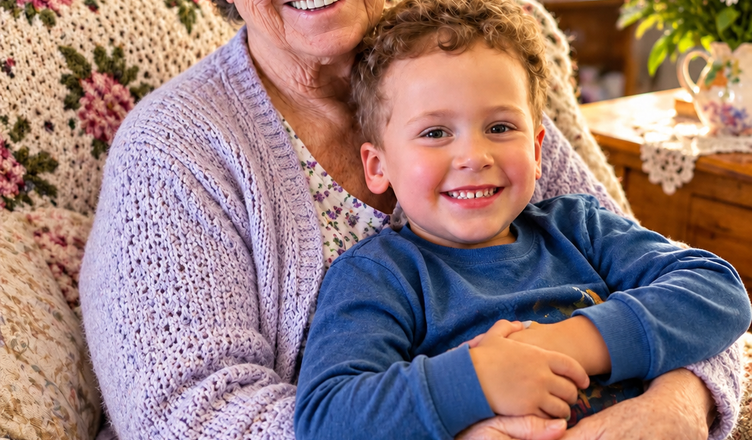
The first time my five-year-old son came home wearing his shirt inside out, I laughed.
Oliver had always been independent. He insisted on dressing himself, even when that meant mismatched socks, backward trousers, or shoes on the wrong feet.
But when it happened four Sundays in a row, I stopped finding it funny.
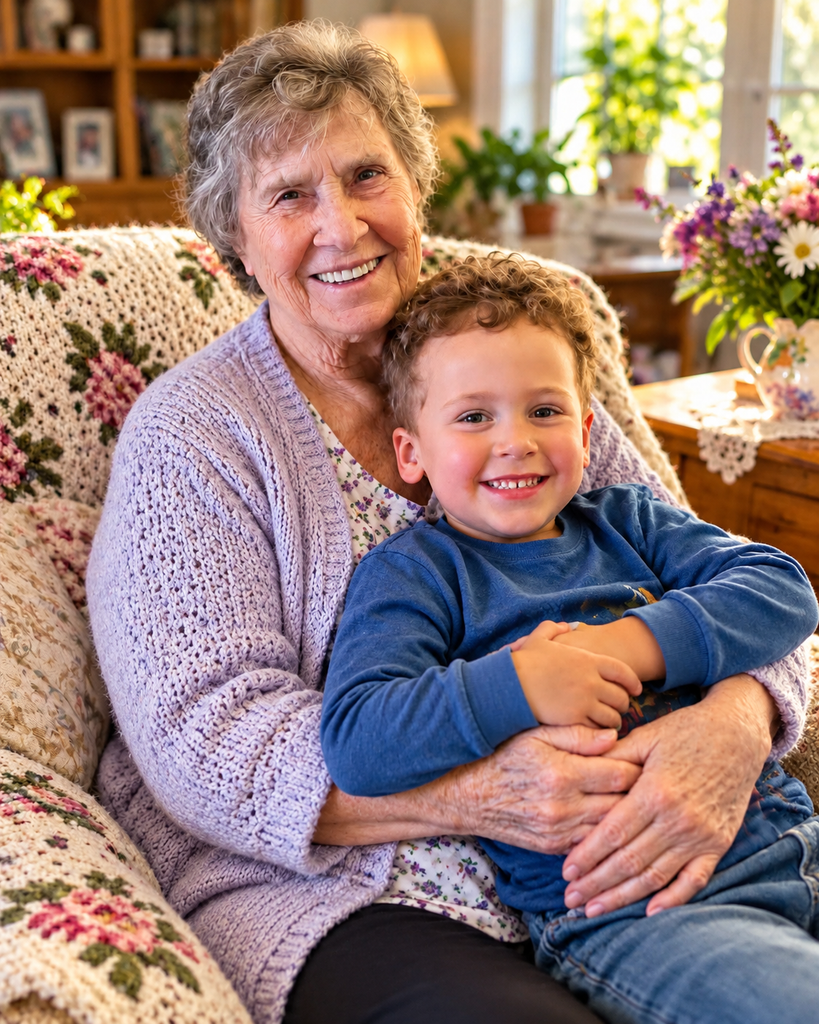
His shirt was inside out. So were his trousers. Even his socks had been turned around.
And whenever I asked why, he gave me the same answer.
«Grandma says I’m not supposed to tell.»
My mother had been looking after Oliver every Sunday for nearly six months.
I’d never questioned the arrangement.
She was a retired primary school teacher, a devoted grandmother, and the woman who had raised me after my father died.
But something was happening in her house.
And my little boy was frightened to talk about it.
I discovered the truth on a rainy afternoon when I opened a bedroom door my mother had kept locked for years.
What I found inside changed my understanding of our family forever.
My mother, Margaret, was seventy-one and lived alone in the house where I grew up.
She was organized to an almost exhausting degree.
Her kitchen cupboards were labeled. Her towels were folded into perfect rectangles. She kept birthday cards in a drawer sorted by month.
When Oliver was born, she became his most enthusiastic admirer.
She knitted blankets, bought picture books, and insisted on keeping a supply of his favorite biscuits.
After my husband, Daniel, began working weekends, Mom offered to watch Oliver on Sundays so I could manage my shifts at the pharmacy.
It seemed like a wonderful solution.
Oliver loved visiting her.
At least, he had at first.
They baked cakes, fed birds in the garden, and built elaborate train tracks across the sitting room.
Then the strange clothing began.
At first, I assumed Oliver was experimenting with dressing himself.
But when I asked him directly, his expression changed.
He lowered his head.
«Grandma says it’s our secret.»
I knelt beside him.
«What secret, sweetheart?»
He shook his head.
«She’ll be sad if I tell.»
That was the moment I began to worry.
I called Mom the following morning.
«Why does Oliver keep coming home with his clothes inside out?»
She laughed.
«Oh, children do the funniest things.»
«He says you told him not to tell me.»
There was a pause.
«He’s probably misunderstood something.»
«What could he have misunderstood?»
«Honestly, Rebecca, you’re making a fuss over nothing.»
Then she changed the subject.
Over the next two weeks, I watched Oliver carefully.
He didn’t have visible injuries.
He ate normally and slept well.
But whenever Sunday approached, he became unusually quiet.
One Saturday evening, I told him he didn’t have to visit Grandma the next day.
He looked relieved.
Then he asked, «Will she be angry?»
I felt a cold knot form in my stomach.
«No, darling. And even if she is upset, that’s not your responsibility.»
He climbed into my lap.
I held him for a long time.
The following Wednesday, Mom called to say she’d misplaced her glasses and wanted help finding them.
Oliver and I went over after lunch.
Mom had a doctor’s appointment later that afternoon, so she asked us to wait while she collected her things.
Before leaving, she reminded Oliver not to go upstairs.
He nodded immediately.
I noticed how quickly he agreed.
After Mom drove away, I searched the sitting room and kitchen for her glasses.
Then I went upstairs.
Oliver followed me reluctantly.
At the end of the hallway was the bedroom that had belonged to my father.
Mom had kept it locked since his death.
As a child, I’d been told it contained old furniture and paperwork.
I’d never been allowed inside.
Now I noticed something strange.
A small pile of children’s clothing lay beside the door.
There was a blue sweater, a pair of socks, and a tiny striped shirt.
All of them were inside out.
I reached for the key hanging on a hook nearby.
Oliver grabbed my hand.
«Mommy, please don’t.»
His voice trembled.
I crouched beside him.
«Why not?»
He looked toward the stairs.
«Grandma says the room is for the other boy.»
I stared at him.
«What other boy?»
He began crying.
I didn’t open the door immediately.
Instead, I took Oliver downstairs and sat with him on the sofa.
I told him he wasn’t in trouble.
I explained that grown-ups shouldn’t ask children to keep secrets that make them frightened or uncomfortable.
Then I asked whether anyone had hurt him.
He shook his head.
«Did Grandma make you do something you didn’t want to do?»
He hesitated.
«She makes me change.»
«Change your clothes?»
He nodded.
«She says I have to wear them the wrong way so the other boy knows I’m not him.»
I tried to understand.
«Who is the other boy?»
Oliver whispered, «The one in the pictures.»
I felt my heart pounding.
He told me that Grandma sometimes took him upstairs and asked him to stand outside the locked bedroom.
She made him turn his clothes inside out.
Then she spoke to someone through the door.
Oliver couldn’t understand what she was saying.
Sometimes she cried.
Sometimes she called him by another name.
«She says it’s a game,» he told me. «But I don’t like it.»
I hugged him.
«Thank you for telling me.»
Then I called Daniel and asked him to come over.
I didn’t want Oliver to be alone while I investigated.
When Daniel arrived, I explained what Oliver had said.
He took our son into the garden.
I went upstairs.
The key turned easily.
Inside, the curtains were closed and the air smelled of dust and lavender.
The room was arranged like a child’s bedroom.
A narrow bed stood against the wall.
There were toy cars on a shelf, a wooden rocking horse, and a schoolbag hanging from a chair.
Everything looked decades old.
On the bedside table stood a framed photograph.
A little boy with dark hair smiled at the camera.
He looked about five.
Underneath the photograph was a name.
Thomas, 1979.
I had never heard of Thomas.
Beside the bed was a wardrobe.
Inside hung children’s clothes, carefully arranged by size.
Some were turned inside out.
On a small desk lay a notebook filled with dates.
Every Sunday for the past six months had been recorded.
Next to each date, Mom had written the same sentence.
He came back today.
My hands began shaking.
Then I found a box of letters.
The first was addressed to my father.
The handwriting belonged to my mother.
I know you think we should stop talking about Thomas, but I can’t pretend he never existed.
I sat on the bed and began reading.
Thomas had been my older brother.
He was born seven years before me.
When he was five, he disappeared during a family holiday.
My parents had taken him to a seaside town.
One afternoon, while my father was buying ice cream, Thomas wandered away from the beach.
Despite an extensive search, he was never found.
The police investigated, but no confirmed explanation emerged.
My mother never recovered from the loss.
She became withdrawn and struggled with severe anxiety.
Two years later, I was born.
My father believed that focusing on their new baby would help Mom rebuild her life.
He persuaded her to pack away Thomas’s belongings.
They stopped mentioning him to friends.
Eventually, they moved to another town.
By the time I was old enough to ask about our family history, Thomas had disappeared from every conversation.
I grew up believing I was an only child.
But Mom had never stopped thinking about him.
She kept his room exactly as she’d imagined it should be.
And after Dad died, she began spending more time inside it.
When Mom returned from her appointment, I was waiting in the kitchen.
The photograph of Thomas lay on the table.
She stopped in the doorway.
For several seconds, she didn’t speak.
Then she sank into a chair.
«You opened the room.»
«Who was he, Mom?»
She covered her face.
«My little boy.»
I sat opposite her.
«Why didn’t you tell me I had a brother?»
She began crying.
«Your father thought it would be better if you didn’t know.»
«Better for whom?»
She didn’t answer.
I asked about Oliver.
Her expression changed.
«I never meant to frighten him.»
«Then why were you making him change his clothes?»
Mom stared at her hands.
She explained that Thomas had been wearing a red shirt on the day he disappeared.
For years, she dreamed about seeing him again.
In those dreams, his clothes were always inside out.
She had begun associating the image with the possibility of his return.
When Oliver turned five, the same age Thomas had been when he vanished, Mom started having those dreams again.
She convinced herself that a small ritual might somehow keep Oliver safe.
She made him reverse his clothes before leaving the house.
Then she stood outside Thomas’s room and whispered a prayer.
At first, Oliver thought it was a game.
But Mom became increasingly emotional.
She started calling him Thomas.
And she asked him not to tell me because she was afraid I’d stop the visits.
I was furious.
Not because my mother was grieving.
But because she’d involved my child in something he couldn’t understand.
«Oliver is not Thomas,» I told her.
She nodded through tears.
«I know.»
«He’s frightened, Mom.»
«I never wanted that.»
«But you kept doing it.»
She lowered her head.
For the first time in my life, I saw how deeply her grief had shaped her behavior.
I had always known Mom as a strict, controlled woman.
Now I understood that much of her need for order came from a loss she’d never been able to explain.
But understanding her pain didn’t mean excusing what she’d done.
I told her Oliver wouldn’t be staying alone with her for the time being.
She began crying harder.
«Please don’t take him away.»
«I’m not taking him away. I’m protecting him.»
Over the following weeks, I helped Mom arrange an appointment with a mental health professional experienced in grief and trauma.
She was reluctant at first.
She insisted she was too old to begin therapy.
But eventually, she agreed.
The counselor helped her talk about Thomas and the years she’d spent pretending he had never existed.
Mom also began sharing his story with me.
She showed me photographs from the seaside holiday.
She told me how Thomas loved collecting shells and hated having his hair washed.
He had a habit of hiding biscuits in his pockets.
He wanted to become a train driver.
I listened.
Sometimes I cried.
I felt grief for a brother I’d never known.
But I also felt angry that my parents had denied me the chance to know he existed.
Mom accepted that anger.
She didn’t ask me to forgive her immediately.
Daniel and I spoke with Oliver in simple, reassuring language.
We told him Grandma had been very sad about someone she lost long ago.
We explained that she had made a mistake by asking him to participate in something that frightened him.
We also made it clear that he had done nothing wrong.
He asked whether the other boy was a ghost.
I told him no.
Thomas was a real child who had disappeared many years earlier.
Nobody knew exactly what had happened to him.
«Will Grandma make me change my clothes again?» he asked.
«No,» I promised.
«And if anyone ever asks you to keep a secret that makes you uncomfortable, you can always tell us.»
Oliver seemed relieved.
Within a few weeks, his usual cheerful personality returned.
He stopped worrying about Sunday visits.
And he began asking questions about Thomas.
Three months later, Mom asked whether she could see Oliver again.
We agreed to meet at our house.
She arrived carrying a small wooden train.
It had belonged to Thomas.
She placed it on the table and looked at Oliver.
«I’m sorry I frightened you,» she said.
Oliver studied her carefully.
«Are you going to make me wear my shirt backward?»
Mom shook her head.
«Never again.»
He considered this.
Then he picked up the train.
«Can we play with this?»
Mom smiled through tears.
«Of course.»
They spent the afternoon building tracks across the living room floor.
I stayed nearby.
For the first time in months, their time together felt relaxed.
There were no secrets.
No strange rituals.
Just a grandmother and her grandson playing.
It has been almost a year since I opened the locked bedroom.
Mom is still receiving support.
She has difficult days, but she no longer hides Thomas’s existence.
She talks about him openly.
She has also begun sorting through his belongings, deciding what to keep and what to donate.
The bedroom door is no longer locked.
Sometimes she sits inside and looks at his photographs.
Other times she leaves it empty and spends the afternoon gardening.
Oliver visits her regularly, although we continue to supervise their time together.
He knows he can say no to anything that makes him uncomfortable.
And Mom respects that.
I have also contacted the local authorities to ask whether Thomas’s disappearance can be reviewed using modern investigative methods.
The original case remains unresolved.
We don’t know whether new information will ever emerge.
But I want my brother’s name to be remembered.
Last Sunday, Oliver came home from Grandma’s house wearing his shirt inside out.
For one terrible second, my stomach tightened.
Then he burst out laughing.
«Mommy, look! I did it myself!»
He explained that he’d been pretending to be a superhero whose costume was reversible.
I laughed with him.
Then I helped him turn the shirt around.
That small moment reminded me how much had changed.
A year earlier, the same sight would have filled me with fear.
Now it was simply a little boy being silly.
I still think about Thomas.
About the child who disappeared before I was born.
About the years my mother spent carrying his memory alone.
And about how easily grief can become something harmful when it remains hidden and untreated.
I wish my parents had told me the truth.
I wish Mom had received help decades earlier.
But I can’t change the past.
What I can do is make sure my son grows up in a family where difficult feelings can be discussed openly.
Where love doesn’t require secrecy.
And where children are never made responsible for an adult’s pain.
The locked room taught me something I will never forget.
Sometimes the most frightening family secrets aren’t hidden because someone wants to hurt us.
Sometimes they’re hidden because someone has been hurting for so long that they no longer knows how to ask for help.
But even when the pain is understandable, protecting a child must come first.
My mother is learning to live with her grief.
My son is learning that he can always tell me the truth.
And I am learning about a brother whose existence was kept from me for most of my life.
We cannot recover the years we lost.
But we can stop allowing silence to take any more of them.