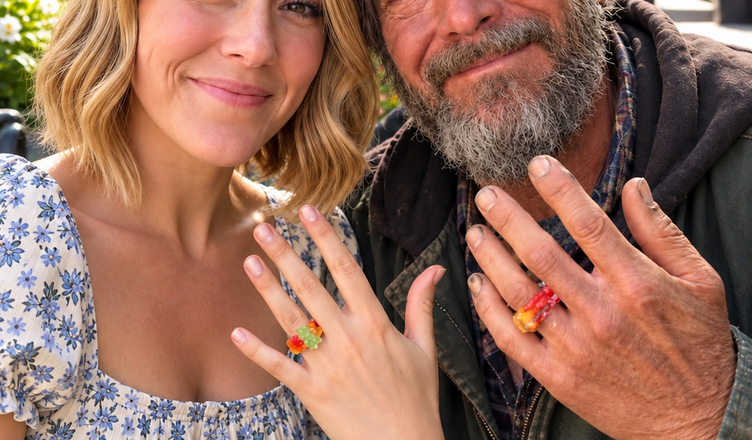
When I told my sister I was going to marry a homeless man who had been told he might have only weeks left to live, she stared at me as though I had lost my mind.
Maybe I understood her reaction.
I was forty-one, divorced, financially independent and living a quiet life. The man I intended to marry owned almost nothing. His clothes fit inside a backpack. He had no permanent address, no car and no family members who visited him.
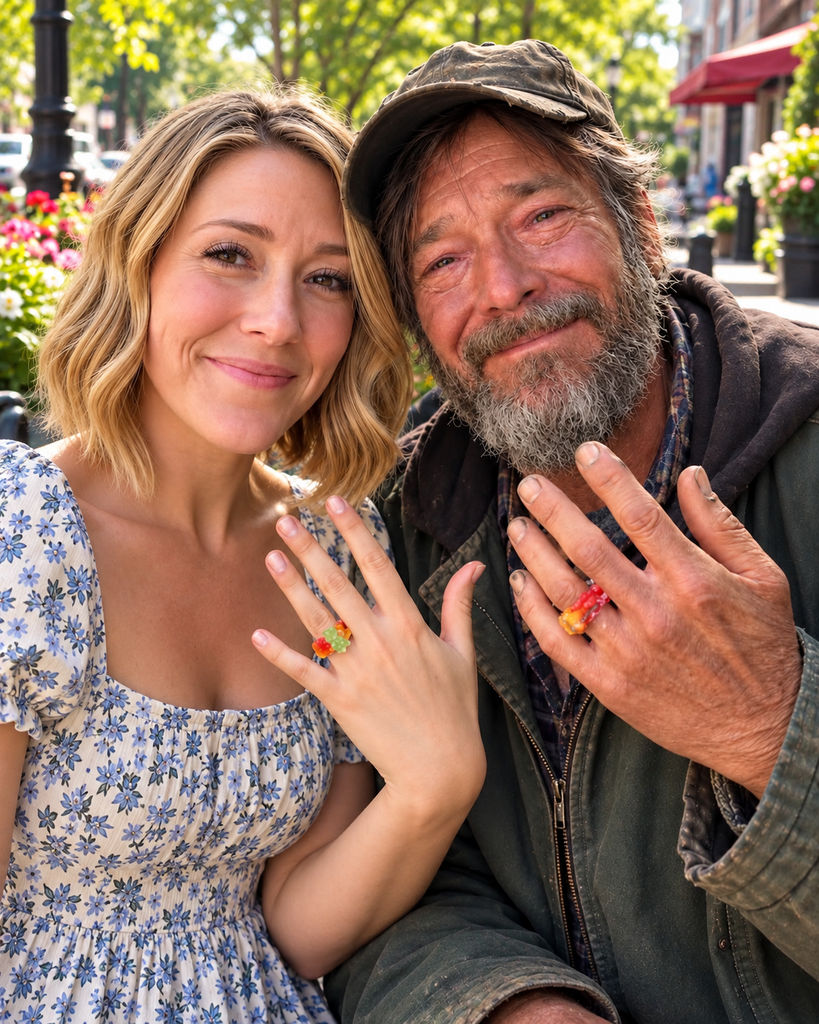
His name was Samuel.
I had known him for less than a year.
What my sister didn’t understand was that I wasn’t marrying him because I expected a future.
I was marrying him because he deserved not to face the end of his life believing he belonged to nobody.
Samuel died twenty-six days after our wedding.
I thought that was the end of our story.
Three days after his funeral, however, a courier delivered an envelope to my apartment.
Inside was a letter in Samuel’s handwriting.
There was also a key.
By the time I reached the final page, I realized the man I had married had hidden almost his entire past from me.
The Man Outside the Library
I first noticed Samuel outside the public library where I worked.
He was probably in his early sixties, although hardship made him look older.
Every morning, he sat on the same bench with a battered backpack beside him.
Unlike some people who came inside mainly to escape the weather, Samuel spent hours reading.
History.
Architecture.
Poetry.
One afternoon I saw him carefully repairing the torn cover of an old library book with materials he’d asked for at the desk.
“You’ve done that before,” I said.
“A long time ago.”
“What did you do?”
He smiled.
“Lots of things.”
That became typical of Samuel.
He could discuss classical music, construction, gardening and nineteenth-century novels, but whenever I asked about his own life, he redirected the conversation.
We gradually became friends.
I brought him coffee occasionally.
He hated being treated like a charity case, so I learned not to make a performance of helping.
If I bought him lunch, he insisted on helping me carry returned books to the sorting area.
Then one winter morning, Samuel didn’t appear.
The Diagnosis
I found out later that he had collapsed at a shelter.
At the hospital, doctors discovered advanced cancer.
The illness had progressed considerably before he sought consistent medical care.
No one could predict an exact amount of time remaining, but Samuel understood that his condition was serious and that treatment was unlikely to offer the kind of recovery he once might have hoped for.
When I visited, he was sitting by the window.
“You shouldn’t be here,” he said.
“That’s an unusual greeting.”
“I mean you shouldn’t waste your afternoon sitting with me.”
“It isn’t your afternoon to allocate.”
He laughed.
That was when our friendship changed.
Over the following weeks, Samuel entered a hospice program.
I visited almost every day.
One evening, he admitted that what frightened him most wasn’t death.
It was dying as though he had never belonged anywhere.
“Everybody should belong somewhere,” I told him.
“I used to.”
He wouldn’t explain.
The Proposal
The marriage was my idea.
Not immediately.
It began as a joke after Samuel mentioned that he had never expected to die unmarried.
“What, are you proposing?” I asked.
He smiled.
“I’m homeless and terminally ill. I’ve had stronger sales pitches.”
Two days later, I couldn’t stop thinking about it.
I asked myself what marriage actually meant if there was no possibility of building decades together.
Could twenty days matter?
Could ten?
Eventually I asked Samuel a different question.
“If you had a month, what would you want that month to feel like?”
He thought for a long time.
“Like I wasn’t alone.”
So I asked him to marry me.
He refused.
Then he accused me of pitying him.
We argued.
I told him pity would have meant buying him dinner and going home feeling virtuous.
I wasn’t offering pity.
I was offering presence.
Eventually, he said yes.
Twenty-Six Days
Our wedding took place in a small room at the hospice.
My sister attended reluctantly.
Two librarians came.
A nurse brought flowers.
Samuel wore a suit borrowed from a volunteer.
When the officiant asked whether I took him as my husband, I knew there was something unusual about making a promise that contained no illusion of time.
We both knew death was close.
Perhaps that made the promise simpler.
The next twenty-six days weren’t tragically beautiful every moment.
Illness isn’t like that.
There were difficult nights.
There was pain.
There were medications and appointments and long stretches when Samuel was too tired to talk.
But there were also ordinary things.
We watched terrible television.
I read to him.
He criticized my coffee.
He told me stories about places he had lived but still avoided explaining why he had ended up on the street.
I stopped asking.
I thought I was respecting his privacy.
I didn’t know he was arranging for me to learn everything after he died.
The Letter
Samuel died shortly before sunrise with my hand around his.
His funeral was simple.
Only nine people attended.
Afterward, I returned home feeling as though I had awakened from a strange, intense dream.
Three days later, the courier arrived.
The envelope had been scheduled for delivery by a law office.
Inside was a letter.
“Dear Claire,” it began, “if you’re reading this, I finally ran out of excuses.”
I sat at the kitchen table.
Samuel explained that his full name wasn’t simply Samuel Reed, as I had known him.
It was Samuel Reed Harrison.
The name meant nothing to me.
Then I continued reading.
Decades earlier, Samuel had been a successful architect and property developer.
Not famous.
Not enormously wealthy.
But comfortable.
He had a wife named Evelyn and a teenage daughter named Anna.
Then, twenty years earlier, Anna died in a car accident.
Samuel’s marriage collapsed afterward.
He began drinking heavily.
He stopped working consistently.
He made terrible financial decisions.
Eventually Evelyn divorced him.
Samuel withdrew from friends, sold what remained of his business interests and disappeared from nearly everyone who knew him.
His homelessness had not been the result of one dramatic event.
It had been the end of a long collapse.
But that wasn’t the secret that made my hands shake.
The Key
Samuel wrote that he had not lost everything.
Years before his life unraveled, he had inherited a small property from his grandfather.
It was an old cottage on several acres outside town.
After Anna died, Samuel transferred ownership into a trust.
He couldn’t bring himself to live there because it contained too many family memories.
But he also refused to sell it.
The key inside my envelope belonged to that cottage.
Samuel had left me the right to use the property, subject to the arrangements explained by his attorney.
I immediately assumed this was the secret.
It wasn’t.
The next paragraph changed everything.
“Please don’t keep the house only for yourself,” Samuel had written. “I think you’ll understand why.”
There was an address for the attorney’s office.
I called that morning.
The Daughter I Didn’t Know Existed
At the attorney’s office, I learned that Samuel had another daughter.
Not biologically.
Years after Anna’s death, Samuel had briefly tried to rebuild his life. During that period, he became close to a woman who had a young daughter named Leah.
Samuel and the woman never married.
Their relationship ended when his drinking worsened.
But for several years, Samuel had acted as a father figure to Leah.
When he disappeared, he disappeared from her life too.
Leah was now thirty-one.
Samuel had located her shortly before becoming seriously ill.
He never contacted her.
He was ashamed.
Instead, he had instructed his attorney to divide the eventual proceeds from the cottage between Leah and a local organization that provided temporary housing and employment support for people experiencing homelessness.
My role was different.
Samuel had named me as the person who could decide whether the cottage should be sold immediately or used temporarily for the project.
I couldn’t understand why.
Then the attorney gave me another letter.
“You Saw Me Before You Knew My Past”
Samuel explained his choice.
For years, people had viewed him through one of two versions of his life.
Those who knew him when he was successful remembered the architect who had ruined everything.
Those who met him later saw a homeless man.
I had known neither story.
I had met him without knowing what he had owned, what he had lost or what mistakes he had made.
“You treated me like a person before you had a reason to admire me or condemn me,” he wrote.
That was why he trusted me with the final decision.
Not because I had married him.
Because I had known him when he had nothing obvious to offer.
Meeting Leah
I contacted Leah through the attorney.
I expected anger.
Instead, she cried.
She remembered Samuel.
She remembered him teaching her to draw houses and taking her to parks on Sunday mornings.
For years, she had assumed he stopped caring.
Learning about his addiction and homelessness didn’t erase the pain of his disappearance.
But it gave context to it.
“He could have called me,” she said.
“Yes.”
“He should have.”
“Yes.”
I didn’t defend him.
Love does not require rewriting someone’s failures into virtues.
Samuel had hurt people.
He knew it.
His final arrangements couldn’t undo that.
But perhaps they could become something useful.
What Happened to the Cottage
Leah and I visited the property together.
It had been empty for years.
The roof needed repairs.
The garden had disappeared beneath weeds.
Inside, we found dusty furniture and boxes containing pieces of Samuel’s earlier life.
Architectural drawings.
Photographs.
A child’s bicycle helmet.
One photograph showed Samuel with Anna.
Another showed him years later with Leah.
I finally understood why he couldn’t live there.
We decided not to sell immediately.
With the cooperation of the trust and the organization named in Samuel’s plans, the property was eventually adapted for a small transitional-housing program.
The project was modest.
It didn’t solve homelessness.
It didn’t erase Samuel’s past.
But it gave several people at a time somewhere stable to live while rebuilding their lives.
Leah asked if one photograph could remain in the house.
It showed Samuel smiling beside a building he had designed decades earlier.
We placed it in the hallway.
The Man I Actually Married
People sometimes assume the revelation changed my memories of Samuel.
It did, but not in the way they expect.
Learning that he had once been successful didn’t make him more valuable.
Learning that he owned property didn’t make our marriage more meaningful.
If anything, his secret reminded me how incomplete our judgments of other people can be.
The man sitting outside the library had once designed buildings.
The homeless patient in hospice had once owned a home.
The lonely man who claimed nobody needed him had left behind people who still remembered loving him.
And the husband I knew for only twenty-six days had lived through decades of choices, mistakes and losses I could never fully understand.
I sometimes wish Samuel had told me everything while he was alive.
I would have told him he didn’t need to wait until death to face the people he had hurt.
I would have encouraged him to contact Leah himself.
Maybe he would have refused.
Shame can imprison people long after everyone else has stopped holding the door closed.
The letter Samuel sent after his funeral didn’t reveal that I had secretly married a rich man.
That would have been a simpler story.
It revealed something more complicated.
A person can lose almost everything and still carry an entire hidden history.
A person can make terrible mistakes and still be capable of generosity.
And sometimes the greatest gift we give another human being isn’t money, rescue or even forgiveness.
Sometimes it is simply refusing to look away when the rest of the world has already decided who that person is.