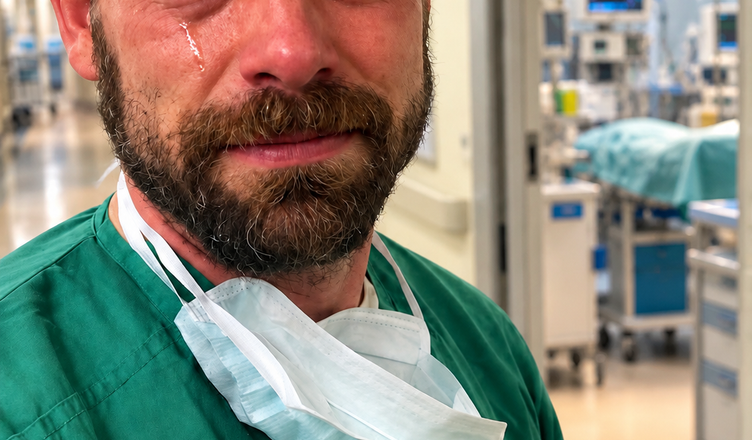
For our fifteenth wedding anniversary, I decided to do something simple.
I bought my husband lunch from his favorite restaurant, slipped a handwritten card into the bag, and drove to his office without telling him I was coming.
I expected Daniel to be surprised.
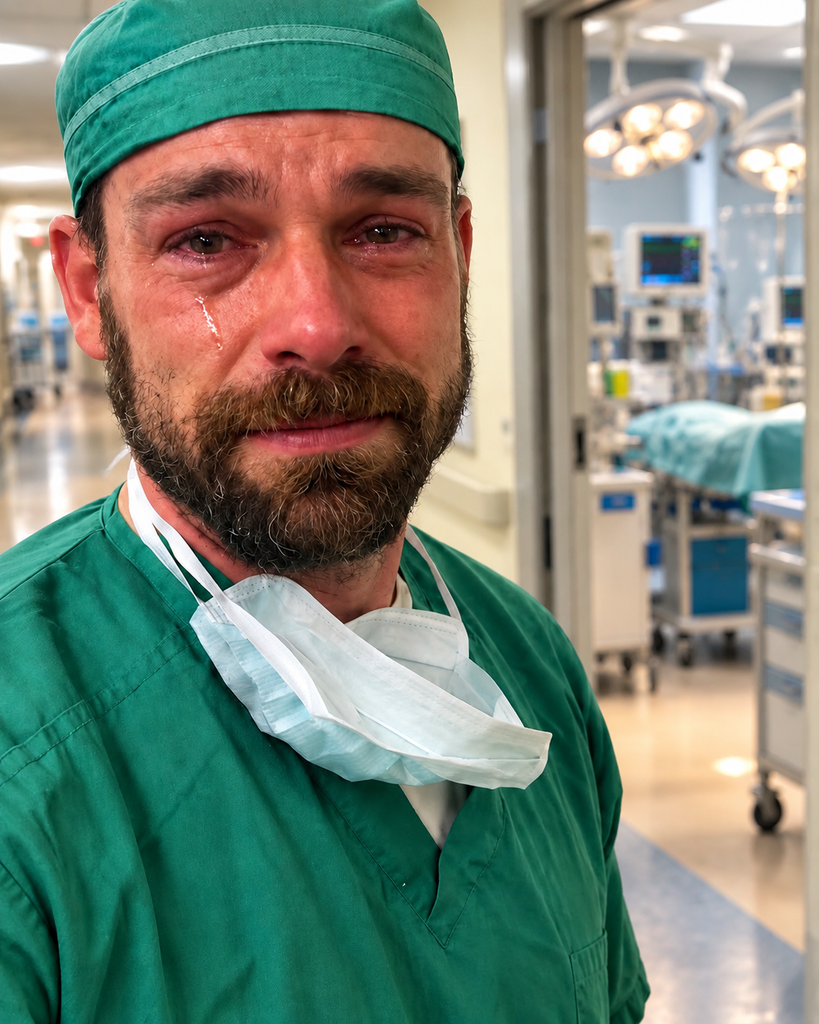
Instead, I was the one who discovered that nearly everyone in the building knew something about my husband that I didn’t.
The receptionist recognized me immediately.
“Rachel! It’s good to see you.”
Then her expression changed.
She looked toward the hallway leading to Daniel’s department.
“You didn’t tell him you were coming?”
“No. It’s a surprise.”
Her smile disappeared.
That should have been my first warning.
The second came moments later when Daniel’s coworker, Melissa, walked into the lobby.
She saw me and stopped.
Her face went pale.
Then her eyes filled with tears.
She took my arm gently and whispered:
“He hasn’t told you, has he?”
Within twenty minutes, I would learn why my husband had been leaving the house before sunrise, why he’d stopped talking about the future, and why an entire office had been treating me as though I were someone they pitied.
But the secret wasn’t an affair.
In some ways, it was harder to understand.
The Man Who Always Had a Plan
Daniel and I met when we were twenty-eight.
I was teaching elementary school. He had just started working for an engineering company.
Daniel was the organized one.
He planned vacations months in advance. He maintained spreadsheets for household expenses. He remembered when the car needed servicing before the warning light appeared.
I teased him about it.
But I also depended on it.
We married after two years and eventually had two children, Oliver and Sophie.
Our life wasn’t extraordinary.
That was what I loved about it.
We had soccer practices, mortgage payments, school meetings and arguments over whose turn it was to unload the dishwasher.
I believed Daniel and I told each other everything important.
During the months before our anniversary, however, he began behaving differently.
He seemed exhausted.
He lost weight.
He often came home late.
Whenever I asked about work, he blamed a difficult project.
“You’ve been working on this project for four months,” I said one evening.
“It’s complicated.”
I believed him.
Why wouldn’t I?
The Changes I Explained Away
There were other signs.
Daniel stopped drinking wine with dinner.
He canceled a weekend trip we’d planned.
Once, while looking for a phone charger, I found a pharmacy bag in his car.
The label had been removed.
When I asked him about it, he said it belonged to a colleague who had left it behind.
Another evening, his phone rang during dinner.
He looked at the screen and immediately went outside.
When he returned, his face was tense.
“Work?”
“Yes.”
Every suspicious detail had an explanation.
The problem with trust is that when it has been earned over many years, you don’t automatically treat strange behavior as evidence of deception.
You help the person you love explain it.
That was what I did.
Until I walked into his office.
“Everyone Thought You Knew”
Melissa led me into an empty conference room.
I was becoming angry.
“What is happening?”
She looked genuinely distressed.
“I thought Daniel told you.”
“Told me what?”
She hesitated.
And then she said:
“He’s leaving the company.”
I almost laughed from relief.
That was all?
“So he found another job?”
Melissa shook her head.
“No.”
She sat down.
“Rachel, Daniel hasn’t really been working normally for weeks.”
I stared at her.
“What are you talking about? He comes here every morning.”
“Yes. But he’s been transitioning his projects to other people.”
“Why?”
Melissa’s eyes filled again.
“Because he’s sick.”
For a moment, the words didn’t make sense.
“Sick how?”
She looked toward the door.
“I shouldn’t be the person telling you this.”
“It’s too late for that.”
Then she gave me the name of the hospital Daniel had been visiting.
Oncology.
The room seemed to tilt.
Finding Daniel
I walked through the office until I found him.
He was sitting alone at his desk.
Several cardboard boxes were stacked against the wall.
His books were gone from the shelves.
He looked up.
The moment he saw me, he understood.
Neither of us spoke.
I placed the lunch bag on his desk.
“Tell me she’s wrong.”
Daniel closed his eyes.
“How much did Melissa tell you?”
“Enough.”
I had never felt anger and fear arrive together so violently.
“How long?”
“Rachel—”
“How long have you known?”
“Almost three months.”
Three months.
For three months, I had slept beside him.
For three months, we had eaten breakfast together.
For three months, I had asked whether he was okay.
And he had lied.
The Diagnosis He Hid
Daniel told me the rest in his car.
He had gone to the doctor after experiencing persistent pain and unexplained weight loss.
Tests led to further tests.
Eventually, doctors found cancer.
It was serious.
Treatment had already begun.
The pharmacy bag I found contained medication for side effects.
The mysterious calls were from his medical team.
The canceled trip conflicted with treatment.
His coworkers knew because his schedule had to be adjusted and his responsibilities reassigned.
His manager knew.
Human resources knew.
Several people in his department knew.
His wife did not.
“Why?” I asked.
Daniel stared through the windshield.
“I wanted to know exactly what we were dealing with before I told you.”
“You’ve known for three months.”
“At first, I thought we’d have clearer answers quickly.”
“And then?”
He admitted that fear had taken over.
He became obsessed with protecting the family from uncertainty.
He updated our insurance.
He reorganized accounts.
He reviewed his life insurance.
He even prepared documents explaining household finances.
He had been planning for the possibility of dying while pretending to me that he was simply busy at work.
Protection Without Permission
Daniel expected me to understand.
I didn’t.
“You let strangers know before your children and me.”
“They needed to know because of work.”
“I needed to know because I’m your wife.”
“I was trying to protect you.”
That sentence made me angrier.
“From what?”
“From this.”
He gestured toward himself.
“From being afraid every day.”
“You don’t get to decide what I’m allowed to be afraid of.”
He began crying.
That was when some of my anger cracked.
Daniel wasn’t hiding his illness because he didn’t trust me.
He was terrified.
The man who planned everything had encountered something he couldn’t control.
So he responded by trying to control information.
If he didn’t tell us, perhaps our normal life could continue a little longer.
I understood the psychology.
Understanding it didn’t make it fair.
Telling Our Children
That evening we told Oliver and Sophie.
We were careful not to make promises we couldn’t keep.
Daniel explained that he had cancer and was receiving treatment.
We told them there would be difficult days.
We also told them we would answer questions as honestly as we could.
Sophie, who was eleven, immediately asked:
“Are you going to die?”
Daniel looked at me.
I could see how badly he wanted to say no.
Instead, he said:
“The doctors are trying very hard to make me better, and I’m going to do everything they tell me to do. But I don’t want to promise something I can’t know.”
It was one of the hardest conversations of our lives.
It was also more honest than anything we’d said to each other in months.
The Other Secret
A week later, Daniel showed me the documents he’d prepared.
That’s when I discovered another part of his plan.
He had intended to resign from work quietly.
He had also arranged for a large portion of his savings to be moved into accounts intended to simplify things for me if his health deteriorated.
The intention was practical.
But again, he had made major decisions about our shared future alone.
I stopped him.
From then on, we attended important appointments together whenever possible.
We met with a financial adviser together.
We spoke with the children together.
When Daniel was frightened, he had to say he was frightened rather than inventing another late meeting.
When I was angry, I had to admit that some of my anger came from terror.
We needed counseling to learn how to do that.
What His Coworkers Had Actually Seen
Months later, I apologized to Melissa for putting her in such an impossible position.
She apologized too.
“I thought you knew,” she said.
Apparently, Daniel had never explicitly told his coworkers that his family was unaware.
He simply avoided discussing us whenever his illness came up.
Several people assumed I was the person supporting him through treatment.
When I walked into the office smiling with an anniversary lunch, Melissa understood immediately.
That explained the strange silence.
Nobody was hiding an affair.
They were watching a wife discover that she had unknowingly been living outside one of the most important realities of her husband’s life.
Learning to Live With Uncertainty
Daniel’s treatment lasted many months.
There were good results and setbacks.
We learned quickly that serious illness rarely follows a clean narrative in which one dramatic moment is followed by certainty.
There were scans.
Waiting periods.
Medication changes.
Days when Daniel felt almost normal and others when getting out of bed required enormous effort.
Our marriage changed too.
Before his diagnosis, I had thought honesty meant telling the truth when someone asked a direct question.
Afterward, I understood that honesty is larger than that.
Sometimes silence can become deception even when every individual sentence is technically defensible.
Daniel hadn’t hidden another woman.
He hadn’t stolen money.
He hadn’t stopped loving us.
He had tried to carry a terrifying burden alone because he believed that was what a good husband and father should do.
Instead, he isolated himself and denied us the chance to carry it with him.
The Anniversary Lunch
I still remember the lunch I brought to his office.
We never ate it.
It remained on his desk while we sat in the parking lot discussing cancer, fear and three months of lies.
For a long time, I hated thinking about that day.
Now I see it differently.
I went to Daniel’s office hoping to surprise my husband.
What I found was a man who had been desperately trying to preserve the version of himself he thought his family needed.
Strong.
Reliable.
Prepared.
Unfrightened.
But families don’t need invulnerable people.
They need people willing to be truthful when life becomes frightening.
The hardest lesson Daniel learned was that protecting the people you love doesn’t mean hiding every painful reality from them.
Sometimes protection means allowing them to stand beside you while you face it.
And the hardest lesson I learned was that even after fifteen years of marriage, you can still discover a room inside the person you love that they have been afraid to let you enter.
The answer isn’t always to walk away.
Sometimes it is to open the door, sit beside them and say:
“You don’t have to carry this alone anymore.”
Clarify the hospital reveal timelineStrengthen Rachel’s emotional progression