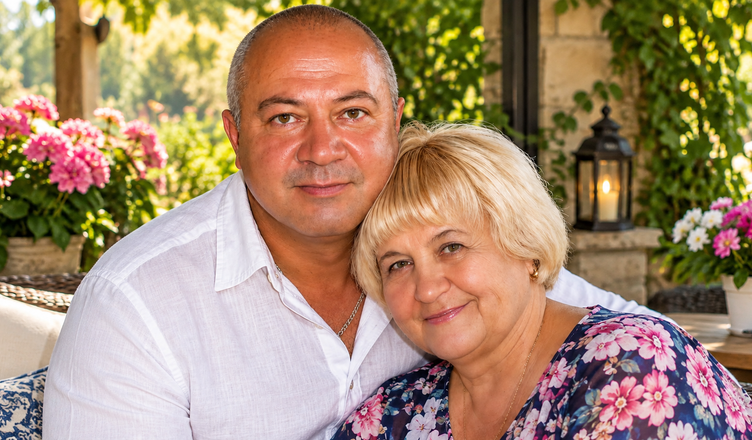
At sixty-five, I thought I already knew the shape of the rest of my life.
I had a comfortable home, two grown children, three grandchildren and enough friends to keep my calendar busy. I had survived the end of a long marriage, learned how to live alone and finally reached the point where an empty house felt peaceful rather than lonely.
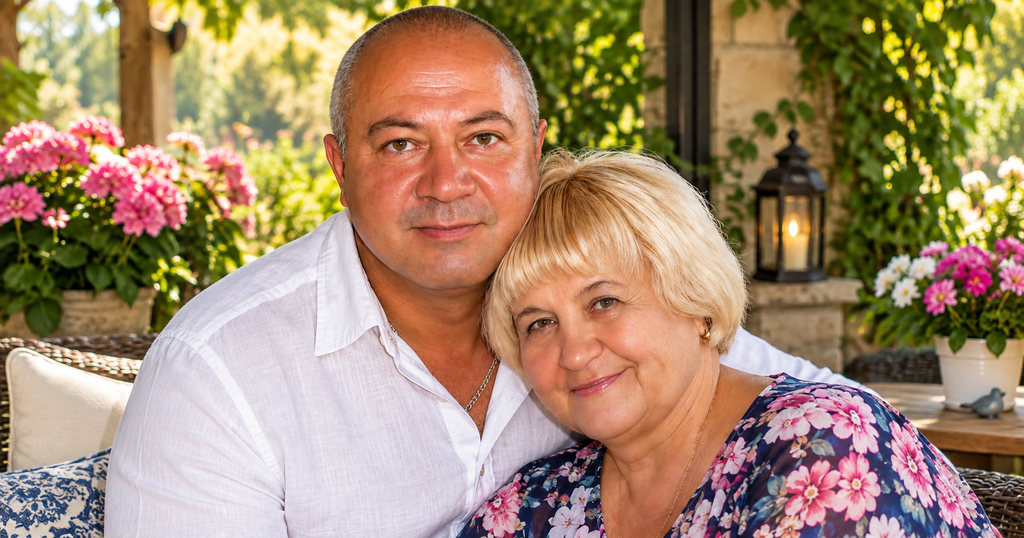
Then I met Robert.
Eighteen months later, he stood beside me in my kitchen, holding a small ring and asking whether I would marry him.
I said yes before he finished the question.
Telling our children should have been the easy part.
It wasn’t.
When we gathered them together and announced our engagement, nobody congratulated us.
My daughter stared at the ring.
Robert’s son pushed his chair away from the table.
Then my son asked the question that revealed what everyone was actually thinking.
“What happens to the house when you die?”
This is a fictional story inspired by the original premise. The characters and events are invented rather than presented as a documented real-life case.
I Wasn’t Looking for a Husband
I met Robert at a community garden.
He was sixty-eight, retired from teaching and had recently moved to the area to be closer to his daughter.
Our first conversation lasted approximately ten minutes and was mostly about tomatoes.
The second lasted an hour.
Soon we were having coffee.
Then dinner.
Then we began planning weekends together.
There was something wonderfully different about falling in love later in life.
Neither of us needed to pretend we were unfinished people waiting for someone else to complete us.
We had careers behind us.
Children.
Mistakes.
Grief.
Habits that were unlikely to change.
Robert knew I hated driving at night. I knew he became unreasonable when anyone tried to reorganize his kitchen.
It was not young love.
That did not make it smaller.
Our Families Seemed to Accept the Relationship
My daughter, Emily, was forty.
My son, Jason, was thirty-seven.
Robert had a daughter, Natalie, and a son, Andrew.
Everyone had met several times.
Nobody appeared hostile.
The grandchildren liked Robert because he could turn almost any household object into a science experiment.
I got along with his children.
That was why their reaction to our engagement shocked us.
I expected surprise.
Perhaps concern about moving too quickly.
I did not expect a conversation about inheritance to begin before anyone had even said congratulations.
“Why Do You Need to Get Married?”
Emily asked the question.
I remember the word need.
Why did we need marriage?
As though marriage at sixty-five required a practical justification that marriage at thirty did not.
“We don’t need to,” I said. “We want to.”
“But you’re already happy.”
“Yes.”
“So why change everything?”
Robert looked at me.
We were beginning to understand that the engagement had activated fears the relationship itself had not.
Dating was temporary in their minds.
Marriage was legal.
Permanent.
And financially significant.
The Questions Became More Direct
Jason wanted to know whether Robert would move into my house.
Andrew asked whether we intended to combine bank accounts.
Natalie worried about her father’s retirement savings.
Then came the houses.
Robert owned a smaller property that he had planned eventually to leave to his children.
My house had been purchased during my first marriage and later became mine after the divorce settlement.
Emily and Jason had always assumed it would one day pass to them.
Suddenly, both sets of adult children imagined their future inheritance moving toward another family.
The romantic announcement had become a financial negotiation.
I was furious.
Then Robert Said Something That Stopped Me
After the children left, I complained for nearly an hour.
“How can they be so greedy?”
Robert listened.
Then he said, “Maybe they’re frightened, not greedy.”
I didn’t like that interpretation.
But the more I thought about it, the more complicated the situation became.
Our children were not merely calculating what they might inherit.
They were worried about losing pieces of their family history.
My house was where my children had celebrated birthdays and Christmases.
Robert’s property contained belongings connected to his late wife, the mother of his children.
Marriage raised legitimate questions.
What would happen if one of us died?
Would the surviving spouse remain in the home?
What would happen to family possessions?
Who would make medical decisions if one of us became incapacitated?
Love did not make those questions disappear.
Later-Life Marriage Can Be Financially Complicated
A marriage involving two young adults who own little may begin with relatively simple finances.
A marriage later in life can involve decades of accumulated property and obligations.
There may be homes.
Pensions.
Investments.
Businesses.
Adult children from earlier relationships.
Grandchildren.
Debts.
Previous estate plans.
One partner may have significantly more assets than the other.
Depending on local law, marriage can also affect inheritance, taxation, benefits and rights relating to property or medical decisions.
The precise rules vary by jurisdiction, so couples facing these issues should obtain qualified legal and financial advice rather than relying on assumptions.
Robert and I had been thinking about the wedding.
Our children had forced us to think about the marriage.
There is a difference.
We Called a Family Meeting
Two weeks later, we invited everyone back.
This time there was no champagne.
Robert began.
“You asked reasonable questions badly,” he said.
Andrew almost smiled.
Robert continued.
“Our finances are our responsibility. But we understand why you’re concerned.”
Then we explained what we intended to do.
We would speak with an estate-planning lawyer.
We would keep significant premarital assets clearly documented.
We would review our wills.
We would discuss powers of attorney and healthcare decisions.
We would make deliberate arrangements concerning our homes rather than leaving everyone to guess.
The details would depend on professional advice and applicable law.
The important point was that neither family would simply be erased because we had fallen in love.
Then I Set a Boundary
After discussing the practical issues, I told our children there was something they needed to understand.
“I appreciate that you have concerns,” I said. “But my house is not your inheritance yet.”
Emily looked uncomfortable.
I continued.
“Anything you eventually receive is something I choose to leave you. It isn’t property you already own.”
That distinction mattered.
Parents can love their children deeply while still retaining control over their own lives and assets.
Adult children may reasonably worry about exploitation, particularly when a parent begins a new relationship later in life.
But concern does not automatically create authority.
I was still capable of making decisions.
So was Robert.
Emily Finally Explained Her Reaction
After the meeting, my daughter stayed behind.
She apologized.
Then she began crying.
Her fear had not really started with money.
“When you said you were getting married, it felt like Dad was being replaced,” she said.
Her father and I had divorced twelve years earlier.
Emily knew intellectually that we would never reunite.
Emotionally, the wedding represented something final.
Robert would become my husband.
The family structure she remembered from childhood would never return.
Suddenly, her reaction made more sense.
Adult children are still children within the emotional geography of their families.
They can have careers, mortgages and children of their own and still react strongly when a parent remarries.
Robert’s Children Had Their Own Fear
Natalie later admitted that she worried I would take her father away from them.
Robert had spent years helping with his grandchildren and joining his children for holidays.
Would marriage mean every Christmas now belonged to my family?
Would I persuade him to move?
Would he sell his house?
Would their mother’s belongings disappear?
Again, those concerns were not completely irrational.
Blended families do not become blended simply because two people exchange rings.
Relationships have to be built.
We Changed the Wedding Plans
Originally, Robert and I had imagined a traditional wedding with more than eighty guests.
After everything that happened, we changed our minds.
We chose a small ceremony in a garden.
Our children and grandchildren would be central to it.
Not because we needed their permission.
Because we wanted the marriage to join two existing families rather than pretend we were starting from nothing.
We were not twenty-five-year-olds creating our first household.
We were two older adults bringing decades of history into the same future.
That deserved acknowledgment.
The Second Reaction Was Different
Several months after our disastrous announcement, everyone gathered again.
This time it was for the wedding.
Emily helped me dress.
Natalie adjusted the flowers.
Jason walked me toward Robert and whispered, “You look ridiculously happy.”
“I am.”
When the ceremony ended, Andrew was the first person to hug his father.
There was no miraculous transformation.
Our families did not instantly become one harmonious unit.
There were still awkward holiday negotiations and disagreements about practical matters.
But nobody treated the marriage as a threat anymore.
Love Does Not Expire
One of the strangest assumptions about aging is that major emotional decisions should eventually stop.
At some invisible age, people are expected to become settled.
No new marriage.
No dramatic change.
No passionate romance.
No reinvention.
But reaching sixty-five does not eliminate the desire for companionship.
Older adults can fall in love intensely.
They can also make mistakes.
They deserve both the freedom to choose and the respect of being treated as adults capable of evaluating those choices.
Family concern can be valuable.
Control is something different.
What Our Children Actually Taught Us
I originally believed our children’s reaction had spoiled one of the happiest moments of my life.
Eventually, I saw that the uncomfortable conversation helped us.
Robert and I had discussed love, travel, where we might live and what kind of wedding we wanted.
We had not discussed death carefully enough.
We had not considered how marriage might affect our children financially or emotionally.
Their questions forced us to do that.
In return, we forced them to confront something too:
Our lives were still ours.
Saying Yes Again
I used to think finding love at sixty-five was the surprising part of my story.
It wasn’t.
The surprising part was discovering how much courage it could take to choose happiness when the people you love are afraid of what your happiness might change.
Robert did not replace the father of my children.
I did not replace the mother of his.
Our marriage did not erase either family’s history.
It added something to it.
There is no age at which a person becomes too old to begin another chapter.
But beginning again later in life requires more than romance.
It requires honesty about money, family, grief, property, expectations and the past.
Our children eventually congratulated us.
By then, however, I no longer needed their approval to know I had made the right decision.
At sixty-five, I had already spent enough years learning that lesson:
You can listen to the people you love.
You can take their fears seriously.
You can plan responsibly.
And after all of that, the life you choose is still your own.