
An old family photograph can seem completely ordinary until someone notices a detail that has been overlooked for decades.
Perhaps it is an unfamiliar face standing in the background, a strange object on a table, or a reflection in a window. Sometimes the surprise is something even simpler: a familiar item appearing in an unexpected place.
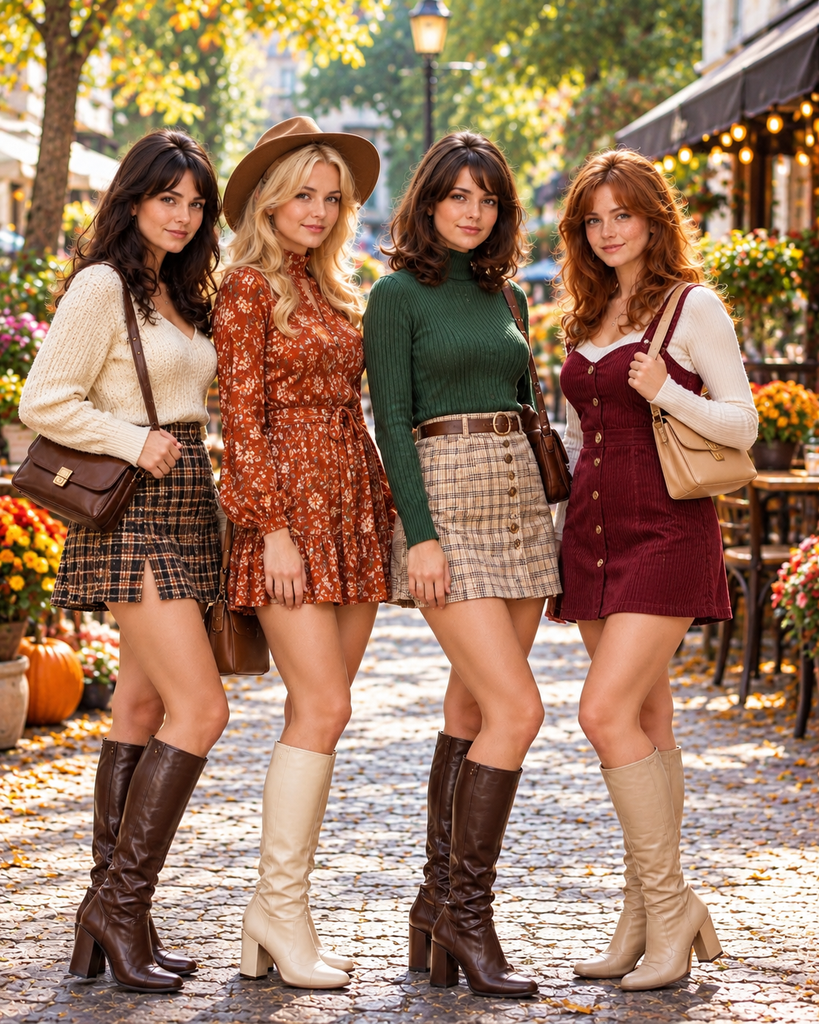
Photographs from the 1970s are particularly fascinating because they preserve a world that is both recognizable and remarkably different from our own.
The clothing, furniture, hairstyles, cars, and household objects tell stories about everyday life. Yet many of these details escape our attention when we first look at an image.
That is why an apparently unremarkable photograph can become the subject of intense curiosity.
But what makes us overlook something that is directly in front of us? And how can we distinguish a genuinely unusual detail from an optical illusion or a misleading interpretation?
The answers reveal as much about human perception as they do about photography.
Why Our Eyes Miss Obvious Details
When people look at a photograph, they rarely examine every part of it with equal attention.
The human visual system naturally prioritizes certain elements.
Faces are especially powerful attention magnets. We instinctively look at people’s expressions, eyes, and body language.
If a photograph shows a smiling family gathered around a dining table, most viewers will focus on the people before noticing the wallpaper, dishes, or objects behind them.
This is an efficient way to process visual information.
But it also means that important details can go unnoticed.
Psychologists use the term inattentional blindness to describe situations in which people fail to notice something visible because their attention is directed elsewhere.
A related phenomenon, change blindness, occurs when people fail to detect differences between visual scenes.
Both help explain why someone can examine a photograph several times and still overlook an unusual feature.
The detail may be clearly visible.
The viewer simply hasn’t directed attention toward it.
The Fascination of 1970s Photography
Photographs taken during the 1970s have a distinctive visual character.
Many family snapshots were captured using film cameras, often with limited opportunities to check the results immediately.
Unlike modern smartphone photography, where people can take dozens of pictures and delete the ones they dislike, film photography required more patience.
A roll of film might contain only 24 or 36 exposures.
People often waited days or weeks before seeing their developed photographs.
As a result, many images preserved spontaneous moments rather than carefully selected poses.
Someone might blink at the wrong moment.
A child might wander into the background.
An unexpected object could appear near the edge of the frame.
These imperfections are part of what makes old photographs interesting.
They can reveal details that the photographer never intended to capture.
What Clothing Can Reveal
Fashion is often the first clue that a photograph belongs to a particular period.
The 1970s are associated with flared trousers, wide collars, patterned shirts, platform shoes, and bold colors.
But not everyone dressed according to the latest trends.
Age, income, geography, occupation, and personal preference all influenced clothing choices.
A photograph showing a woman in a conservative dress beside someone wearing dramatic bell-bottom trousers might reflect differences in taste rather than a contradiction in the photograph’s date.
Clothing can also remain in use for many years.
A coat purchased in 1965 might still appear in a family photograph taken in 1978.
This is why fashion alone cannot establish the exact year an image was captured.
Nevertheless, it can provide useful historical context.
The shape of a collar, the cut of a jacket, or the style of a handbag may help narrow down a possible period.
The Objects That Tell Hidden Stories
Everyday objects can reveal surprisingly detailed information about the world in which a photograph was taken.
Consider a family gathered in a living room.
The television may have a wooden cabinet and physical control knobs.
A telephone might sit on a hallway table, connected to the wall by a cord.
A record player could be positioned beside a collection of vinyl albums.
These objects were ordinary at the time.
Today, they provide visual clues about technology, entertainment, and domestic life.
But there is an important distinction between an object being unusual and an object being impossible.
For example, a device that resembles a modern electronic gadget might actually be an older product with a similar design.
Portable radios, early calculators, cameras, and communication equipment existed in many different forms during the 1970s.
An unfamiliar object should not automatically be treated as evidence that a photograph is fake or that something extraordinary occurred.
Sometimes the explanation is simply that technology developed earlier than people realize.
Why Backgrounds Matter
The background of a photograph is often more informative than it first appears.
A street sign can help identify a location.
A shop window may reveal the name of a business.
A vehicle’s design can provide clues about the period.
Posters, advertisements, and building features may also help establish context.
In family photographs, the background can preserve details that have since disappeared.
A house may have been renovated.
A local business may have closed.
A familiar street may look completely different today.
For historians and family researchers, such details can be valuable.
They can help reconstruct places, events, and relationships that written records describe only partially.
However, interpreting background details requires caution.
An object visible behind someone may be unrelated to the main subject.
A person standing nearby may simply be a passerby.
Without additional evidence, it is easy to invent a story that the photograph itself cannot support.
The Mystery of Reflections
Reflections are among the most frequently misunderstood features in photographs.
Windows, mirrors, polished furniture, and even shiny car surfaces can produce images that appear strange when viewed out of context.
A reflection may show an object located outside the camera’s direct field of view.
It may also distort shapes, reverse their orientation, or make two separate objects appear connected.
In older photographs, film grain and limited resolution can make these effects harder to interpret.
A blurred reflection might resemble a face.
A bright patch of light might appear to be an unfamiliar object.
A shadow could create the impression that someone is standing where nobody was present.
These effects can be intriguing, but they are not necessarily mysterious.
Before drawing conclusions, it helps to consider the position of the camera, the direction of the light, and the reflective surfaces in the scene.
Often, a simple explanation becomes apparent once the photograph is examined carefully.
When the Camera Captures Something Unexpected
Photographers do not always notice everything happening around them.
A person concentrating on a group portrait may fail to see someone walking behind the subjects.
A child might make an unusual gesture just as the shutter is pressed.
A passing vehicle could appear at the edge of the frame.
These accidental details sometimes become the most memorable part of an image.
They can also change how viewers interpret the scene.
Imagine a photograph showing a cheerful picnic.
At first, it appears to be an ordinary family gathering.
But a closer look reveals dark storm clouds gathering behind the trees.
The detail doesn’t necessarily indicate that anything dramatic happened.
Still, it introduces a contrast between the happy expressions in the foreground and the threatening weather in the distance.
Our minds naturally begin constructing a narrative.
We wonder whether the family noticed the approaching storm.
We imagine what might have happened next.
The photograph becomes more interesting because it invites questions.
How Old Photographs Can Mislead Us
Not every surprising visual detail is meaningful.
Film photography has characteristics that can create unusual effects.
Motion blur may distort a moving hand or face.
Double exposure can place two images on the same frame.
Light leaks can produce bright streaks or unusual colors.
Damage to negatives may create marks that resemble objects or figures.
Photographic prints can also deteriorate over time.
Scratches, fading, chemical changes, and poor storage conditions may alter their appearance.
When an old image is scanned, additional artifacts can appear.
Dust on the scanner glass, excessive sharpening, and digital compression can make small details look more dramatic than they really are.
A mysterious shape may disappear when the original negative is examined.
For this reason, a surprising detail in a low-quality digital image should be treated as a question rather than a conclusion.
The Role of Digital Enlargement
Modern technology allows us to inspect photographs in ways that were difficult when they were first developed.
A scanned image can be enlarged, adjusted for contrast, and examined section by section.
This can help reveal details that are difficult to see in a small print.
But enlargement has limits.
Increasing the size of an image does not automatically create new information.
If the original photograph contains very little detail, software may produce a larger but equally unclear image.
Aggressive sharpening can introduce artificial edges.
Some enhancement tools may generate plausible-looking features that were not actually recorded by the camera.
This is especially important when examining faces, license plates, or text.
An enhanced image may look convincing without being historically reliable.
For serious research, the original photograph or negative remains an important reference.
Why We See Faces Where None Exist
Have you ever noticed a face in the clouds, a pattern on a wall, or the front of a car?
This phenomenon is known as pareidolia.
It occurs when the brain recognizes familiar patterns in ambiguous visual information.
Human faces are particularly easy to perceive because our brains are highly sensitive to their structure.
Two dark spots above a curved line can resemble eyes and a mouth.
In old photographs, shadows and grain may accidentally create similar arrangements.
A viewer might believe a mysterious person is hiding in the background when the apparent face is actually formed by leaves, furniture, or reflections.
The experience can feel remarkably convincing.
Once someone identifies the pattern as a face, it may become difficult to see it any other way.
That does not mean the viewer is foolish.
It reflects a normal feature of human perception.
How Family Photographs Become Historical Evidence
Beyond visual puzzles, old photographs can have genuine documentary value.
They may help establish where someone lived, who attended an event, or how a neighborhood looked at a particular time.
Family historians often compare photographs with letters, diaries, official records, and newspaper archives.
A handwritten date on the back of a print can provide useful information.
So can the photographer’s stamp, the type of photographic paper, or the presence of identifiable landmarks.
But no single clue should automatically be considered definitive.
Dates may have been written years later.
Photographs may have been copied.
People sometimes misremember when or where an image was taken.
The strongest conclusions come from combining several independent sources.
A photograph can support a historical account, but it rarely explains an entire event by itself.
The Difference Between Curiosity and Sensationalism
Online discussions often describe old photographs as containing impossible objects, hidden strangers, or evidence of unexplained events.
Such claims can attract attention because they encourage viewers to search for something extraordinary.
Sometimes there really is an interesting detail.
But a dramatic caption is not evidence.
If an image is presented without its original source, date, or context, it may be impossible to verify the story attached to it.
Photographs can also be cropped or edited to emphasize a particular interpretation.
An object that looks mysterious in a close-up may appear completely ordinary when the full scene is visible.
Before accepting a sensational explanation, it is worth asking where the photograph came from and whether the claimed detail can be independently confirmed.
Curiosity is valuable.
Certainty without evidence is not.
A Better Way to Examine an Old Photograph
Instead of immediately searching for a supposed hidden mystery, begin by observing the entire scene.
Notice the people, their expressions, and their positions.
Then examine the surroundings.
Look for objects that help establish the setting and period.
Consider the lighting and whether reflections or shadows could explain unusual shapes.
Pay attention to the edges of the frame, where accidental details often appear.
If the photograph is digital, compare the enlarged image with the original.
Avoid relying entirely on heavily enhanced versions.
Finally, separate what is visible from what is inferred.
For example, you may be able to say that a person is standing beside a particular vehicle.
You may not be able to establish why they were there.
This distinction makes photographic analysis more reliable and often more interesting.
Why These Images Continue to Fascinate Us
Part of the appeal of vintage photography is the feeling that we are looking into a world that no longer exists.
The people in the image may have grown old or died.
The buildings may have disappeared.
The objects may now belong in museums.
Yet the photograph preserves one small moment with remarkable immediacy.
A smile remains unchanged.
A child is forever caught in mid-step.
A family gathering continues in a fraction of a second, even though decades have passed.
When we notice a previously overlooked detail, the image seems to come alive again.
We realize that the scene contains more information than we initially understood.
That discovery can be surprisingly emotional.
It reminds us that ordinary moments are often richer than they appear.
The Real Secret Behind a Photograph From the 1970s
Without examining a specific original photograph, it would be misleading to claim that one particular hidden detail has been identified.
A mysterious caption alone cannot establish what the image contains.
But the broader fascination with these photographs is easy to understand.
They challenge us to look more carefully.
They reveal how attention shapes perception.
And they show how much historical information can survive in seemingly unimportant details.
A hairstyle may reveal a fashion trend.
A household object may illustrate technological change.
A background sign may preserve the name of a forgotten business.
A reflection may show something the photographer never noticed.
Not every discovery is shocking.
Some are simply interesting.
Others may help families recover memories or researchers understand the past.
The most rewarding approach is to remain observant without abandoning skepticism.
Because the extraordinary thing about an old photograph is not always a hidden object or a strange figure.
Sometimes it is the realization that an ordinary moment, captured decades ago, still has something new to tell us.
And once we begin looking beyond the obvious, even the simplest family snapshot can become a window into an entire forgotten world.
Add a stronger opening mysteryCut repeated explanations and examples