
When I told my husband I was pregnant, he dropped the glass he was holding.
It shattered across the kitchen floor.
I had imagined this moment dozens of times. I thought he might laugh, cry, or sweep me into his arms. Instead, he stood motionless, staring at the pregnancy test.
«Are you certain?» he whispered.
«Three tests,» I replied. «And I’ve made a doctor’s appointment.»
He sank into a chair.
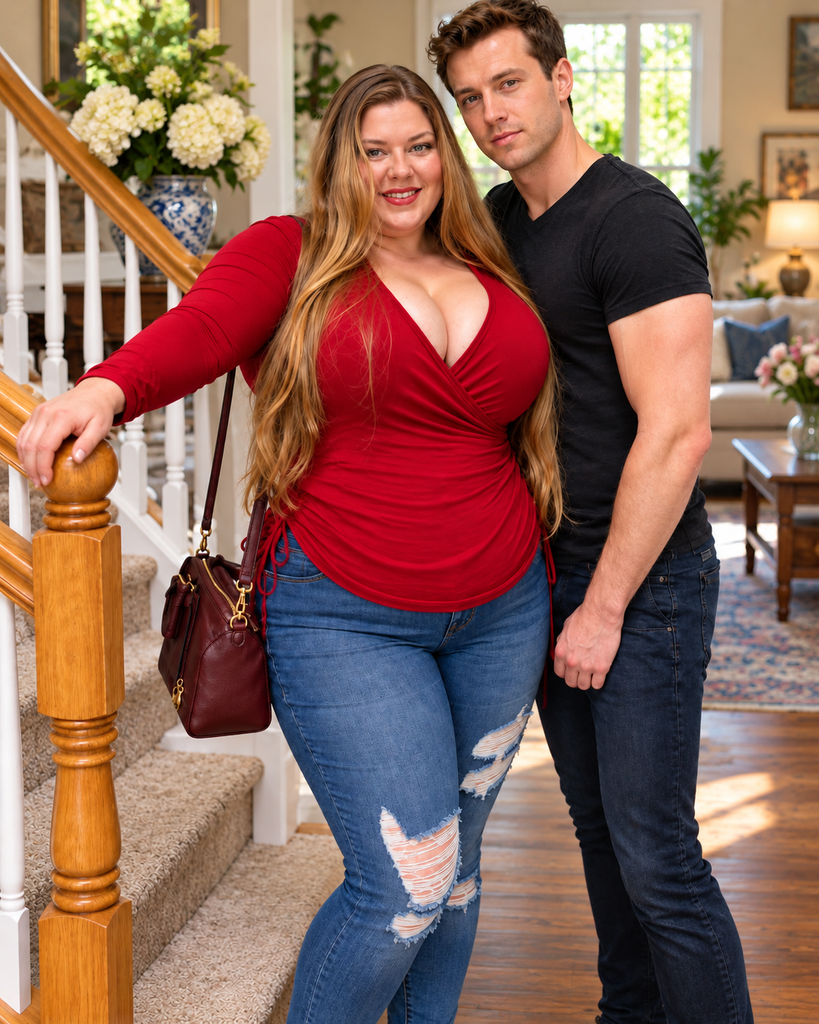
My husband, Nathan, was twenty-six. I was fifty-five.
We had been married for five months, and nearly everyone in my life believed our relationship was a mistake.
Now, as I watched the fear spreading across his face, I began to wonder whether they had been right.
But the secret Nathan was hiding wasn’t an affair or a plan to steal my money.
It concerned a decision he had made years before we met—and a truth about the baby I was carrying.
A Marriage Nobody Approved Of
I met Nathan at a community theater fundraiser.
I owned a small interior design business, had been divorced for twelve years, and had grown accustomed to living alone.
Nathan worked as a lighting technician.
He was funny, thoughtful, and completely unimpressed by my financial success.
When he asked me to dinner, I assumed he was joking.
He wasn’t.
Our first date lasted four hours.
We talked about music, travel, and the strange ways life can change when you’re least expecting it.
Nathan told me he’d grown up in foster care and had worked since he was sixteen.
I told him about my failed marriage and the years I’d spent building my company.
We began seeing each other regularly.
The age difference was impossible to ignore.
But in private, our relationship felt surprisingly ordinary.
We cooked together, argued about which films to watch, and spent weekends renovating an old cottage I’d inherited from my aunt.
Six months later, Nathan proposed.
The Warnings I Refused to Hear
My sister called the engagement ridiculous.
My closest friend asked whether Nathan had signed a financial agreement.
My adult daughter, Emily, was furious.
«He’s younger than I am, Mom.»
«I know.»
«Doesn’t that bother you?»
«Not enough to stop loving him.»
Emily shook her head.
«You’re making a terrible mistake.»
I understood her concerns.
Nathan was still establishing his career, while I owned a successful business and several properties.
Our financial circumstances were very different.
We sought independent legal advice and signed a prenuptial agreement.
That reassured me.
It did not reassure my family.
When we married in a small ceremony beside the sea, Emily declined to attend.
I told myself that time would change her mind.
I had no idea how complicated our future would become.
The Pregnancy Nobody Expected
I had stopped menstruating more than two years earlier.
My doctor had explained that I was postmenopausal.
I had also been told, long before meeting Nathan, that my chances of carrying a pregnancy naturally at my age were extremely low.
So when I began experiencing nausea and unusual fatigue, pregnancy wasn’t my first thought.
I assumed I had a stomach problem.
Then I noticed tenderness in my breasts.
On impulse, I bought a pregnancy test.
It was positive.
I took two more.
Both were positive.
I sat on the bathroom floor, shaking.
Years earlier, I had desperately wanted another child.
My first marriage ended partly because my former husband didn’t want to expand our family.
Eventually, I accepted that motherhood would remain something I’d experienced only once.
Now, at fifty-five, I was staring at three positive tests.
I knew the situation was medically unusual.
I also knew home tests couldn’t establish whether the pregnancy was viable or explain how it had occurred.
Still, I felt an overwhelming surge of hope.
Nathan’s Strange Reaction
That evening, I prepared Nathan’s favorite dinner.
I placed the tests in a small gift box.
When he opened it, his expression changed instantly.
He looked frightened.
Then he asked a question that made me uncomfortable.
«Have you been seeing anyone else?»
I stared at him.
«What?»
«Please, just answer.»
«Of course not.»
He covered his face with his hands.
I felt humiliated.
«You think I’ve been unfaithful?»
«No,» he said quickly. «I don’t know what to think.»
I demanded an explanation.
But Nathan only said that we needed to see a doctor.
He barely slept that night.
I lay beside him, wondering why news that had filled me with hope seemed to terrify him.
The Appointment That Raised More Questions
Two days later, I visited a specialist.
The doctor repeated the pregnancy testing and arranged an ultrasound and blood tests.
She explained that a confirmed pregnancy after menopause would be extremely uncommon without assisted reproduction or hormone treatment.
She also discussed the increased medical risks associated with pregnancy at my age.
I answered questions about medications, supplements, and previous fertility treatment.
I had undergone fertility treatment many years earlier during my first marriage.
But I hadn’t used fertility medication recently.
The doctor asked whether I’d had any procedures involving embryos.
«No,» I said.
Then I remembered something.
Three months earlier, Nathan had encouraged me to attend a private wellness clinic.
He said they offered treatments for fatigue and hormonal symptoms.
I’d received injections and tablets prescribed during several visits.
I hadn’t questioned the treatment closely.
The specialist asked me to bring the records.
That was the moment my excitement began turning into fear.
The Clinic Records
When I requested copies of my records, I discovered that the clinic had documented hormone treatment and fertility-related investigations.
Some entries were unfamiliar.
Others referred to consultations I didn’t remember attending.
The paperwork also contained a reference to stored reproductive material.
I stared at the page.
Years earlier, during my first marriage, I had undergone an IVF cycle.
Several embryos had been created and frozen.
After my divorce, I believed the storage arrangements had ended.
I had never authorized anyone to use those embryos.
I contacted the fertility center where the original treatment had taken place.
They confirmed that historical records existed but said they would need to review the documentation before answering my questions.
The specialist urged me not to jump to conclusions.
A positive pregnancy test alone could not establish genetic parentage or the circumstances of conception.
But something was clearly wrong.
The Secret Nathan Had Hidden
That evening, I confronted Nathan.
I placed the clinic paperwork on the kitchen table.
«Tell me what you know.»
He looked at the documents and began crying.
At first, he said nothing.
Then he admitted that he’d been corresponding with someone connected to my former fertility clinic.
He had discovered the old IVF records while helping me organize paperwork after our wedding.
He knew how much I’d once wanted another child.
And he had become obsessed with the idea of giving me the family I’d lost.
«I thought it would make you happy,» he whispered.
I felt cold.
«What did you do?»
He admitted that he’d contacted a private clinic and discussed whether any of my stored embryos could still be used.
He claimed he had never intended for anything to happen without my knowledge.
But he had concealed the conversations and encouraged me to attend the clinic under a misleading explanation.
I stared at him.
«You had no right.»
«I know.»
«No, Nathan. I don’t think you do.»
The Medical History He Hadn’t Shared
There was another reason Nathan had panicked when I announced the pregnancy.
At nineteen, he had undergone treatment for a serious medical condition.
Before treatment, doctors warned that it could permanently affect his fertility.
Subsequent tests showed that he had no sperm detectable in his semen.
Nathan had been told that biological fatherhood might not be possible without specialist intervention.
He had never told me.
He feared I would reject him.
When he saw the positive tests, he knew he couldn’t simply assume the pregnancy was his.
He also feared that his secret conversations with the clinic might somehow be connected.
«Why didn’t you tell me about your fertility problems?» I asked.
«Because I thought you didn’t want children anymore.»
«Then why were you contacting fertility clinics behind my back?»
He couldn’t answer.
That contradiction revealed how little he’d considered my wishes.
He had confused wanting to make me happy with deciding what happiness should look like.
Searching for the Truth
I contacted the fertility center, the private clinic, and an independent solicitor.
I wanted to know exactly what treatment I’d received and whether any reproductive material had been used.
The review took several weeks.
During that time, I attended medical appointments to monitor the pregnancy.
I was frightened by the uncertainty.
I was also furious with Nathan.
He moved into a rented apartment while I decided what to do.
The clinics’ records eventually revealed a serious administrative problem.
An old file had been incorrectly linked to my recent treatment.
The reference to stored embryos had appeared in my paperwork because of that error.
There was no evidence that an embryo transfer had taken place.
The private clinic also confirmed that Nathan had made inquiries but had not obtained authorization to use my reproductive material.
The findings ruled out the explanation I had feared most.
But they did not explain the positive pregnancy tests.
An Unexpected Diagnosis
Further investigations provided the answer.
The specialist discovered that I was not carrying a developing pregnancy.
My initial test results had been caused by an abnormal elevation of a hormone detected by pregnancy tests.
Additional imaging identified a medical condition requiring treatment and follow-up.
The doctor explained the findings carefully.
Some conditions can produce misleading pregnancy-test results, particularly when the clinical circumstances are unusual.
I listened, barely able to speak.
For several weeks, I had imagined holding a baby.
I’d thought about names.
I’d pictured Nathan teaching our child to ride a bicycle.
Now I had to accept that there would be no baby.
I was grieving something that had never truly existed.
And I was frightened about my health.
The Husband I No Longer Recognized
Nathan came to see me after the diagnosis.
He brought flowers and apologized.
He said he had been terrified of losing me.
He insisted that his intentions had been loving.
I wanted to believe him.
But I couldn’t ignore what he’d done.
He had hidden important medical information.
He had contacted fertility providers without telling me.
And he had encouraged me to undergo treatment without being honest about his involvement.
Even though no embryo transfer had occurred, the secrecy was serious.
I told him that love did not give him permission to make decisions about my body.
He cried.
«I thought I was helping.»
«You were trying to control something that wasn’t yours to control.»
For the first time, he didn’t argue.
The Decision I Had to Make
My recovery took several months.
I attended follow-up appointments and began counseling to process the experience.
I also sought independent advice about the clinic’s conduct and the accuracy of its records.
Nathan asked whether we could repair our marriage.
I didn’t answer immediately.
I had married him believing that our relationship was built on mutual respect.
But he’d concealed facts that affected our future and made choices without involving me.
I needed to decide whether trust could be rebuilt.
My daughter Emily visited one afternoon.
She sat beside me on the sofa.
«I was angry when you married him,» she admitted.
«I know.»
«But I don’t want you to feel like you have to stay just to prove everyone wrong.»
I began crying.
For months, I’d been afraid that leaving Nathan would mean admitting my family had been right.
Emily’s words helped me understand that my decision didn’t need to be about anyone else’s judgment.
It needed to be about my own well-being.
A Marriage That Couldn’t Continue
Six months after the diagnosis, I told Nathan I wanted a divorce.
He was devastated.
He said he still loved me.
I believed him.
But love wasn’t enough.
He had broken my trust in ways I couldn’t overlook.
Our separation was difficult, but we handled the practical arrangements through our solicitors.
I didn’t try to punish him.
I simply wanted to reclaim control over my life.
Nathan eventually began counseling of his own.
He wrote me a letter acknowledging that his fear of abandonment had contributed to his secrecy.
I appreciated the apology.
But I didn’t change my decision.
Sometimes forgiveness and reconciliation are two different things.
Finding My Way Back
The following year, I returned to my work and began traveling again.
I spent more time with Emily.
We repaired parts of our relationship that had suffered during my marriage.
I also became involved with a patient advocacy organization focused on informed consent and reproductive healthcare.
I didn’t share every private detail of my experience.
But I wanted other people to understand the importance of asking questions about treatments, requesting medical records, and making decisions without pressure.
I learned that even well-intentioned partners can cross serious boundaries when they believe they know what’s best for someone else.
And I learned that medical uncertainty should be investigated carefully rather than filled with assumptions.
What I Finally Understood
When I married Nathan, people warned me that he wanted my money.
They assumed a younger man couldn’t genuinely love an older woman.
I still believe those assumptions were unfair.
Our age difference wasn’t what destroyed our marriage.
The problem was secrecy.
Nathan was afraid to tell me about his fertility history.
He was afraid I might regret not having another child.
And instead of discussing those fears, he tried to manage them behind my back.
His actions hurt me far more than any criticism from strangers.
I had spent years believing that a perfect family would finally make my life complete.
But there was no perfect family waiting for me.
There was only the life I already had—and the responsibility to protect it.
A Different Kind of Happiness
I’m fifty-seven now.
My health has stabilized, and I continue to attend the follow-up care recommended by my doctors.
Emily recently became engaged.
When she told me, I cried with happiness.
She laughed.
«Please don’t start planning the wedding before I do.»
I promised I wouldn’t.
We both knew how important that promise was.
I no longer believe that happiness comes from controlling the future.
Sometimes it comes from accepting what cannot be changed.
I still think about the morning I saw those positive pregnancy tests.
For a brief time, I believed I was about to become a mother again.
Losing that possibility was painful.
But the experience also forced me to confront something I’d ignored for years.
I had spent so much time defending my marriage against other people’s opinions that I’d stopped questioning what was happening inside it.
I mistook secrecy for privacy.
I mistook grand gestures for devotion.
And I mistook my desire for a happy ending as evidence that one was guaranteed.
Today, I live alone in a smaller house near the sea.
I have friends, work I enjoy, and a daughter who calls me every Sunday.
My life isn’t the one I imagined when I married Nathan.
But it belongs to me.
And after everything that happened, that feels more valuable than the perfect family I once thought I needed.