
The first thing I noticed about the wooden box was how ordinary it looked.
It was small enough to fit in my handbag, made of dark walnut, with a brass clasp worn smooth by years of use.
My husband’s solicitor handed it to me outside the chapel, less than an hour after the funeral.
«Mr. Whitmore instructed me to give you this personally,» he said.
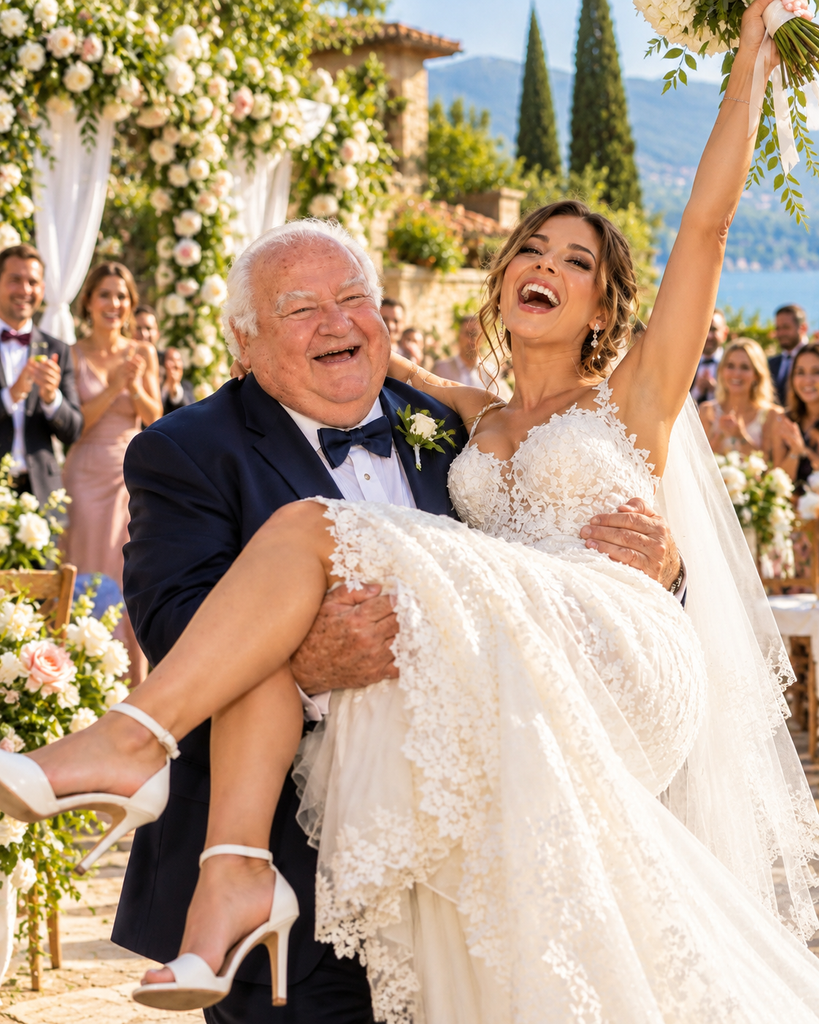
I was twenty-nine. My husband had been seventy when we married and seventy-one when he died.
I had spent our entire marriage imagining the inheritance that would follow his death.
Instead of discussing his estate, the solicitor placed the box in my hands.
«Your husband wanted you to receive something before the will was explained.»
I opened it.
Inside lay a silver bracelet, a photograph of a little girl, and a folded document bearing my original name.
Not the name I had given my husband.
The name I had spent eleven years trying to erase.
The Girl I Used to Be
I grew up in a small industrial town where most families struggled to pay their bills.
My mother cleaned offices at night. My father disappeared when I was nine, leaving behind debts and promises he never kept.
By seventeen, I was working in a supermarket and dreaming of escaping.
I wanted expensive clothes, beautiful holidays, and a home where the electricity was never disconnected.
At eighteen, I became pregnant.
The baby’s father was a boy I had known since school. He left when I told him.
I was frightened, broke, and completely unprepared for motherhood.
My daughter, Sophie, was born in November.
She had dark hair and a tiny crescent-shaped birthmark beneath her right ear.
For seven months, I tried to raise her.
Then I made a decision that would follow me for the rest of my life.
The Secret I Buried
My mother was struggling with serious health problems, and I had lost my job.
I could barely afford food.
A social worker helped me explore support services and possible care arrangements, but I felt trapped.
Eventually, I agreed to place Sophie with a foster family while I tried to stabilize my life.
The arrangement was meant to be temporary.
At first, I visited regularly.
Then I moved to another city after accepting a job.
I missed appointments.
I stopped answering calls.
I told myself Sophie would be better off without a mother who couldn’t provide for her.
Over time, her circumstances were reviewed through the appropriate child welfare process.
She was eventually adopted.
I signed the necessary documents and walked away.
Afterward, I changed my surname and began introducing myself as Victoria.
Nobody in my new life knew I had a daughter.
Meeting the Millionaire
I met Charles Whitmore at a charity auction.
He was a retired property developer with a reputation for generosity and a fortune estimated in the millions.
I was twenty-seven, working as an events coordinator.
Charles was charming, well-spoken, and surprisingly attentive.
He asked about my career and laughed at my jokes.
When he invited me to dinner, I accepted immediately.
I won’t pretend that his money wasn’t the main attraction.
He owned several properties, traveled first class, and wore watches worth more than my annual salary.
I imagined what life beside him could offer.
Within six months, we were engaged.
My friends warned me that the age difference was enormous.
His relatives assumed I was interested only in his estate.
They weren’t entirely wrong.
A Marriage Built on Unequal Expectations
Charles knew I enjoyed luxury.
He bought me designer clothes and took me on holidays I’d once seen only in magazines.
I moved into his enormous house overlooking the countryside.
For the first time, I felt financially secure.
But Charles wasn’t foolish.
He asked difficult questions about my past.
I told him my parents were dead and that I had no close family.
Neither statement was completely true.
My father was absent, but my mother was alive.
And somewhere, my daughter was growing up with another family.
Charles never pushed when I changed the subject.
I interpreted his silence as trust.
Looking back, I wonder whether it was something else.
The Man Behind the Money
During our marriage, I discovered that Charles was more complicated than I’d expected.
He had grown up poor and built his business through decades of work.
He could be demanding and stubborn, but he was also generous.
He supported local schools and funded a program helping young people leaving foster care.
That particular charity made me uncomfortable.
Whenever Charles mentioned it, I found an excuse to leave the room.
Once, he asked why I never attended its events.
«I don’t like being around sad stories,» I replied.
He studied me for a moment.
«Sometimes those stories deserve to be heard.»
I laughed awkwardly and changed the subject.
He didn’t ask again.
The Illness That Changed Everything
Ten months after our wedding, Charles suffered a serious stroke.
He survived, but his health deteriorated.
He needed help walking and struggled with fatigue.
The man who had once controlled boardrooms now needed assistance with ordinary tasks.
At first, I resented the change.
I had imagined glamorous dinners and long holidays.
Instead, my days revolved around appointments, medication, and arranging care.
Charles noticed my frustration.
One evening, he asked whether I regretted marrying him.
I answered too quickly.
«Of course not.»
He smiled sadly.
«You don’t have to pretend with me, Victoria.»
I looked away.
For the first time, I wondered how much he understood about my reasons for marrying him.
The Final Conversation
A week before Charles died, he asked me to sit beside his bed.
He seemed unusually alert.
«There’s something I want you to remember,» he said.
«What?»
«Money can make life easier, but it can’t undo every decision.»
I frowned.
«Why are you telling me this?»
He reached for my hand.
«Because I know you’ve spent years running from something.»
My heart began pounding.
I asked what he meant.
But he closed his eyes.
«I’m tired,» he whispered.
We never discussed it again.
He died six days later.
I cried at his funeral.
Some of those tears were genuine.
Others came from fear about what would happen next.
The Photograph in the Box
Standing outside the chapel, I stared at the photograph.
The little girl appeared to be about six.
She had dark hair, serious eyes, and a small crescent-shaped birthmark beneath her ear.
Sophie.
My daughter.
I hadn’t seen her since she was a baby.
I turned the photograph over.
On the back, Charles had written:
She deserved to know she was never forgotten.
My hands began shaking.
The solicitor asked whether I needed to sit down.
I barely heard him.
«Where did he get this?»
«He left a letter explaining what he could.»
I unfolded the document beneath the photograph.
It was a copy of a letter I had written years earlier, when Sophie was still in foster care.
I recognized every word.
I’m sorry I can’t be the mother you need.
I had never imagined seeing it again.
How Charles Discovered My Past
The solicitor explained that Charles had learned about my previous identity through a routine review of information I had provided during our marriage.
The discrepancies prompted questions.
Charles then approached me indirectly, hoping I would tell him the truth.
When I didn’t, he sought professional advice about how to handle what he knew.
He did not obtain confidential adoption records or attempt to interfere with Sophie’s placement.
Instead, he kept the documents he already had and contacted an organization that helped adopted adults and birth relatives navigate lawful reunion processes.
He wanted to understand whether there might someday be an appropriate way for Sophie to receive information from me.
But he knew that contact couldn’t be forced.
«Did he find her?» I asked.
The solicitor hesitated.
«He learned that she was safe. He was not given permission to contact her.»
I felt both relieved and devastated.
The Letter Charles Wrote
Inside the box was a second envelope.
This one contained a handwritten letter from my husband.
Victoria,
I knew you had a daughter before we married.
I also knew that you had changed your name and hidden much of your past.
I waited for you to tell me because I believed honesty had to be your choice.
I stopped reading.
Charles had known.
All those dinners, holidays, and conversations.
Every time he’d asked about my childhood.
Every time I’d lied.
He had known.
The letter continued.
I don’t know everything that happened when Sophie was born. I won’t pretend to understand decisions I wasn’t there to witness.
But I know you’ve spent years convincing yourself that forgetting her was the only way to survive.
I don’t believe you’ve forgotten her at all.
I pressed the paper against my chest.
What He Left Me
The solicitor invited me to his office the following morning.
There, he explained the will.
Charles had left most of his fortune to his existing charitable foundation and several relatives.
I was not the sole beneficiary.
However, I had been provided for through a separate financial arrangement established during his lifetime, along with a modest inheritance under the will.
I would not become a multimillionaire.
But I would have enough to live securely while rebuilding my career.
Charles had also left funds to support independent counseling and family-reconnection services, available to me if I chose to use them.
There was no requirement that I contact Sophie.
No condition forcing me to reveal my past publicly.
Charles had written that the decision must remain mine.
I sat in silence.
I’d married him expecting wealth.
Instead, he’d left me something I couldn’t buy.
An opportunity to confront the life I’d abandoned.
The Anger I Couldn’t Explain
For several weeks, I was furious.
I felt exposed.
I resented Charles for investigating my past without telling me.
I resented the solicitor for delivering the truth so calmly.
Most of all, I resented myself.
I’d convinced myself that Sophie was better off without me.
Now I had to admit that I had never truly known whether that was the case.
I had made a painful decision under difficult circumstances.
But I’d also chosen, repeatedly, not to seek support or explore what information I could lawfully receive about her welfare.
I couldn’t change what had happened.
And I couldn’t assume that Sophie would want anything to do with me.
That realization was harder than losing the fortune I’d expected.
Returning to My Mother
I hadn’t spoken to my mother in eight years.
After Charles’s death, I traveled back to my hometown.
She was living in a small apartment near the railway station.
When she opened the door, she stared at me.
«Victoria?»
I nodded.
She began crying.
We sat at her kitchen table for hours.
I told her about Charles, the box, and the photograph.
My mother listened quietly.
Then she said something that broke my heart.
«I always hoped you’d come back for her.»
I looked down.
«I thought she’d be happier without me.»
«Maybe she has a good life,» my mother replied. «But you never gave yourself the chance to find out what she might need from you.»
I couldn’t argue.
The First Step Toward Sophie
With professional guidance, I registered my interest in possible future contact through an appropriate intermediary service.
I wrote a letter explaining who I was.
I didn’t ask Sophie to forgive me.
I didn’t claim that circumstances had left me with no choice.
I simply told her that I had been frightened, overwhelmed, and unable to manage my responsibilities.
I acknowledged that my absence might have hurt her.
And I made it clear that she owed me nothing.
The service explained that any contact would depend on the applicable rules, the wishes of those involved, and Sophie’s circumstances.
I accepted that.
For the first time, I was trying to do something without expecting an immediate reward.
The Reply I Never Expected
Nearly a year passed.
I returned to work and began volunteering with a family support organization.
I learned how many parents faced difficult circumstances and how important practical assistance could be.
Then one afternoon, I received a letter from the intermediary service.
Sophie was now thirteen.
Her adoptive parents had received information about my wish to make contact.
After careful consideration and professional advice, they had agreed to exchange letters on her behalf.
Sophie had written a short message.
I opened it with trembling hands.
Hello,
My parents told me about you.
I don’t know what I want to say yet.
I like drawing and horses.
They said I can ask questions when I’m ready.
I hope you’re okay.
I read it again and again.
There was no forgiveness.
No dramatic reunion.
Just a few sentences from a girl who was beginning to understand a complicated part of her history.
It was more than I’d expected.
A Relationship That Needed Time
Over the following months, we exchanged occasional letters through the agreed arrangements.
I learned that Sophie loved animals and wanted to become a veterinarian.
She was good at mathematics and hated mushrooms.
She had a younger adoptive brother who annoyed her but whom she clearly adored.
I told her about my work and my childhood.
I answered questions honestly when she asked them.
I didn’t send expensive gifts.
I didn’t try to compete with her parents.
They were the people who had raised her, cared for her, and been present throughout her life.
I respected that.
Eventually, Sophie asked whether we might meet someday.
Her parents and the professionals involved helped us plan a careful, supported meeting.
I was terrified.
The Day I Saw My Daughter Again
We met at a quiet family center.
Sophie arrived with her adoptive mother.
She was taller than I’d imagined, with dark hair and the same green eyes I saw in the mirror.
For a moment, I couldn’t speak.
Then she smiled nervously.
«Hi.»
«Hello, Sophie.»
We sat together and talked.
She asked whether I’d liked school.
Whether I had any pets.
Whether I had always lived in the same city.
I answered every question.
Then she asked the one I’d been dreading.
«Why didn’t you come back?»
I took a breath.
«Because I was scared, and I made choices I regret. You deserved more from me.»
She looked down.
«Was it because of me?»
«No,» I said immediately. «Never because of you.»
Her adoptive mother reached for her hand.
I was grateful she was there.
Sophie didn’t hug me that day.
I didn’t expect her to.
But before leaving, she asked whether we could meet again.
I said yes.
What I Finally Understood About Charles
Two years after Charles’s death, I visited his grave.
I brought flowers and the photograph he’d left in the box.
I sat beside the headstone for a long time.
I still had complicated feelings about our marriage.
Charles had concealed what he knew.
He had made decisions about his estate that surprised me.
And I had entered the relationship with expectations I wasn’t proud of.
But his final gift had forced me to confront a truth I’d avoided for years.
I couldn’t build a meaningful future while pretending my past didn’t exist.
The money he left helped me survive.
The box made me reconsider who I wanted to become.
I couldn’t undo my absence from Sophie’s childhood.
I couldn’t demand that she love me.
But I could be honest.
I could respect her boundaries.
And I could stop treating shame as a reason to disappear.
The Inheritance I Never Imagined
I’m thirty-two now.
Sophie and I are still getting to know each other.
Some meetings are easy.
Others are awkward.
There are questions I struggle to answer and feelings neither of us fully understands.
Her adoptive parents remain central to her life.
I don’t try to change that.
My mother and I have also rebuilt a relationship, slowly and imperfectly.
I live in a modest apartment and work for a community organization.
My life looks nothing like the luxurious future I imagined when I married Charles.
But I no longer measure security only by the amount in my bank account.
Sometimes I think about the young woman who stood outside a chapel expecting to inherit millions.
She opened a wooden box believing it contained a final gift from a wealthy husband.
Instead, she found a photograph of the daughter she’d tried to forget.
I once thought my darkest secret was that I had married a man for his money.
It wasn’t.
My darkest secret was that I had abandoned a child and then spent years pretending she had never existed.
Charles knew.
He could have exposed me publicly or used that knowledge to humiliate me.
Instead, he left me the truth and the freedom to decide what to do with it.
I still don’t know whether I deserved his generosity.
But I know what I intend to do with the chance he gave me.
I intend to become someone Sophie can trust, even if it takes years.
Because the greatest thing Charles left me wasn’t his fortune.
It was the possibility of becoming a person who no longer needed to hide from her own life.