
For ten years, I believed I knew everything important about the final months of my daughter’s life.
I knew which song she played constantly while preparing the nursery. I knew she craved oranges during pregnancy and couldn’t stand the smell of coffee. I knew she wanted to name her son Jacob.
And I knew the terrible part.
My daughter, Hannah, died shortly after giving birth.
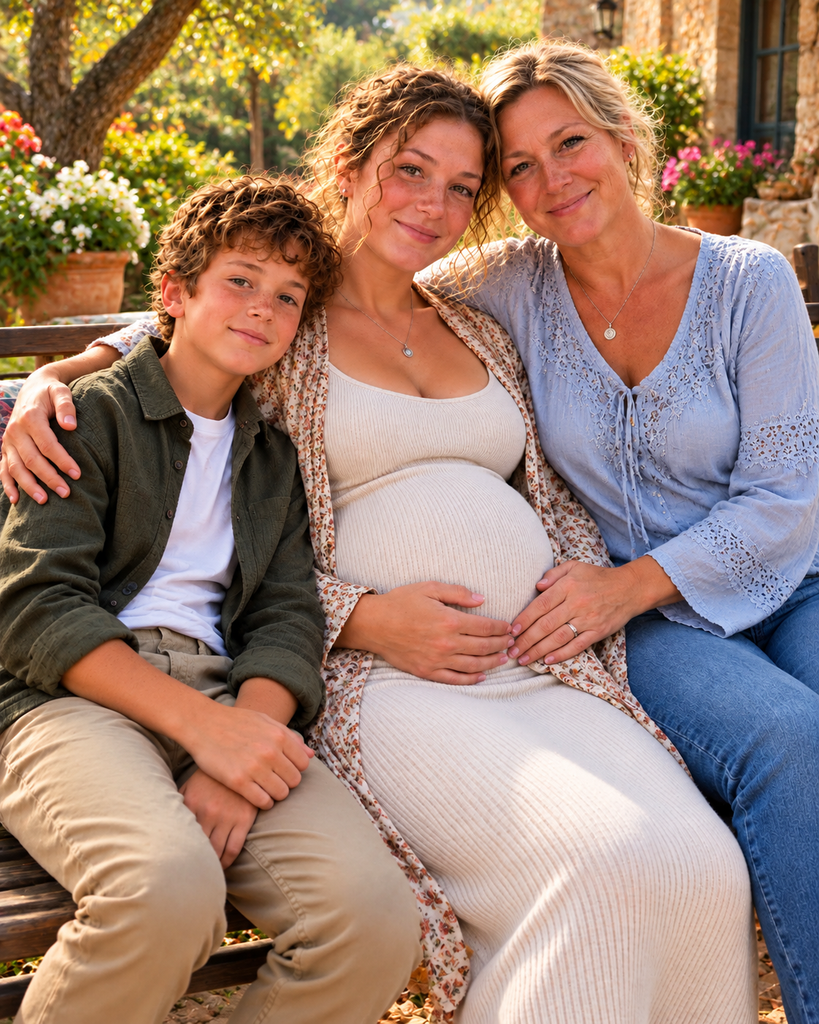
Jacob survived.
From the moment I brought him home, I tried to give him enough love for two people.
Every year on the anniversary of Hannah’s death, Jacob and I visited her grave.
On the tenth anniversary, someone was waiting for us.
A woman I’d never seen before stood several steps away from Hannah’s headstone holding a weathered envelope.
When she saw me, she started crying.
“You’re Margaret, aren’t you?”
I instinctively moved closer to Jacob.
“Yes.”
She held out the envelope.
“Hannah made me promise not to give this to you until Jacob was old enough.”
My daughter’s handwriting was on the front.
My hands began to shake.
But the greatest surprise wasn’t inside the letter.
It was standing directly in front of me.
The Life Hannah Left Behind
Hannah was twenty-seven when she died.
She was independent, stubborn and compassionate almost to a fault.
Her relationship with Jacob’s father, Eric, had ended during her pregnancy.
At least that was what she told me.
I never met him.
Whenever I asked questions, Hannah became uncomfortable.
“He isn’t going to be involved, Mom.”
“Does he know about the baby?”
“Yes.”
“Does he want to be involved?”
“No.”
I disliked him without knowing his face.
What kind of man learns he’s going to have a child and disappears?
But Hannah was an adult.
She insisted she had handled the situation.
So I stopped pushing.
Then, during the final weeks of her pregnancy, I noticed something strange.
She became anxious whenever the phone rang.
Once, I entered her apartment and found her crying over a letter.
She folded it immediately.
“What’s wrong?”
“Nothing.”
“Hannah.”
“Please, Mom. I just don’t want to talk about it.”
Those were some of the last private words we exchanged.
Becoming Jacob’s Parent
After Hannah died, there was barely time to grieve.
A newborn doesn’t understand that the adults around him have lost someone.
Jacob needed feeding.
Changing.
Holding.
He woke every few hours.
I was fifty-four and suddenly raising an infant again.
There were legal matters too.
Hannah had named me as the person she wanted to care for Jacob if anything happened to her.
There was no father listed as an active caregiver.
No man appeared to claim him.
So Jacob came home with me.
The first year was survival.
The second was easier.
By the time he started school, our life had settled into something that looked ordinary from the outside.
Jacob called me Grandma, never Mom.
I wanted that distinction preserved.
Hannah was his mother.
I was the person raising him.
I kept photographs of her throughout the house.
I told him stories.
I explained how she used to dance while cooking and how she once drove six hours to rescue an injured dog she’d seen online.
As he grew older, his questions changed.
“Where’s my dad?”
I told him what I believed.
“I don’t know.”
“Did he leave Mom?”
“I think so.”
“Did he know about me?”
“Yes.”
That answer would later become the one I regretted most.
Not because I had deliberately lied.
Because I had repeated a story I had never independently confirmed.
The Woman at the Cemetery
Her name was Rebecca.
She asked if we could speak privately.
Jacob was ten, not two. He knew something unusual was happening.
“Is this about my mom?” he asked.
Rebecca looked at him for a long moment.
“Yes.”
We sat on a bench near the cemetery entrance.
The envelope remained in my hands.
“How did you know Hannah?”
“She was my best friend.”
I stared at her.
I knew Hannah’s friends.
At least I thought I did.
Rebecca explained that they had met through a support group during Hannah’s pregnancy.
Not a pregnancy support group.
A group for families dealing with addiction.
That immediately confused me.
Hannah didn’t use drugs.
Then Rebecca said:
“It wasn’t for Hannah.”
I understood before she finished.
“Eric?”
She nodded.
The Story I Had Never Heard
According to Rebecca, Eric had not abandoned Hannah because he didn’t care about their baby.
He had struggled for years with addiction.
Hannah loved him, but she had reached a point where love could no longer make their home safe or predictable.
When she discovered she was pregnant, she gave him a choice.
Seek serious treatment and remain sober, or stay away until he could demonstrate stability.
Eric entered treatment.
Then he relapsed.
Hannah ended the relationship.
But she didn’t stop loving him.
“She was terrified you’d judge her,” Rebecca said.
“Why would she think that?”
Rebecca looked uncomfortable.
Then I remembered.
Years earlier, one of my brothers had struggled with addiction.
I had been angry about the damage his behavior caused our family.
I had said things I later regretted.
Hannah had heard them.
Apparently, she concluded that if I knew about Eric, I would never trust him around Jacob, even if he recovered.
So she kept his identity from me.
The Letter
I finally opened the envelope.
The first line nearly broke me.
“Mom, if you’re reading this, then Jacob is old enough to begin hearing the complicated version of our story.”
Not the true version.
The complicated version.
Hannah explained that she wasn’t writing because she expected to die.
She had written several letters before giving birth because becoming a parent had made her think about worst-case scenarios.
She wanted Jacob to know that his father wasn’t simply a man who had rejected him.
Eric was ill.
He had made choices that hurt people.
Both things could be true.
Hannah wrote that if Eric became stable and remained that way, she wanted Jacob eventually to have the opportunity to know him.
But not immediately.
Not because of guilt.
Not because of biological obligation.
Only if it could be done safely and gradually.
Then came the sentence that made me look up at Rebecca.
“Rebecca knows how to find him.”
Where Was Eric?
I felt angry.
Ten years.
“You knew all this time?”
Rebecca nodded.
“And you said nothing?”
“I promised Hannah.”
“She didn’t know she was going to die.”
“No.”
“Then why wait ten years?”
Rebecca explained that Hannah had originally asked her to hold the letter until Jacob was mature enough to understand that adults could love someone and still need boundaries from them.
After Hannah died, Rebecca had considered contacting me immediately.
Then she learned Eric had relapsed again.
She decided that delivering the letter while he was unstable would contradict the purpose of Hannah’s instructions.
“So why now?”
“Because Eric has been sober for eight years.”
I couldn’t speak.
“He’s alive?”
“Yes.”
“Does he know about Jacob?”
“He has always known.”
“Then why hasn’t he come?”
Rebecca reached into her bag.
Because, she explained, Eric had respected Hannah’s boundary.
Ten Years of Birthday Cards
The second envelope contained photographs and cards.
Ten birthday cards.
One for each year of Jacob’s life.
Eric had written them but never sent them.
Rebecca had kept them.
The first was only a few lines.
The later ones were longer.
He never called himself Dad.
He never asked Jacob to forgive him.
He wrote about his recovery.
His job.
The apartment he eventually rented.
The woodworking class he began teaching at a community center.
He sent Rebecca periodic documentation showing that he was still participating in recovery programs.
Not because Hannah had legally required it.
Because he believed that if the day ever came when Jacob wanted to meet him, he should be able to show that he’d taken his responsibility seriously.
I felt something uncomfortable.
For ten years, I had imagined Jacob’s father as a man who had disappeared without caring.
The reality was harder.
Eric had disappeared because Hannah had asked him to stay away until he was safe.
Then she died before she could decide whether that time had arrived.
The Choice Wasn’t Mine Alone
My first instinct was to protect Jacob.
I wanted to take the letters home, hide them and think for several months.
Then I realized I was dangerously close to repeating Hannah’s mistake.
Protection could become control.
Jacob was still a child, but this was his history.
So I gave him an age-appropriate version.
I told him his father had struggled with a serious illness called addiction.
I explained that his mother had loved Eric but had not believed it was safe for them to live together.
I told him Eric had worked for years to become healthier.
Then I asked:
“Would you like to read one of his cards?”
Jacob chose the tenth birthday card.
He read it twice.
Then he asked:
“Does he look like me?”
Rebecca began crying.
Meeting His Father
We did not arrange a meeting the next day.
Or the next week.
I spoke with a counselor experienced in family reunification.
We verified what we reasonably could about Eric’s circumstances.
Then Jacob and Eric exchanged letters.
Months later, they had a short video call.
Only after that did they meet.
The first meeting took place in a park.
I expected something dramatic.
Instead, it was awkward.
Eric cried.
Jacob didn’t.
They talked about baseball.
Then Jacob noticed a small scar above Eric’s eyebrow.
He had one in almost exactly the same place.
He laughed.
That tiny moment did more than any prepared speech could have done.
Eric didn’t become Jacob’s father overnight.
He didn’t replace me.
He didn’t replace Hannah.
He became another person in Jacob’s life.
Slowly.
Carefully.
What Hannah’s Secret Taught Me
For years, I told Jacob that his mother had been brave.
I still believe that.
But bravery doesn’t mean making every decision perfectly.
Hannah was afraid of my judgment, afraid of Eric’s instability and afraid of what might happen to her child.
She tried to control those fears by keeping parts of her life separate.
I wish she had trusted me with more.
I also had to admit that perhaps I hadn’t always made myself easy to trust.
The letter at the cemetery didn’t expose a scandal.
It exposed something more human.
A young mother had loved a man she couldn’t safely build a life with.
A man with an addiction had lost his family and eventually worked to rebuild himself.
A grandmother had spent ten years believing a simple explanation because simple explanations are easier than complicated truths.
And a boy discovered that his father had not forgotten him.
Hannah’s letter is now kept in a box with Eric’s birthday cards.
One day, when Jacob is older, he will read everything.
He will form his own opinion about his parents and the choices they made.
That is his right.
My job isn’t to decide what he should feel.
My job is the same one I’ve had since the day I first carried him home:
to keep him safe while giving him enough truth to understand where he came from.
For ten years, I thought keeping Hannah’s memory alive meant preserving the version of her story I already knew.
Now I understand something different.
To remember someone honestly, we have to allow them to have been complicated.
Hannah was loving.
She was frightened.
She made difficult choices.
She kept secrets.
And she left behind a final request that eventually gave her son something I could never have given him alone:
the chance to know the other half of his story.
Clarify the cemetery letter’s timelineDeepen Margaret’s grief and guilt