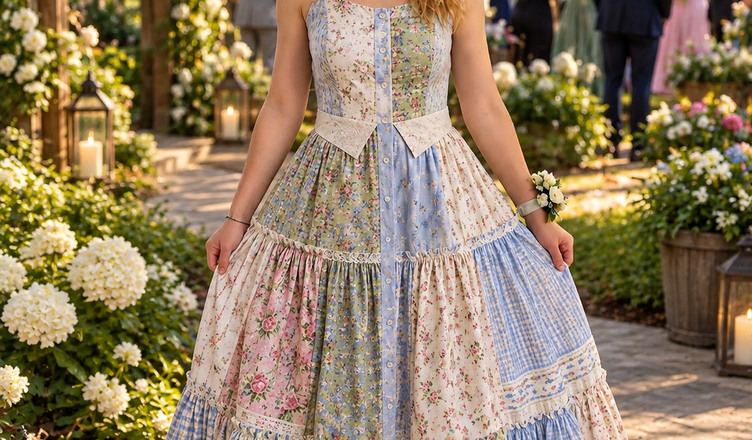
For 18-year-old Anna, however, the most important thing she wore to graduation was something nobody else initially understood.
Her dress had not come from an expensive boutique. It had not been ordered months in advance or chosen because it followed the latest fashion. Anna had made it herself from several old shirts that once belonged to her father.
He had died two years earlier.
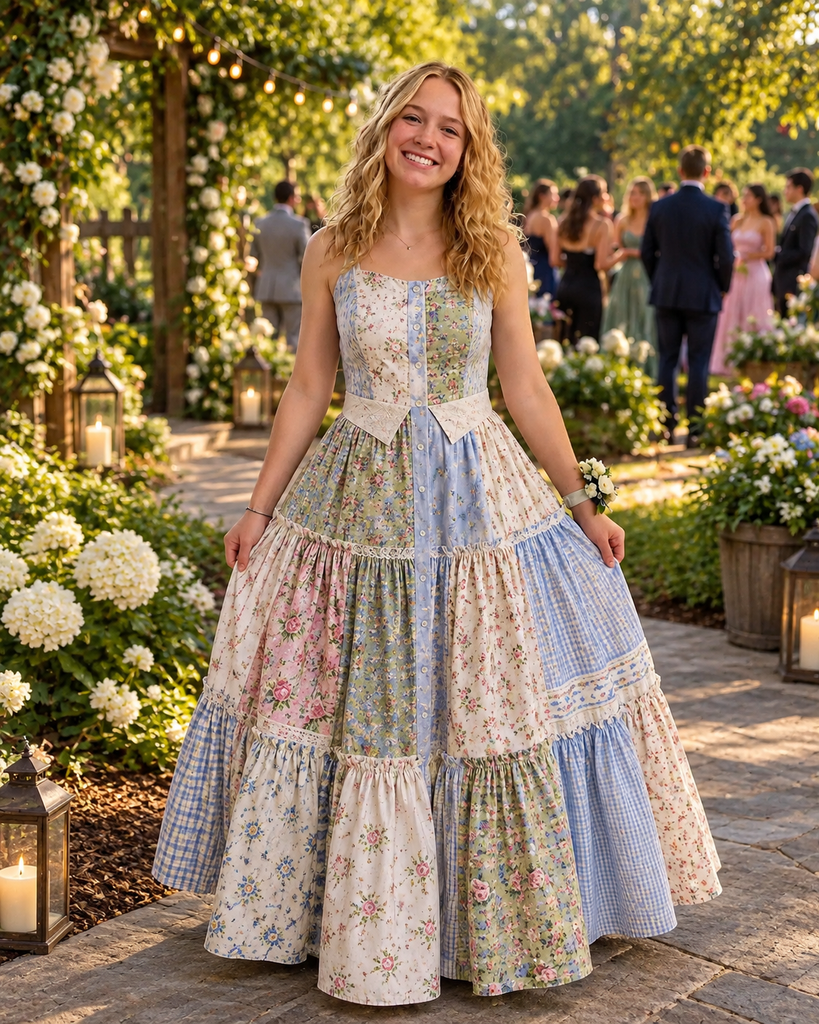
The original premise does not provide names, a location, or evidence that it describes a documented event. The following is therefore an independent fictional story inspired by its central theme: grief, memory, creativity, and the danger of judging something before knowing its meaning.
The Closet Nobody Wanted to Empty
After Anna’s father, David, died, his clothes remained in the bedroom closet.
For months, Anna’s mother could not bring herself to move them.
There were work shirts, old sweaters, jackets and a suit he had worn to weddings and formal dinners. None of the items was particularly valuable.
Their importance came from familiarity.
Anna remembered her father rolling up the sleeves of his blue shirts while fixing things around the house. She remembered him wearing a green checked shirt on family trips and an old white one when he cooked on weekends.
Eventually, her mother began sorting through the closet.
Some clothes were donated.
Others were given to relatives.
Anna asked to keep several shirts.
She did not know what she would do with them.
She simply was not ready to let them go.
The Graduation He Would Never See
David had spoken often about Anna’s graduation.
He had promised to take too many photographs. He joked that he would embarrass her by cheering louder than every other parent.
At the time, Anna had rolled her eyes.
After his death, she would have given almost anything to hear those embarrassing cheers.
As graduation approached, classmates began discussing outfits.
Some had purchased elegant dresses. Others were sharing photographs of shoes, hairstyles and accessories.
Anna participated in the conversations but felt strangely disconnected from them.
Every plan for graduation contained an absence.
Her father should have been there.
No dress could change that.
Then one evening she opened the box containing his remaining shirts.
An idea began to form.
Turning Memory Into Something New
Anna had learned basic sewing from her grandmother.
She was not an expert, but she understood patterns, seams and how to operate a sewing machine.
She placed several of her father’s shirts across the floor.
The colors did not match perfectly.
That was part of their charm.
There was pale blue cotton, white fabric with narrow stripes and a darker checked pattern.
Instead of preserving the shirts forever inside a box, Anna wondered whether she could transform them into something she could actually wear.
Her mother was uncertain at first.
“Are you sure?” she asked.
Cutting the fabric would be irreversible.
Anna understood.
“That is why I want to do it.”
The first cut was the hardest.
After that, the shirts gradually stopped being garments and became material.
A Dress Made From a Life
Anna spent several weeks working on the design.
She created a fitted upper section from the plainest fabric and used pieces from the other shirts to build the skirt. She preserved one original pocket and incorporated it near the side.
Inside the dress, where nobody else would see it, she stitched a small piece containing one of her father’s initials from a clothing label.
The finished garment was imperfect.
Some seams were visible.
The different fabrics created an unusual pattern.
A professional designer could probably have made something more polished.
Anna did not care.
When she put the dress on, she recognized pieces of her father’s everyday life.
For the first time, graduation felt slightly less like a day defined by who would be missing.
She would carry something of him with her.
The First Reactions
On the morning of graduation, Anna’s mother cried when she saw the finished dress.
Not because it was technically perfect.
Because she recognized the fabric immediately.
She touched the blue section of the skirt.
“He wore this one constantly.”
Anna nodded.
“I know.”
At school, the reaction was different.
Most students did not know where the material had come from.
To them, the dress simply looked unusual.
Anna noticed people staring.
A few classmates complimented her and asked whether she had made it herself.
Others whispered.
Near the entrance to the hall, she heard someone laugh.
“Is that made from men’s shirts?”
Another voice answered.
“It looks like it.”
Anna kept walking.
The Difference Between Unusual and Worthless
People often evaluate clothing within seconds.
We notice whether something appears expensive, fashionable, professionally made or appropriate for the occasion.
But price and meaning are entirely different forms of value.
A new designer dress may have significant financial value.
A handmade garment created from a loved one’s clothing may be worth very little on the resale market while being emotionally irreplaceable.
Neither form of value is imaginary.
They simply measure different things.
The students laughing at Anna saw fabric.
Anna saw memories.
That gap in knowledge shaped everything.
When Mockery Finds an Audience
Inside the hall, Anna became increasingly aware of the attention.
Someone pointed toward her skirt.
Another student smiled and whispered to a friend.
The behavior was not dramatic enough for a teacher to intervene. Nobody shouted an insult across the room.
But small acts can still hurt.
Anna considered putting on her graduation gown early so the dress would be hidden.
Then she remembered how long she had spent making it.
She left it visible.
Her father had once told her that embarrassment becomes much more powerful when you start making decisions for the people trying to embarrass you.
She could not remember the exact words anymore.
She remembered the idea.
The Principal Knew the Story
Before the ceremony began, Principal Harris stepped toward the microphone.
Anna expected the usual instructions about seating and photographs.
Instead, he paused.
“I want to mention something before we begin.”
The room gradually quieted.
Anna looked toward the stage.
Mr. Harris explained that graduation was usually described as a celebration of the students who were present.
But every graduating student had reached that room with help from people who might not be sitting in the audience.
Parents.
Grandparents.
Teachers.
Friends.
Some of those people were absent because of distance.
Others were absent because they were no longer alive.
Anna felt her throat tighten.
Then the principal looked toward her section.
He Did Not Turn Her Into a Spectacle
Mr. Harris had learned about Anna’s dress from her mother while organizing graduation details.
He did not ask Anna to stand.
He did not call attention to the students who had laughed.
Instead, he briefly explained that one member of the graduating class had created her clothing from shirts belonging to a parent she had lost.
He spoke about memory and the different ways people carry those they love into important moments.
Then he said something simple.
Graduation, he reminded the students, was supposed to demonstrate how much they had learned.
That education included knowing that something should not be mocked merely because its meaning was not immediately visible.
The room became silent.
Anna looked down at her dress.
For the first time that morning, she did not feel exposed.
She felt understood.
The Apology That Came Later
After the ceremony, one of the girls who had laughed approached Anna.
She seemed uncomfortable.
“I didn’t know about your dad.”
Anna nodded.
“No, you didn’t.”
The girl apologized.
Anna accepted.
But the moment left her thinking.
Would the dress have deserved ridicule if her father were alive?
Would it have been acceptable to mock her simply because she had made something unusual?
Knowing the story made people more sympathetic.
It should not have been necessary to make them respectful.
That distinction mattered.
Clothing Can Become a Form of Memory
Keeping the belongings of someone who has died is common.
A watch may be worn by the next generation. Jewelry may be passed down. A favorite sweater may remain folded in a drawer because its texture or smell evokes memories.
Transforming clothing into another object is another way of preserving that connection.
Families sometimes create quilts from shirts, pillows from sweaters or small keepsakes from fabric.
The original item changes, but its emotional significance can continue.
For Anna, cutting her father’s shirts had initially felt frightening because she was destroying something that could never be replaced.
Eventually, she understood the process differently.
The shirts had spent two years inside a box.
As a dress, they accompanied her somewhere her father had always planned to be.
Grief Does Not Follow a Schedule
Two years had passed since David’s death.
Some people assumed Anna’s grief should therefore be largely finished.
Grief rarely behaves so neatly.
Major milestones can make absence feel new again.
Graduations, weddings, birthdays and the birth of a child can create happiness and sadness simultaneously. A person may genuinely enjoy the occasion while also feeling the absence of someone who should have witnessed it.
That does not diminish the celebration.
It reflects the importance of the relationship.
Anna was proud to graduate.
She was excited about her future.
She also wanted her father there.
All three things could be true.
A Photograph With an Empty Space
After the ceremony, Anna and her mother stood outside for photographs.
Her mother took far too many.
Anna laughed.
“That was Dad’s job.”
“I know,” her mother replied. “I’m covering for him.”
For one photograph, Anna removed her graduation gown so the handmade dress could be seen completely.
Years later, that image would become more important than she expected.
Fashion would change.
Her hairstyle would eventually look dated.
The school building itself might someday be renovated.
But the pieces of blue, white and checked fabric would continue telling the same story.
What We Cannot See
The experience taught Anna something she carried beyond graduation.
People walk around wearing invisible histories.
A cheap ring may have belonged to a grandmother.
An old jacket may be the last gift someone received from a brother.
A damaged watch may have survived an important event.
A strange handmade dress may contain pieces of a father who never lived to see his daughter graduate.
We usually do not know.
That uncertainty should make us slower to ridicule, not faster.
The principal’s speech did not make Anna’s dress more valuable.
It had been valuable before anyone in the room understood it.
What changed was the audience.
They finally learned the story behind what they had been judging.
Anna had entered the hall worried that people saw an awkward dress made from old men’s shirts.
She left knowing that the garment represented something much larger.
Her father could not sit in the audience.
He could not cheer too loudly or take embarrassing photographs as he had promised.
But when Anna crossed the stage to receive her diploma, pieces of the shirts he had once worn moved with every step.
It was not the same as having him there.
Nothing could be.
But on one of the most important days of her young life, she had found a way to carry part of the past forward instead of leaving it behind.