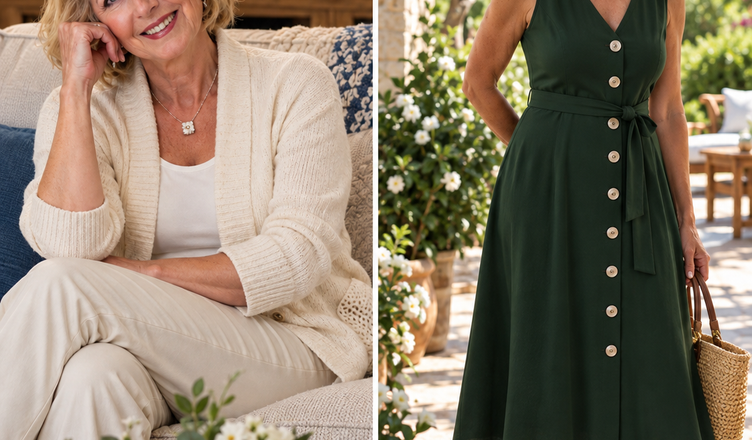
It sounds like a strange question, yet many women discover that the older they become, the more strangers seem willing to answer it for them. A skirt is suddenly considered too short. A dress is too fitted. A bright color attracts comments. Sleeveless clothing is questioned. High heels are described as inappropriate, while fashionable outfits are dismissed as an attempt to “look young.”
The criticism is rarely about fabric alone. Behind it lies a much broader question about aging, visibility, confidence and the expectations society places on women.
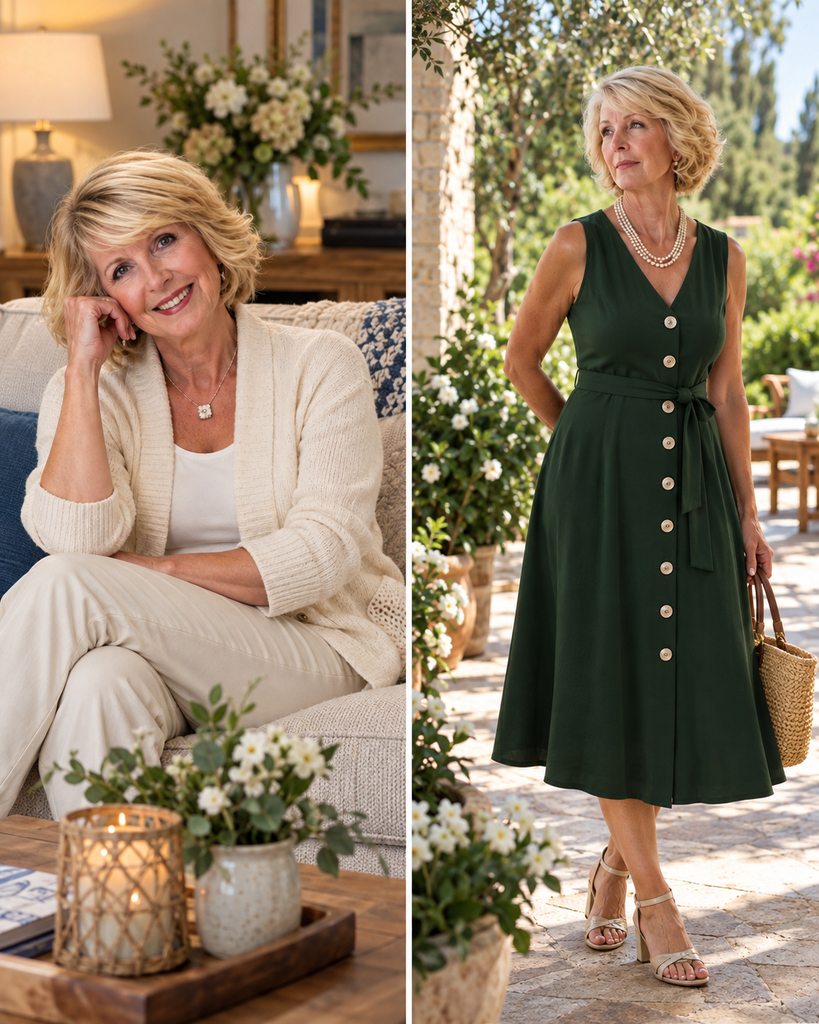
Consider the story of a 75-year-old woman who becomes the target of criticism because of the way she dresses. People tell her that certain clothes are no longer suitable “at her age.” Instead of changing her wardrobe to satisfy them, she responds with a simple principle: deciding what she wears is her own responsibility.
The original account provides only this basic situation, so there is no reliable basis for adding biographical details about the woman or presenting the episode as a documented public event. But the issue it raises is very real and much larger than one individual story.
The Unwritten Rules of Aging
There is no official handbook telling people what they must wear at 30, 50, 70 or 90. Nevertheless, unwritten rules surrounding age can be surprisingly powerful.
For women in particular, clothing is often treated as a public statement that others feel entitled to judge. Younger women may be criticized for appearing too provocative, too conservative, too casual or too concerned with fashion. As they grow older, another layer of expectations appears: they are often encouraged to become less noticeable.
The language used to express this expectation can sound harmless.
“Dress your age.”
“That style is for younger women.”
“You would look more elegant in something modest.”
Sometimes such comments are intended as advice rather than insults. Yet they still raise an important question: what exactly does “dressing your age” mean?
Age itself does not determine personality. Two women born in the same year may have completely different tastes, occupations, lifestyles and ideas about beauty. One may love neutral colors and classic tailoring. Another may prefer leather jackets, bold prints or colorful dresses. Neither preference becomes automatically invalid because of a birthday.
Practical needs can certainly change with age. Comfort, mobility, temperature sensitivity and health considerations may influence clothing choices. But these are individual realities, not universal aesthetic rules.
Clothing Is More Than Decoration
People sometimes dismiss fashion as superficial. In reality, clothing serves several purposes at once.
At the most basic level, it protects the body. Beyond that, it can communicate profession, culture, social role, mood and personal taste. What someone wears can also influence how that person experiences a particular day.
A favorite jacket may create confidence before an important meeting. A formal outfit can mark a special occasion. Comfortable clothes can make an ordinary afternoon more pleasant. A bright dress may simply bring its wearer joy.
These functions do not disappear at 60 or 75.
The desire to choose one’s appearance is closely connected with autonomy. That does not mean every clothing choice must be celebrated by everyone else. Taste remains subjective. People are free to dislike an outfit just as the person wearing it is free to like it.
The important distinction is between personal preference and authority.
Saying, “That style isn’t for me,” expresses taste.
Saying, “People your age shouldn’t wear that,” creates a rule for somebody else based primarily on age.
Those statements are not the same.
Why Older Women Attract Particular Scrutiny
Aging brings an interesting contradiction. Modern culture frequently tells people to remain active, confident and engaged as they grow older. At the same time, visible signs of aging are often treated as things that should be concealed.
Older women can find themselves caught between competing expectations.
If they stop paying attention to fashion, they may be described as having “given up.” If they remain highly interested in fashion, they can be accused of trying too hard to look younger. Gray hair may be criticized as aging, while dyed hair may be interpreted as refusing to accept age. Conservative clothing can make someone seem old-fashioned, while more daring clothing can be called inappropriate.
It becomes a game that is almost impossible to win because the standards contradict one another.
The problem is therefore not necessarily the particular dress, skirt or pair of shoes. It is the assumption that aging should gradually reduce a woman’s freedom to decide how visible, colorful or expressive she wants to be.
Style Does Not Have to Mean Chasing Youth
One of the most common misunderstandings about fashionable older people is the assumption that they are attempting to appear younger.
Sometimes they may be. But enjoying contemporary clothing does not automatically mean rejecting one’s age.
A 75-year-old woman can know perfectly well that she is 75 and still enjoy an outfit commonly associated with younger people. The two ideas are compatible.
There is also no requirement that confidence in later life must imitate youth. Personal style can evolve without disappearing.
Someone who loved dramatic jewelry at 35 may still love it at 75. Another person may become more adventurous with clothing after retirement because professional dress codes no longer matter. Someone else may move in the opposite direction and decide that comfort is now more important than fashion.
All of these are legitimate developments because personal style is precisely that: personal.
Criticism Has Changed in the Social Media Era
Public judgment of appearance is not new, but social media has changed its scale.
In the past, criticism might have come from relatives, neighbors or colleagues. Today, a photograph or video can reach thousands of strangers in hours. People who know nothing about the individual can offer instant opinions about the person’s body, hairstyle, makeup and clothing.
Age can become a particularly easy target.
The distance created by a screen can make people comfortable saying things they would probably never say directly to someone standing in front of them. A simple photograph can turn into a debate about whether an older person looks “appropriate.”
But popularity does not transform an opinion into a universal standard.
Ten thousand people can dislike a dress. That still does not create an objective rule stating that a 75-year-old cannot wear it.
At the same time, the opposite extreme should be avoided. Not every negative comment about an older person’s outfit is necessarily ageism. People criticize clothing worn by individuals of every age. Context matters.
The key question is whether the criticism concerns the outfit itself or whether age is being used as the primary reason the person supposedly should not wear it.
There Are Situations Where Clothing Rules Matter
Personal freedom does not mean clothing exists without context.
Workplaces can have dress codes. Religious institutions may have expectations concerning clothing. Certain ceremonies require formal attire. Safety regulations can make particular garments unsuitable in factories, laboratories or other environments. Cultural customs also shape what is considered respectful in specific settings.
These are questions of context rather than age alone.
A 25-year-old and a 75-year-old attending the same formal event may both be expected to follow the same dress code. Their individual interpretations of that dress code can still be very different.
This distinction is useful because it prevents a discussion about age from becoming an argument that “anything goes everywhere.”
The stronger principle is simpler: restrictions should have a relevant reason. Age by itself rarely explains why a particular color, silhouette or style should suddenly become forbidden.
The Body Changes, but Identity Does Not Disappear
Physical aging is unavoidable. Bodies change. Skin changes. Hair changes. Strength, posture and mobility may change as well.
But a changing body does not erase personality.
This may be one reason conversations about clothing and aging can become surprisingly emotional. They touch something deeper than fashion: the fear that older people gradually become socially invisible.
When someone continues to dress boldly at 70 or 80, the reaction may reveal as much about observers as it does about the person wearing the clothes. Some see confidence. Others see defiance. Others simply see an outfit they dislike.
The wearer, meanwhile, may not be trying to make any statement at all.
She may simply like the dress.
That possibility is easy to overlook.
Not every unconventional choice is a protest. Sometimes people are merely living according to preferences they have developed over decades.
Confidence Is Not Reserved for the Young
There is a curious tendency to associate confidence in appearance with youth, as though older people should become increasingly apologetic about occupying space.
But aging can also produce the opposite effect.
After decades of adapting to workplaces, relationships, family responsibilities and changing social expectations, some people become less interested in receiving approval from everyone around them. They understand that universal approval is impossible.
That can influence clothing.
A person who once worried constantly about appearing fashionable enough, thin enough or conservative enough may eventually decide that comfort and personal satisfaction matter more.
This does not mean older people become immune to criticism. Words can hurt at any age. It simply means experience can change the importance assigned to other people’s judgments.
Perhaps “Dress Your Age” Needs a New Meaning
The phrase does not necessarily have to disappear. Perhaps it simply needs to mean something different.
Instead of treating age as a list of restrictions, “dressing your age” could mean dressing as the person you actually are at that age.
At 75, that might mean elegant trousers and a simple blouse.
It might mean a bright red dress.
It might mean jeans and sneakers.
It might mean high heels for dinner and comfortable shoes the next morning.
There is no contradiction in any of those choices.
A lifetime is not a process of gradually surrendering colors, patterns and styles until only a narrow range of “acceptable” clothing remains.
The story of a woman refusing to change her wardrobe because others think she is too old for it resonates because the argument is not ultimately about one outfit. It is about who gets the final word.
Other people can have opinions. Fashion magazines can suggest trends. Friends can give advice. Families can express preferences. Cultures can develop traditions.
But unless a genuine dress code, safety concern or specific circumstance requires otherwise, the person getting dressed remains the person who must live in those clothes.
Turning 75 changes many things.
It does not automatically transfer ownership of the wardrobe to everyone else.