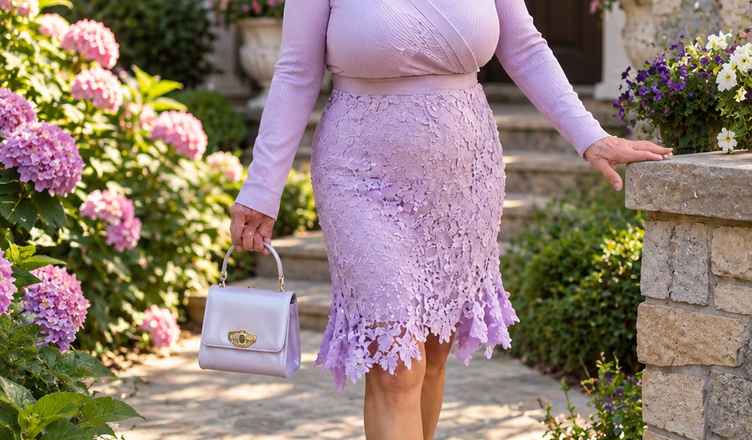
There is an unwritten rule that many people encounter as they grow older: at some mysterious point, they are expected to become less visible.
Clothes should become quieter. Hemlines should become longer. Colors should become more restrained. High heels are supposedly something to leave behind, while anything described as youthful risks attracting the familiar criticism: “You should dress your age.”
But what does dressing your age actually mean?
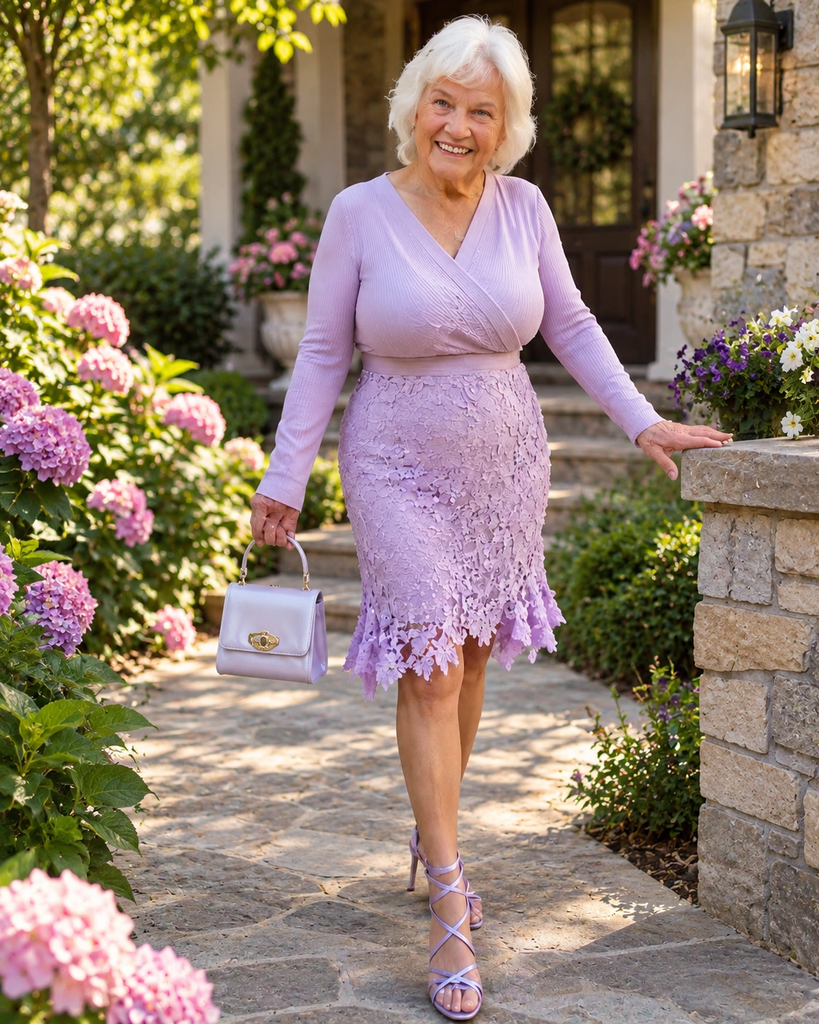
Imagine a 92-year-old woman opening her wardrobe and reaching for a short skirt and a pair of elegant heels. She likes the outfit. She feels comfortable in it. Perhaps she has loved fashion for most of her life and sees no reason to abandon that interest simply because another birthday has passed.
To some observers, the sight might seem surprising. Others might find it refreshing. A few would inevitably insist that certain clothes are no longer “appropriate.”
The disagreement reveals something larger than a debate about skirts.
It raises a question about aging itself: how much freedom do we allow older people to remain the individuals they have always been?
The Invisible Wardrobe Rules of Aging
Society has rules for clothing even when nobody writes them down.
Children are expected to dress one way, teenagers another. Professional environments develop their own standards. Formal occasions have conventions. Weather and practical circumstances naturally influence what people wear.
Age, however, creates a different kind of expectation.
An older woman wearing a conservative outfit rarely attracts attention. The same woman wearing a miniskirt, fitted dress or high heels may immediately become a subject of discussion.
Interestingly, the clothing itself has not changed.
The person wearing it has.
This suggests that much of what people call “age-appropriate fashion” is not really about fabric, length or color. It is about assumptions regarding how older people should behave.
We often associate youth with experimentation, visibility and sexuality while connecting old age with restraint and disappearance.
Those assumptions can become so familiar that they appear natural.
They are not necessarily natural at all.
They are cultural expectations.
Style Is Part of Identity
Clothing serves a practical purpose, but that is only the beginning.
People also use clothing to communicate.
A carefully chosen suit can express professionalism. Bright colors may reflect an outgoing personality. Vintage clothing can connect someone with a particular era or aesthetic. Jewelry can carry family memories. A favorite pair of shoes may simply make someone feel more like themselves.
None of these functions automatically disappears with age.
Someone who enjoyed fashion at 30 does not necessarily stop caring about it at 70, 80 or 90.
In fact, growing older can sometimes make personal style more confident.
Younger people frequently dress while wondering how others will respond. They follow trends, compare themselves with friends and worry about making mistakes.
With age can come a different attitude: experience has already demonstrated how temporary other people’s opinions can be.
For some older adults, that creates freedom.
The question shifts from “Will everyone approve?” to “Do I like this?”
That can be a powerful change.
Why a Miniskirt Can Become Controversial
There is nothing inherently rebellious about a short skirt.
Yet place that skirt on a woman in her nineties and suddenly people may interpret it as a statement.
The same is true of high heels, swimsuits, fitted clothing or bold makeup.
Why?
Part of the answer lies in the way popular culture represents aging.
Older adults are often shown primarily as grandparents, retirees or people dealing with health problems. These experiences are real and important, but they represent only part of later life.
An older person can be a grandmother and still love fashion.
She can have arthritis and still care about lipstick.
She can have grandchildren while also wanting to feel attractive.
She can require help with one aspect of life and remain fiercely independent in another.
Human identity does not simplify merely because someone gets older.
Yet public expectations often do.
That is why an older woman wearing something unexpected can attract disproportionate attention. She is challenging a familiar visual script.
Confidence Is Not Reserved for Youth
Advertising frequently presents confidence as something associated with youth.
The message is contradictory.
Young people are encouraged to “be themselves,” while older people are sometimes expected to become increasingly restrained.
But confidence has no biological expiration date.
If anything, decades of life can provide reasons for greater self-assurance.
By 92, a person may have lived through enormous social change. She may have experienced love, disappointment, family responsibilities, professional challenges, grief, reinvention and loss.
She may have spent decades fulfilling expectations placed on her by parents, employers, partners or society.
At that stage, asking permission to wear a particular skirt can seem rather absurd.
This does not mean every 92-year-old woman wants to wear a miniskirt.
Most probably do not.
That is precisely the point.
Freedom is not about replacing one expectation with another. Older women should not be told they must dress boldly any more than they should be told they must dress conservatively.
The important principle is choice.
Practicality Still Matters
Rejecting age stereotypes does not require pretending that aging brings no physical changes.
Balance can change. Joints can become less flexible. Certain shoes may increase the risk of falling. Skin can become more sensitive. Some people develop health conditions that affect what feels comfortable or safe.
These are practical considerations, not moral judgments.
There is an important difference between saying, “Those shoes may be difficult for you to walk safely in,” and saying, “A woman your age shouldn’t wear those.”
The first statement concerns a specific physical risk.
The second concerns social permission.
A person might respond to changing mobility by choosing lower heels, supportive footwear or different fabrics while preserving the style she loves.
Adaptation does not have to mean surrendering individuality.
Fashion has always involved balancing appearance with comfort and circumstances. Older adults deserve the same opportunity to make those decisions for themselves.
The Double Standard Around Older Women
Age-related judgment affects everyone, but women often encounter particularly intense scrutiny.
Female appearance has historically been connected to youth in advertising, entertainment and beauty culture. As a result, women can face contradictory expectations as they age.
If they embrace gray hair and wrinkles, some people say they have “let themselves go.”
If they use cosmetics, cosmetic procedures or youthful clothing, others accuse them of “trying too hard.”
If they dress conservatively, they can become socially invisible.
If they dress boldly, they may be told they are seeking attention.
There is almost no way to satisfy every observer.
Perhaps the solution is to stop trying.
A 92-year-old woman does not owe strangers an appearance that makes them comfortable with the concept of aging.
Her body remains hers.
So does her wardrobe.
Growing Older Without Disappearing
One reason stories about stylish older people resonate so strongly is that many of us fear not only aging but becoming invisible.
Modern culture devotes enormous attention to remaining young. Anti-aging products, cosmetic treatments and lifestyle programs often frame visible aging as a problem to solve.
But there is another possibility.
Instead of trying to make older people look younger, society could become more comfortable seeing older people as fully individual adults.
That includes people who dress traditionally.
It includes people who stop caring about fashion completely.
And it includes the 92-year-old who still loves short skirts and heels.
The goal should not be to celebrate someone because she “doesn’t look her age.” That still implies that looking old is undesirable.
A healthier perspective is much simpler: she looks her age because whatever a 92-year-old person looks like is what 92 can look like.
There is no single uniform.
Fashion as Continuity
Clothes can also provide continuity across a lifetime.
Consider how many memories become attached to appearance.
The dress worn on a first date.
The shoes bought with a first salary.
A coat that traveled across countries.
A necklace inherited from a mother.
A particular shade of lipstick worn for decades.
Fashion can become a personal archive.
When someone continues dressing distinctively in later life, she may not be attempting to imitate youth at all.
She may simply be continuing to be herself.
That distinction is often overlooked.
Wearing a miniskirt at 92 does not necessarily mean pretending to be 22. It may mean refusing the assumption that reaching 92 requires abandoning everything enjoyed at 22, 42 or 72.
The Privilege of Reaching 92
There is another perspective worth considering.
Reaching one’s nineties is itself something many people never experience.
A 92-year-old has accumulated more than nine decades of birthdays, seasons, relationships and change.
Against that scale, arguments about whether a skirt is several inches too short begin to look remarkably small.
A long life should not automatically become a narrower life.
Where health and circumstances permit, later years can still contain curiosity, humor, beauty, romance, creativity and personal expression.
That expression will look different for everyone.
For one person, it might mean gardening.
For another, traveling.
For another, painting.
And for someone else, it might mean putting on a favorite pair of heels and refusing to apologize for them.
There Is No Universal Way to Look Your Age
Perhaps the phrase “dress your age” survives because people want simple categories.
But age does not create a personality.
Two women born on exactly the same day can reach 92 with completely different tastes, histories and priorities. One may prefer long dresses and comfortable shoes. Another may enjoy bright makeup and short skirts.
Neither is doing 92 incorrectly.
Clothing does not determine dignity.
Hemline length does not measure maturity.
And personal style does not have to disappear when youth does.
There are certainly occasions when dress codes matter, and physical realities can influence what is practical. But outside those circumstances, an adult’s wardrobe remains fundamentally a personal decision.
The most interesting thing about a 92-year-old confidently wearing clothes that others consider “too young” is therefore not the outfit itself.
It is the reaction the outfit produces.
Perhaps instead of asking why she still wears miniskirts and heels, we should ask why seeing an older woman dress exactly as she wishes can still seem unusual.
Aging changes many things.
It does not automatically change the right to decide who you are.