For thirteen years, I believed the most important decision of my life had already been made.
I was twenty-eight when my closest friend, Claire, died unexpectedly. She left behind a five-year-old daughter named Miranda and a silence that seemed to swallow everyone who had loved her.
Miranda had no father involved in her life and no close relatives prepared to raise a child. I had known her since the day she was born. I had held her as a baby, bought ridiculous birthday presents, babysat her when Claire worked late, and listened to her proudly explain drawings that looked like colorful storms.
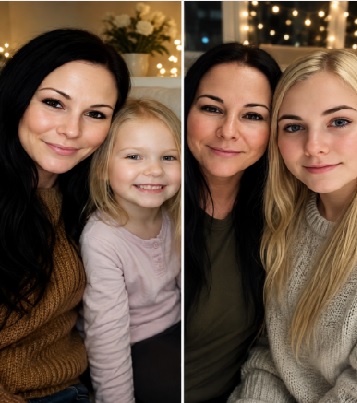
But knowing a child and becoming responsible for one are completely different things.
When the possibility of adoption was first discussed, I was terrified.
I had never planned to become a mother at twenty-eight. My apartment was small. My career was still uncertain. I had savings, but hardly enough to feel secure. More importantly, I was grieving too.
Yet every practical concern seemed insignificant when I looked at Miranda.
She had lost the person around whom her entire little world had revolved.
So I said yes.
The paperwork took time, and the emotional adjustment took much longer. Eventually, however, Miranda became my daughter in every meaningful sense of the word.
I never asked her to call me Mom.
At first, she used my name. A couple of years later, without any conversation about it, she began calling me Mom occasionally. Eventually it became natural.
I never tried to replace Claire either.
There were photographs of her throughout our home. On Miranda’s birthday, we sometimes talked about things her mother had done when she was little. I kept a box containing photographs, letters and small belongings that I thought Miranda might someday want.
My greatest fear was that she would grow up believing she had been abandoned by the world.
So I tried to make one thing absolutely clear.
She was wanted.
She was not a burden I had accepted because there was nobody else.
She was family.
Years passed in the ordinary way that years do when you’re raising a child.
There were school projects completed at the last possible minute, forgotten lunches, parent-teacher meetings, arguments about bedtime and increasingly expensive birthday requests.
There were scraped knees and childhood illnesses.
Then came adolescence.
Miranda went through a period when every question sounded like an accusation.
“Where are you going?”
“Why do you need to know?”
“What time will you be home?”
“Why don’t you trust me?”
Sometimes I would close my bedroom door afterward and laugh because I could almost hear Claire saying, “Now you understand.”
But there were difficult moments too.
At fourteen, Miranda became obsessed with understanding exactly what had happened after her mother’s death.
She wanted documents.
She wanted dates.
She wanted to know who had been contacted, who had refused responsibility and why I had ultimately become her guardian and then her adoptive parent.
I answered as carefully as I could.
I didn’t want to turn her relatives into villains. People make complicated decisions during terrible circumstances, and some of those people had genuine reasons for believing they could not raise a five-year-old child.
Still, Miranda understood the central truth.
When her life collapsed, I had stayed.
After that conversation, she hugged me longer than usual.
Then, as teenagers often do, she changed the subject and asked what we were having for dinner.
By the time she was seventeen, our relationship felt solid enough that I stopped worrying about whether adoption had somehow created an invisible distance between us.
She was preparing for university. She worked weekends at a café. She complained about my music. I complained about the mysterious collection of glasses that continually migrated from the kitchen into her bedroom.
It was normal.
And normal was something I had once desperately wanted for her.
Then Miranda turned eighteen.
We had a small celebration at home. Several of her friends came over, we ordered too much food, and someone brought a cake large enough for thirty people.
Late that evening, after everyone had gone, Miranda hugged me.
“Thank you,” she said.
“For the party?”
“For everything.”
I thought she was simply emotional because it was a milestone birthday.
Three days later, she appeared in my bedroom doorway.
I was sitting on the bed sorting laundry when I noticed her standing there.
Something about her expression immediately made me uncomfortable.
She wasn’t angry.
That would have been easier.
She looked determined.
“Can we talk?” she asked.
“Of course.”
She entered but didn’t sit down.
Then she said something that made my stomach tighten.
“I’m legally an adult now.”
I stared at her.
“Yes.”
“So there are decisions I can make myself.”
My mind immediately began racing through possibilities.
Had she decided not to attend university?
Was she moving in with someone?
Had something happened at work?
“Miranda, what is this about?”
She took a folded envelope from behind her back.
For a few seconds, she simply held it.
Then she gave it to me.
“I’ve been working on something,” she said.
Inside were several printed pages.
I started reading, expecting something terrible.
Instead, I became confused.
The documents concerned names.
Specifically, Miranda’s legal name.
After the adoption, she had kept Claire’s surname. I had insisted on it. Her name was part of her history, and I had never wanted adoption to erase the woman who had given birth to her.
But the papers Miranda handed me were related to a legal name change.
She wanted to add my surname to hers.
I looked up.
“I don’t understand.”
She finally sat beside me.
“You always told me that becoming your daughter didn’t mean I stopped being hers.”
I nodded.
“And you’re right. I don’t want to lose Mom’s name.”
She paused.
“But I don’t want to go through the rest of my life without yours either.”
I couldn’t speak.
For years, I had quietly wondered whether Miranda would someday reach adulthood and decide that our relationship belonged to her childhood.
Legally, she no longer needed me.
She could leave.
She could build an independent life.
Perhaps that fear was irrational, but adoption can contain strange emotional contradictions. You spend years teaching a child that love is permanent while privately knowing that adulthood gives them the freedom to redefine every relationship they have.
Miranda apparently understood more of this than I realized.
“When I was little,” she continued, “you chose me because I couldn’t choose anything for myself.”
She looked down at the papers.
“Now I can.”
That was when I began crying.
Not graceful tears either.
I cried so hard that Miranda started laughing while she hugged me.
“This wasn’t supposed to make you hysterical,” she said.
“You could have warned me.”
“That would have ruined it.”
We sat together for a long time.
Eventually I asked the question that had been bothering me.
“Are you absolutely sure?”
She nodded.
“I’ve been thinking about it for almost a year.”
That surprised me most.
Her eighteenth birthday had not inspired a sudden emotional decision. She had researched the process and considered what the change meant.
We talked about Claire.
That conversation mattered.
I told Miranda again that she owed me nothing for raising her. Adoption wasn’t a loan she needed to repay with gratitude, loyalty or a surname.
She understood.
“That isn’t why I’m doing it,” she said.
And I believed her.
She wanted both names because both belonged to her story.
One represented where she came from.
The other represented where she had grown up.
Neither had to erase the other.
That realization changed something in me too.
For many years, I had thought about my relationship with Miranda in terms of responsibility.
When Claire died, a child needed someone.
I became that someone.
I made meals, attended meetings, paid bills, imposed rules, worried about grades and sat beside hospital beds when Miranda was sick.
Those were acts of parenting.
But parenthood had never been a single decision made when I signed adoption papers.
It had been thousands of ordinary decisions made afterward.
Getting up when she had nightmares.
Listening when she was frightened.
Saying no when saying yes would have been easier.
Apologizing when I was wrong.
Giving her space when she needed independence.
Remembering that loving Claire’s daughter meant allowing Miranda to remember Claire rather than competing with a woman who was no longer alive.
And perhaps the hardest lesson was understanding that children eventually become adults who must decide for themselves what family means.
Several months later, Miranda’s new documents arrived.
She carried the envelope into the kitchen and opened it at the table.
There it was.
Her first name followed by two surnames.
Claire’s.
And mine.
Miranda stared at it for several seconds before smiling.
“Looks strange,” she said.
“You can still change your mind.”
She gave me an annoyed look.
“Mom.”
That single word answered everything.
I once believed I had rescued a five-year-old girl from being alone.
With time, I understood the truth was more complicated.
Miranda had changed my life just as completely.
I had expected adulthood to loosen the connection between us. Instead, it revealed something I should have understood long before.
A legal document can establish a family relationship, but it cannot manufacture one.
That happens afterward.
It happens in kitchens and school hallways, during arguments and celebrations, through disappointments, forgiveness, routine and time.
Thirteen years earlier, I had been the adult, and Miranda had been the child who had no control over what happened next.
At eighteen, the choice finally belonged entirely to her.
And she chose to carry both parts of her life forward.
Not because the past needed to be replaced.
Because her family had become larger than the tragedy that once threatened to leave her alone.