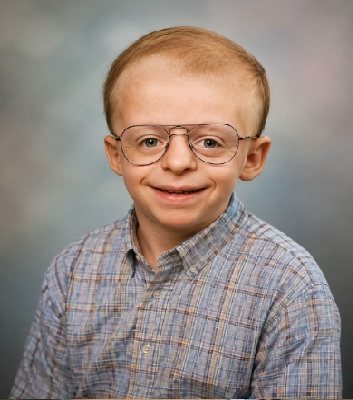
Some children begin life surrounded by celebration and welcoming arms. Jono Lancaster’s story began with rejection—an experience whose consequences would remain with him for many years.
Jono was born on October 31, 1984, in West Yorkshire, England, with Treacher Collins syndrome, a rare genetic condition that affects the development of facial bones and tissues. In his case, the condition affected his cheekbones, jaw, and ears, and he later used hearing aids.
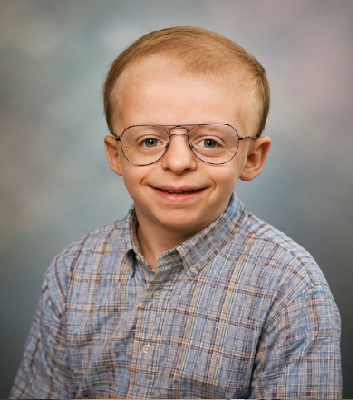
Only 36 hours after his birth, his biological parents left the hospital without him. According to what Jono later shared about his adoption records, they were deeply shocked by his appearance and believed they were unable to form an emotional bond with their newborn son.
That moment could have defined the rest of his life.
But another person soon entered his story.
Her name was Jean.
A Completely Different Reaction
Social services needed to find someone who could care for the newborn, and Jean Lancaster became Jono’s foster mother. She was warned that the baby looked different and that his appearance had already caused strong reactions in others.
Jean responded differently.
As Jono later recalled, when she first saw him, she smiled, picked him up, and immediately felt a connection. Instead of concentrating only on the challenges of raising a child with a craniofacial condition, she saw a baby who needed a home, affection, and protection.
That difference in perspective would become one of the most important themes of Jono’s life.
Different adults had looked at the same child. Some saw a situation they believed they could not handle. Jean saw a little person who deserved love, security, and a family.
Before long, she became far more than a temporary caregiver.
For several years, the possibility of contact between Jono and his biological parents remained open. Eventually, on May 18, 1990, when he was five years old, Jean officially adopted him.
Jono would later joke that this meant he had two birthdays.
Behind the humor was something much deeper: he had been chosen.
Jean did not pretend that the difficult parts of his past did not exist. According to Jono, she was willing to speak openly with him about his appearance and his biological parents. That honesty mattered because even the strongest love could not automatically remove every question he had about where he came from.
But Jean gave him a safe place from which to ask those questions.
Growing Up Looking Different
Treacher Collins syndrome affects people in different ways. It primarily influences facial development, particularly the cheekbones, jaw, and ears. Some people experience significant hearing difficulties, while children with more pronounced symptoms may require extensive medical care.
The condition does not determine intelligence, personality, ambition, dreams, or a person’s ability to build a meaningful life.
Unfortunately, children do not always understand such distinctions.
As Jono grew older, the love he received at home could not completely protect him from the reactions of the outside world. His facial difference made him immediately noticeable, and he experienced bullying and cruel comments.
Over time, those experiences began to affect the way he saw himself.
The problem was not simply that people noticed his appearance. Repeated rejection can gradually teach someone to expect rejection almost everywhere.
For a boy who already knew that his biological parents had left shortly after his birth, cruel comments about his appearance could carry an especially painful meaning. They seemed to reinforce a fear planted at the very beginning of his life: perhaps his face would always determine whether other people accepted him.
During difficult periods, Jono struggled with confidence and with feeling that he belonged. He later spoke openly about seeking approval from others and sometimes trying to attract attention as a way of coping with his insecurity.
Yet alongside the cruel voices of others, there was always another voice.
Jean’s.
She saw the same face—and loved him.
Questions That Did Not Disappear
Being deeply loved by an adoptive family does not necessarily eliminate a person’s curiosity about their biological parents.
As Jono entered adulthood, questions about his origins remained.
Why had his parents made their decision? Had they ever regretted it? Would they want to know what kind of man their son had become?
When Jono was in his mid-twenties, he decided to try to make contact.
He hoped enough time had passed for some form of communication to become possible. He reached out to his biological parents and made it clear that he would be willing to meet them.
The response was painful.
They did not want contact and indicated that they did not welcome further attempts to establish a relationship.
For Jono, it was another rejection decades after the first.
It would have been understandable if that response had left him with nothing but lasting anger and resentment.
Instead, Jono gradually developed a more complicated understanding of what had happened. He did not deny the pain caused by his biological parents’ choices, but he also expressed gratitude for being given life. He has spoken about respecting their decision to remain distant, despite the hurt it caused him.
Acceptance in this situation did not mean pretending that nothing painful had happened.
It meant refusing to allow that rejection to control everything that followed.
Turning Difference Into a Way to Help Others
As Jono’s relationship with himself began to change, so did the direction of his life.
The face he once feared would prevent him from finding friendship, employment, acceptance, and love eventually became part of what allowed him to connect so deeply with people facing similar challenges.
He began meeting children with Treacher Collins syndrome and other craniofacial differences.
For a child who feels isolated because almost nobody around them looks like them, meeting a confident adult with a similar condition can have enormous significance.
Such encounters can also be valuable for parents.
When a family receives a diagnosis, parents may suddenly find themselves surrounded by medical terminology, uncertainty, and fear about their child’s future. Meeting an adult who has personally experienced childhood bullying, insecurity about appearance, and the difficult journey toward self-acceptance can provide something beyond medical information.
It can provide perspective.
Jono became a public speaker and advocate, sharing his experiences and encouraging greater understanding and respect for people with facial differences.
The characteristic that had once caused him so much pain was no longer something he wanted to hide.
His face had not changed.
His relationship with it had.
This Is Not Simply a Story About Appearance
It would be easy to reduce Jono Lancaster’s life to a simple inspirational formula: a baby was rejected, a loving woman rescued him, and eventually everything became wonderful.
Real life is more complicated.
Jean’s love could not prevent bullying. Adoption did not erase Jono’s questions about his biological parents. His achievements in adulthood could not rewrite what happened during the first days of his life.
Even many years later, attempting to contact his biological parents reopened an old wound.
Jean could not protect him from every painful experience.
What she gave him was a foundation.
A child who repeatedly encounters judgment especially needs somewhere to experience the opposite. For Jono, Jean’s home became that place—a space where his appearance was never considered a reason to love him less.
That distinction matters.
Confidence is sometimes discussed as though a person simply needs to decide one morning to become strong.
In reality, much of a child’s understanding of personal worth develops through relationships. Children learn something about their own value from the way adults look at them, speak to them, and respond when they are vulnerable.
Jean could not control how every stranger, schoolmate, or passerby would treat Jono.
But she could make sure their voices were not the only ones he heard.
What It Means to Be Chosen
Years later, Jono has spoken with enormous warmth about the woman who raised him.
Jean became his mother not because biology assigned her that role, but because she chose to accept responsibility for a child whose future was uncertain.
And that choice influenced much more than his childhood.
The security and care Jean gave him eventually became something Jono could offer to others.
When he meets children with facial differences, he understands fears that people without similar experiences may struggle to recognize. When he speaks with parents, he can demonstrate that a medical diagnosis describes a condition—it does not determine the limits of a child’s future.
And when Jono talks about his own insecurities, he speaks not as an outside observer but as someone who lived through them.
Perhaps this is one of the most important lessons in his story.
Jono did not become valuable because he grew up and became a public speaker and advocate.
He already had value when he was a newborn baby lying in a hospital.
Jean understood that long before he had achieved anything.
Her love was not a reward for resilience, success, or courage.
It came first.
And because it came first, Jono had an environment in which those qualities could eventually grow.
The Face He No Longer Wanted to Hide
For many years, Jono feared that his appearance would close doors before people had the opportunity to know him.
Gradually, however, he discovered that friendship, love, respect, and meaningful relationships were possible without having to look like everyone else.
He has spoken about reaching a point where he no longer wanted surgery solely for the purpose of changing his appearance. He had learned to accept the face that once made him feel like an outsider.
Of course, this does not mean every person with a facial difference should make the same choice. Decisions about medical treatment are deeply personal, particularly when procedures may involve breathing, hearing, eating, or other important physical functions.
Jono’s experience offers a different lesson.
Self-acceptance does not mean pretending that a painful past never existed.
Sometimes it means reaching the point where other people’s reactions no longer have the power to determine your worth.
Jono’s biological parents made one decision during the first days of his life.
Jean made another.
For many years, Jono carried the pain associated with the first decision. But the second gave him a family, a foundation, and an example of what unconditional acceptance could look like.
Today, his story reaches far beyond one family or one rare genetic condition. It raises a question familiar to anyone who has ever felt judged before being truly known:
What can happen when even one person chooses to see the human being before seeing the difference?
In Jono Lancaster’s life, the answer began with Jean.
She could not change the circumstances of his birth. She could not guarantee that the world would always treat him kindly.
But there was something incredibly important she could do.
She could take him home.
And she did.